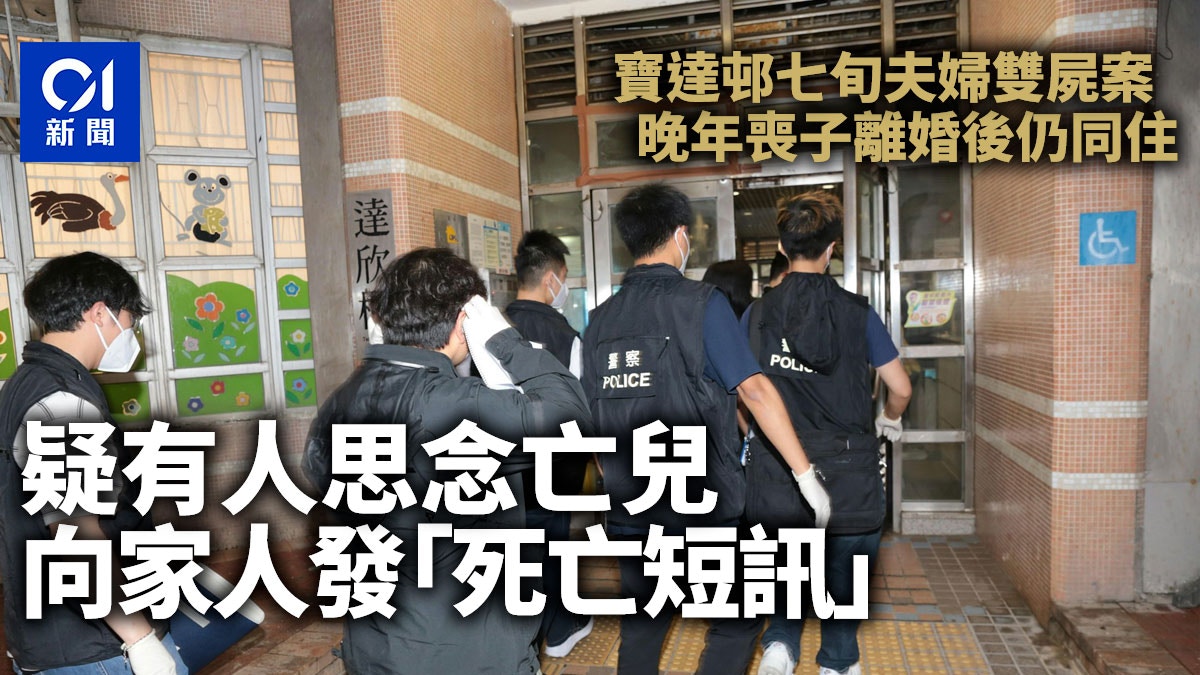
A tragedy has unfolded in the Sau Mau Ping area of Hong Kong, where the discovery of two elderly bodies in a public housing unit has led police to launch a murder-suicide investigation. The victims, a man and a woman both in their 70s, were found dead in their residence at Po Tat Estate, sparking a grief-stricken reflection on the challenges of elderly mental health and the enduring pain of bereavement.
The Po Tat Estate double death initially drew authorities to the scene as a suspicious death inquiry. However, following a detailed forensic examination and preliminary investigations by the Regional Crime Unit, the Hong Kong Police Force has since reclassified the case as a murder-suicide. The investigation reveals a complex domestic situation where the couple, despite being legally divorced, had continued to reside together in the same housing unit until their deaths.
Police reports indicate that the deaths were not an isolated incident of sudden illness but were tied to a profound family tragedy that had haunted the couple for years. Investigators believe the motive was rooted in the loss of their son, whose own death by suicide had left the parents in a state of prolonged grief. This heartbreaking backdrop has turned a police investigation into a stark reminder of how unresolved trauma can impact the elderly in high-density urban environments.
As the community in Sau Mau Ping grapples with the news, the case highlights the precarious nature of elderly support systems in Hong Kong. The duality of the couple’s relationship—legally separated yet physically cohabiting—suggests a reliance on one another that persisted despite the collapse of their marriage, only to end in a final, violent act of desperation.
Police Reclassify Case as Murder-Suicide
The investigation into the deaths at Po Tat Estate shifted significantly after the arrival of the Regional Crime Unit. Initial reports from the scene suggested a suspicious discovery, but as evidence was gathered from within the home, the narrative changed. According to reports from RTHK, police have now officially categorized the incident as a murder-suicide, indicating that one partner likely took the life of the other before ending their own.
The Regional Crime Unit spent several hours processing the scene, examining the layout of the apartment and searching for any notes or digital communications that might explain the timing of the event. While the police have not released the specific sequence of events, the reclassification suggests a deliberate act rather than an accident or a third-party intrusion. The utilize of the term “murder-suicide” in official police parlance typically follows the discovery of evidence that precludes other forms of foul play.
The precision of the police response reflects the severity of the crime. In Hong Kong, cases involving multiple deaths in public housing are handled with high priority to ensure that all evidence is preserved for the eventual coroner’s inquest. The focus has now shifted to determining the exact method of death and confirming the identities of the deceased through formal autopsy reports.
A History of Loss and the Desire for ‘Reunion’
Central to the investigation is the devastating loss of the couple’s son. According to reports from HK01, the couple had suffered the loss of their child years prior, who had died by suicide. This loss is believed to be the primary catalyst for the recent tragedy. The psychological toll of losing a child is often cited by mental health professionals as one of the most difficult forms of grief to process, particularly for elderly parents who may lack a wider support network.
Disturbingly, investigators found that the husband had previously expressed a desire to “reunite” with his late son. This sentiment, while perhaps viewed as a expression of longing by some, is now seen by authorities as a warning sign of suicidal ideation. The concept of “reunion” in the context of bereavement often signals a dangerous shift from mourning to a desire to join the deceased, a phenomenon that can lead to the exact type of tragedy seen in Po Tat Estate.
The couple’s living arrangement further complicates the emotional landscape of the case. Though they were divorced, they remained under the same roof. In many Hong Kong public housing estates, divorced elderly couples continue to cohabitate due to the extreme scarcity of available housing and the financial impossibility of maintaining two separate residences. This “divorced but together” status often creates a pressure cooker of emotional tension, where the shared grief of a lost child becomes the only remaining bond between two people who can no longer function as a married couple.
The Crisis of Elderly Isolation in Hong Kong
The Po Tat Estate double death is not merely a criminal case but a symptom of a broader social crisis affecting Hong Kong’s aging population. The city has one of the fastest-growing elderly populations in the world, and with it comes a rise in social isolation and depression. When this isolation is compounded by the loss of a child, the risk of psychiatric crisis increases exponentially.
Public housing estates like Po Tat Estate are designed for efficiency, but they can sometimes become silos of loneliness. For elderly residents, the loss of a spouse or child can lead to a “social death” long before physical death occurs. The lack of integrated mental health services specifically tailored for grieving seniors often means that warning signs—such as the husband’s comments about “reuniting” with his son—go unnoticed or unaddressed by professional services.
Mental health advocates argue that the “reunion” sentiment is a critical red flag. When an elderly person begins to speak of the afterlife or joining a deceased loved one, it is often a plea for help. In this instance, the lack of an intervention mechanism allowed a long-simmering tragedy to reach a violent conclusion. The tragedy underscores the require for more aggressive community outreach and mental health screenings within public housing estates to identify high-risk seniors before they reach a point of no return.
Key Factors in the Po Tat Estate Tragedy
- Loss of a Child: The previous suicide of the couple’s son created a foundation of unresolved grief.
- Complex Cohabitation: A divorced status combined with shared living quarters created an emotionally volatile environment.
- Warning Signs: Expressed desires for “reunion” with the deceased son went unmitigated.
- Police Intervention: The shift from “suspicious death” to “murder-suicide” confirms the intentional nature of the act.
What Happens Next: The Legal and Forensic Process
The case now moves into the judicial and forensic phase. The bodies have been transported to the morgue for post-mortem examinations, which will provide the definitive cause of death for both the man and the woman. These findings will be crucial for the Hong Kong Police Force to finalize their report and for the Coroner’s Court to determine the official circumstances of the deaths.
A coroner’s inquest is expected to follow. In Hong Kong, an inquest is mandatory for deaths that occur in suspicious circumstances or are classified as suicides and murders. The inquest will likely examine the couple’s medical histories, their relationship status, and any records of mental health support they may or may not have received. This process is designed not only to establish the facts but to identify any systemic failures that could have prevented the tragedy.
For the residents of Sau Mau Ping and Po Tat Estate, the incident has left a lingering sense of shock. The sight of the Regional Crime Unit and the subsequent police cordons served as a grim reminder of the hidden struggles occurring behind the closed doors of thousands of public housing units. The case will likely prompt renewed calls for the government to increase funding for elderly psychiatric care and bereavement counseling.
The next official checkpoint will be the release of the autopsy reports and the scheduling of the coroner’s inquest, which will provide the final legal closure to this heartbreaking episode. We will continue to monitor the official statements from the Hong Kong Police Force as more details emerge regarding the forensic findings.
World Today Journal encourages readers to share this story to raise awareness about elderly mental health. If you or someone you know is struggling with grief or suicidal thoughts, please contact local mental health helplines or professional counseling services immediately.