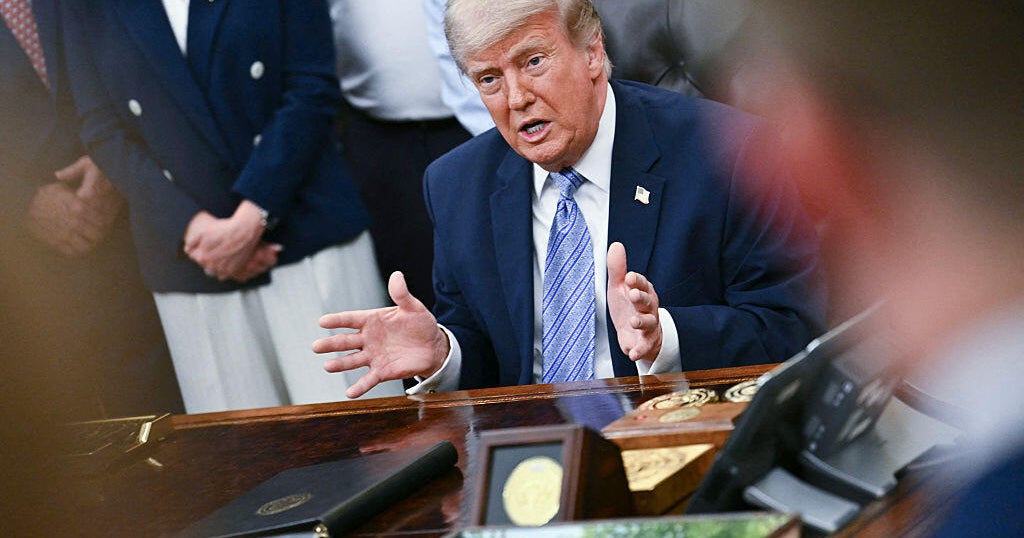
The constitutional friction between the executive branch and the legislative branch regarding military engagement reached a significant milestone during the Trump administration, when the U.S. House of Representatives moved to restrict the President’s authority to initiate further hostilities against Iran. This legislative action, which sought to curtail unilateral military action, underscored a growing bipartisan skepticism regarding the scope of presidential war powers in the modern era.
The resolution, formally designated as H.Con.Res. 83, was a direct response to the escalating tensions that followed the January 2020 strike that killed Iranian General Qasem Soleimani. According to the official Congressional record, the measure aimed to terminate the President’s authority to use United States Armed Forces to engage in hostilities in or against Iran unless a declaration of war or specific statutory authorization had been granted by Congress.
For those of us tracking the evolution of international affairs, this moment served as a vital case study in the application of the War Powers Resolution of 1973. The legislative push highlighted the fundamental tension between the need for rapid executive response in a crisis and the constitutional mandate that reserves the power to declare war for the legislative branch.
The Constitutional Framework and War Powers
The debate over whether the executive branch has overstepped its bounds is a perennial feature of American politics. When the House voted on January 9, 2020, to limit the President’s war-making capabilities, it relied heavily on the framework established by the 1973 War Powers Resolution, which requires the President to notify Congress within 48 hours of committing armed forces to military action and mandates the withdrawal of those forces within 60 days unless Congress grants an extension. The House vote, which passed 224-194, was a clear signal of the growing unease within the chamber regarding open-ended military commitments in the Middle East, as documented by Reuters.
The legal significance of this vote cannot be overstated. By invoking the War Powers Resolution, lawmakers were attempting to reassert their role in the decision-making process for national security. This was not merely a symbolic gesture; it was an attempt to enforce a strict interpretation of Article I, Section 8 of the U.S. Constitution, which grants Congress the sole power to declare war. The legislative action forced a public reckoning on whether the 2002 Authorization for Use of Military Force (AUMF) against Iraq could legitimately be stretched to cover potential conflicts with Iran.
Bipartisan Shifts and Legislative Hurdles
What made the 2020 vote particularly noteworthy was the emergence of bipartisan support. While the measure was primarily driven by the Democratic majority, several Republican members broke ranks, signaling that the traditional party-line approach to military intervention was fraying. This shift reflected a broader “America First” sentiment that prioritized domestic concerns and cautioned against “endless wars” abroad.
Despite the House passing the resolution, the legislative process faced significant headwinds in the Senate. Under the procedures set forth in the War Powers Resolution, the measure was granted expedited consideration, but it still required navigation through a chamber where the leadership remained staunchly supportive of the administration’s broader Iran policy. As noted in assessments by the Congressional Research Service, the legal efficacy of such concurrent resolutions is often debated, as they are not signed by the President and therefore do not carry the same weight as a public law.
Key Takeaways from the 2020 Legislative Action
- Constitutional Reassertion: The vote represented a rare attempt by the House to utilize the War Powers Resolution to constrain executive military action.
- The AUMF Debate: Central to the conflict was whether existing authorizations from 2001 and 2002 provided sufficient legal cover for new strikes against Iranian targets.
- Bipartisan Dissent: The inclusion of Republican votes in favor of the measure indicated a notable shift in the GOP’s traditionally hawkish stance on Middle East policy.
- Legal Limitations: Because the resolution was a concurrent resolution, it faced significant hurdles in becoming binding law, highlighting the structural difficulty of reining in executive power once military operations have commenced.
What This Means for Future Foreign Policy
The events of 2020 continue to inform current discussions regarding the balance of power between the White House and the Capitol. As we observe the ongoing shifts in global security, the questions raised during that vote remain relevant. Does the executive branch require a new, specific authorization for every theater of conflict, or does the legacy of post-9/11 authorizations provide a permanent, if controversial, mandate for action?
For observers of international relations, the key takeaway is that the legislative branch possesses tools to challenge executive military policy, but those tools are often blunted by political polarization and the complex nature of modern, non-traditional warfare. As the geopolitical landscape continues to evolve, the precedent set by this vote serves as a reminder that the authority to engage in war remains one of the most contested and essential elements of the American democratic experiment.
As we move forward, the next checkpoint for this ongoing debate will likely emerge during future budgetary cycles or if a new request for authorization is submitted to Congress. For now, the 2020 resolution stands as a landmark moment of legislative oversight. We invite our readers to share their thoughts on the balance of war powers in the comments below, as we continue to track how these constitutional debates shape the trajectory of global affairs.