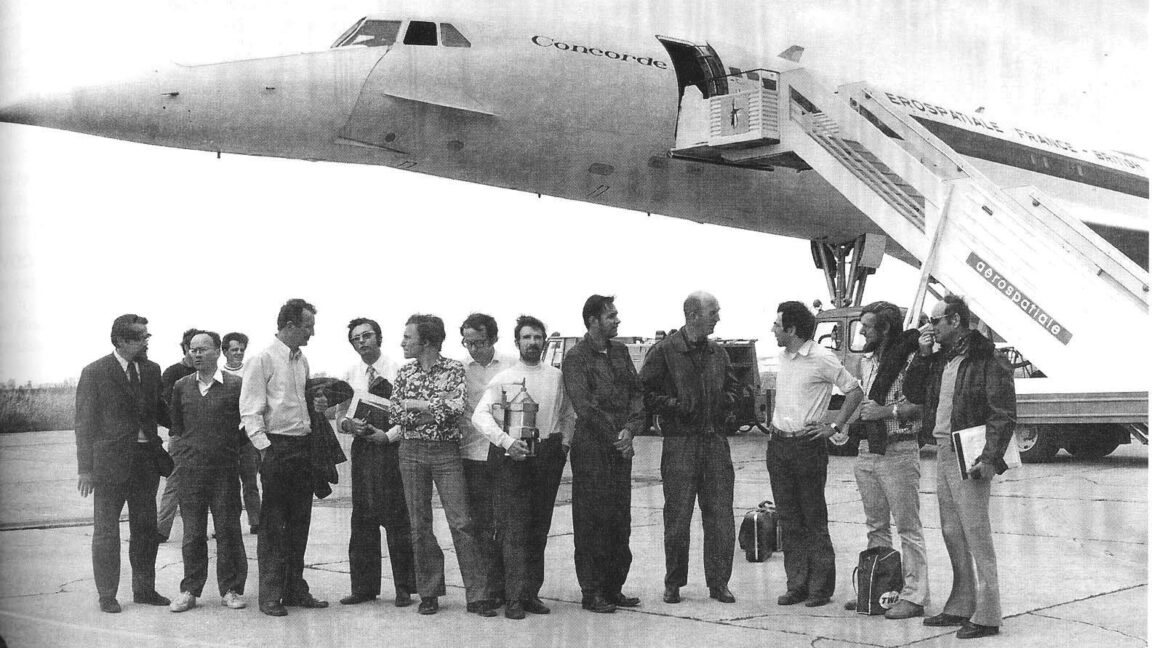
Aboard the Concorde 001 prototype, eight pioneering scientists observed a total solar eclipse for an astonishing 74 minutes, a feat of engineering and orbital mechanics that remains unmatched in the annals of aviation history.
Today, that legendary aircraft rests at the National Air and Space Museum of France at Paris-Le Bourget airport, a destination that draws aviation and science enthusiasts from around the globe. Right behind the jet’s iconic, drooping long nose, a painted map traces the historic flight path over Africa, commemorating the day human ingenuity briefly outran the lunar shadow at twice the speed of sound.
The pursuit of celestial alignments has captivated humanity for centuries, but capturing an extended view of totality has always been bound by the stubborn physics of planetary rotation. While ground-based observers in equatorial regions experience a maximum duration of totality lasting roughly 7.5 minutes, and viewers across Europe during upcoming events like the August 12 solar eclipse will see less than two minutes of darkness, the Concorde team rewrote the rules of eclipse chasing through pure velocity.
Chasing the Lunar Shadow at Mach 2
The extraordinary 1973 mission required precise coordination between pilots, flight engineers, and astrophysicists. Travelling at Mach 2—more than twice the speed of sound—the Concorde 001 effectively outpaced the Earth’s rotation and the speed of the Moon’s shadow as it swept across the globe. By matching the trajectory and speed of the umbra, the aircraft prolonged the fleeting moments of darkness far beyond any terrestrial limit.
According to historical aviation records, the mission carried a specialized scientific payload. Researchers mounted equipment directly over specially modified cabin windows to study the solar corona without the atmospheric distortion that plagues ground-based observatories. The resulting 74 minutes of totality allowed physicists to gather unprecedented data on the Sun’s outer atmosphere.
The aircraft itself, designated as prototype F-WTSS 001, stands as a testament to the cooperative European aeronautical engineering of the late 20th century.
Preserving the Legacy of Concorde 001
Maintained by the Musée de l’Air et de l’Espace, the Concorde prototype serves as a primary attraction for visitors exploring the rich history of flight in France. The museum, situated just northeast of Paris, houses an extensive collection of civilian and military aircraft ranging from early aviation pioneers to modern jets.
What are your thoughts on this legendary supersonic science mission? Share your perspective in the comments below, and join the conversation with fellow aviation and astronomy enthusiasts.
Related reading