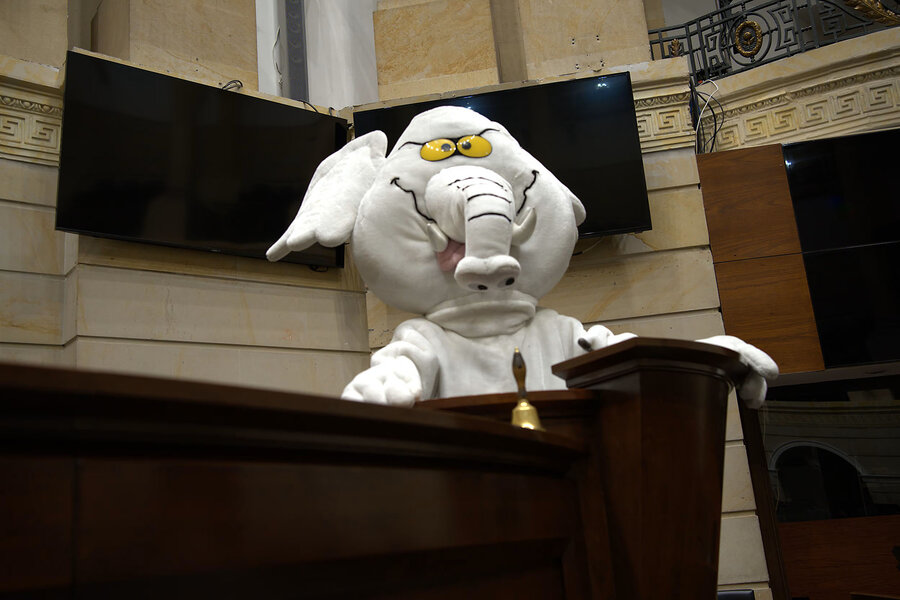
Colombian Senator Jota Pe Hernández, a former social media content creator, has gained national prominence by utilizing an elephant costume to symbolize government corruption and stalled public infrastructure projects, colloquially known in the country as “white elephants.” Hernández, who secured a seat in the Colombian Senate during the 2022 legislative elections, has maintained a political platform centered on fiscal oversight and the exposure of abandoned state-funded developments, according to reporting by Reuters.
The term “white elephant” refers to expensive public works projects that remain incomplete or non-functional despite significant investment of taxpayer funds. In the Colombian context, these projects often serve as focal points for anti-corruption discourse, as they represent the intersection of administrative inefficiency and potential misappropriation of public resources. By physically bringing the costume into the halls of Congress, Hernández sought to draw attention to the budgetary impact of these projects, which are tracked by the Contraloría General de la República, the national body responsible for auditing state finances.
The Origins of the Anti-Corruption Strategy
Jonathan Ferney Pulido Hernández, known publicly as Jota Pe Hernández, entered the political sphere after building a significant following as a YouTuber. His campaign strategy relied heavily on digital engagement and the use of viral imagery to critique the legislative establishment. Upon taking office, he transitioned this digital-first approach into the physical legislative environment, aiming to make abstract concepts of fiscal waste tangible for the voting public.
The use of the elephant suit serves as a visual metaphor for the “elephant in the room”—the obvious but often ignored issue of systemic waste. According to data provided by the National Planning Department (DNP), which manages the Mapa Inversión platform, Colombia has historically struggled with thousands of infrastructure projects that have faced delays or abandonment. These projects range from local schools and hospitals to major road networks, often leaving communities without intended services while costs continue to accrue.
Fiscal Oversight and Legislative Action
The role of the Contraloría is to identify these projects and pursue legal or administrative recovery of funds. Under Colombian law, the Congress of the Republic holds the power to conduct political control debates, where legislators can summon government ministers and heads of agencies to explain the status of public works. Hernández has utilized these sessions to demand accountability for specific projects that have stalled, often citing reports from the Auditor General’s office.
Financial transparency remains a primary concern for the Colombian electorate. The Transparency International index consistently monitors the country’s progress in addressing public sector corruption. For legislators like Hernández, the challenge lies in moving beyond symbolic protests to influence actual budgetary allocations and legislative reforms that provide the Contraloría with more teeth to penalize responsible contractors and officials.
Impact on Colombian Political Discourse
The adoption of unconventional protest tactics within formal legislative chambers has sparked debate regarding the decorum of political institutions versus the necessity of radical transparency. Supporters argue that the performative nature of the protest successfully forces media coverage and public scrutiny onto issues that would otherwise remain buried in technical audit reports. Critics, however, suggest that such methods may distract from the nuanced legislative processes required to fix the underlying structural problems causing project abandonment.
Despite the controversy, the focus on “white elephants” has remained a consistent theme in the current administration’s discourse. The government continues to face pressure to complete legacy projects left over from previous terms. The next official updates on the status of these high-priority infrastructure projects are expected to be released in the upcoming quarterly reports from the DNP and the Contraloría, which are typically published on the agencies’ respective official websites.
For citizens tracking the progress of local projects, the DNP’s Mapa Inversión remains the primary government resource for monitoring the status, funding, and completion timelines of public works across Colombia. Ongoing legislative debates regarding these projects are scheduled throughout the current session of the Senate, and interested parties can follow these proceedings via the official Senate website. Readers are invited to share their thoughts on the effectiveness of these legislative tactics in the comments section below.