
Healthcare organizations face an escalating cyber threat landscape where AI-powered attacks—particularly deepfakes and prompt injection—are outpacing defensive capabilities, according to new research from Gartner. The advisory firm warns that four emerging AI-driven attack vectors are already exploiting gaps in enterprise security, with healthcare systems among the most exposed due to their reliance on sensitive data and legacy systems. “By 2026, 70% of organizations will have experienced at least one successful AI-driven attack, up from less than 10% in 2023,” predicts Gartner, citing rapid advancements in generative AI that attackers are weaponizing in its latest threat intelligence report. For healthcare providers, the stakes are higher: a single breach could disrupt patient care, compromise life-saving data, or trigger regulatory penalties exceeding $1 million.
While cybersecurity teams scramble to adapt, attackers are leveraging AI to bypass traditional defenses. Deepfake audio and video impersonations of executives or medical staff are now being used to authorize fraudulent transactions or manipulate employees into transferring funds. Meanwhile, prompt injection—a technique where attackers manipulate AI models to produce harmful outputs—has already been demonstrated in healthcare settings, with malicious actors embedding hidden commands in medical AI tools to alter diagnoses or treatment recommendations as documented in recent case studies. “The problem isn’t just that these attacks exist,” says Dr. Elena Vasquez, a cybersecurity expert at the U.S. Department of Health and Human Services (HHS), “it’s that defenders are playing catch-up while attackers have already integrated AI into their toolkits.”
The gap is widening because most healthcare organizations still rely on legacy security models designed to counter traditional threats like phishing or ransomware. AI-driven attacks, however, require entirely new detection methods—such as analyzing anomalies in voice patterns for deepfakes or monitoring AI model behavior for prompt injection. “The average time to detect an AI-powered attack is now under 24 hours, compared to weeks for conventional breaches,” notes Gartner’s Enterprise Security and Risk Management team. For hospitals and clinics, where operational continuity is critical, even a few hours of downtime can mean the difference between life and death.
Four AI-Powered Cyber Threats Healthcare Must Prepare For
Gartner identifies four specific AI-driven attack vectors that are currently outpacing enterprise defenses, with particularly severe implications for healthcare:
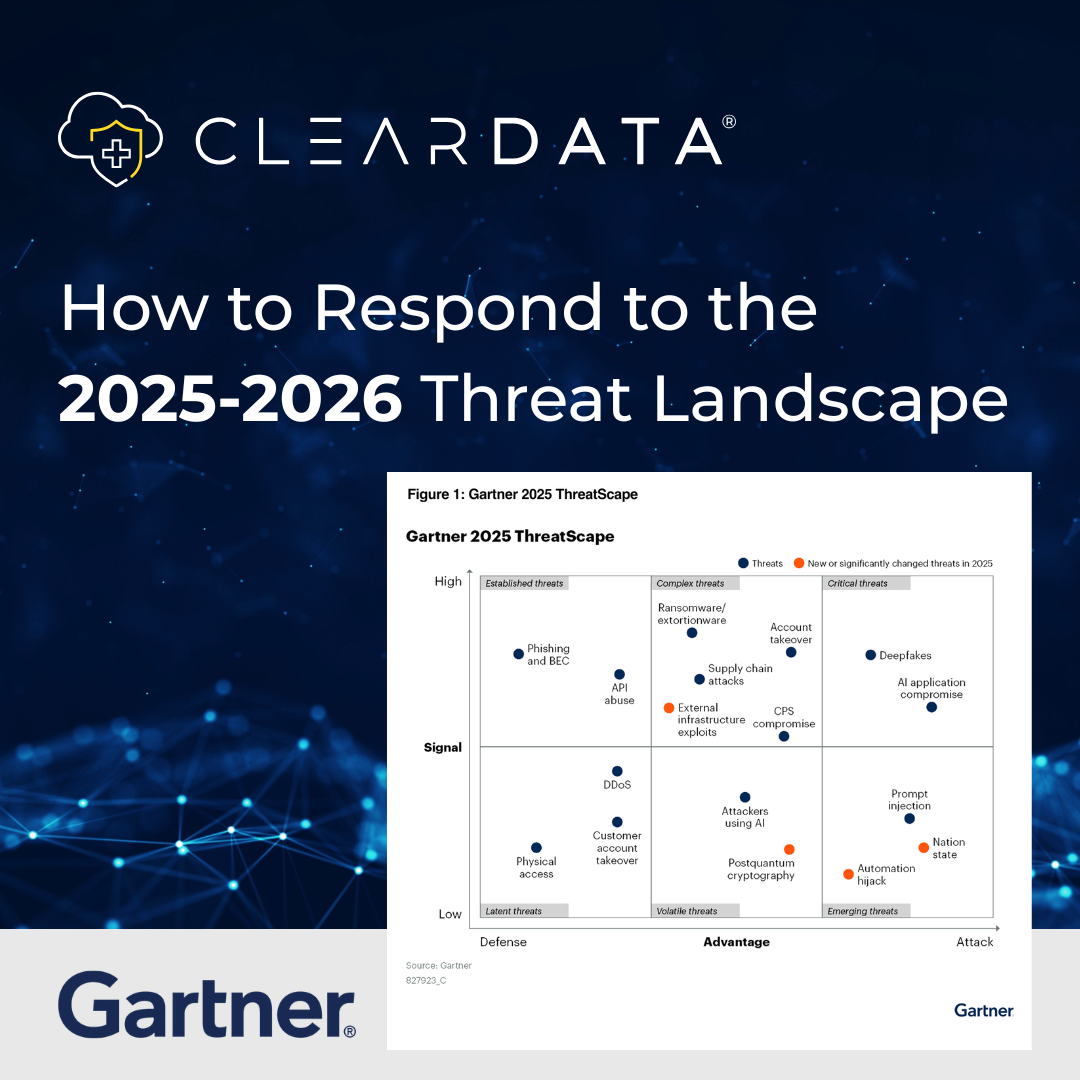
- Deepfake Impersonations: AI-generated voice or video clones of executives, board members, or even patients are being used to authorize wire transfers, manipulate staff into disclosing credentials, or fabricate emergency medical directives. In one documented case, a deepfake call to a hospital’s finance department resulted in a $2.3 million transfer to a fraudulent account as reported by Bank Info Security.
- Prompt Injection Attacks: By exploiting vulnerabilities in AI-powered diagnostic tools or chatbots, attackers can embed hidden commands that alter outputs—for example, changing a “do not treat” flag in a patient’s record to “proceed with surgery.” The Office of the National Coordinator for Health IT (ONC) has issued preliminary guidance warning that over 60% of medical AI systems lack built-in protections against such manipulations.
- AI-Generated Social Engineering: Attackers use AI to craft hyper-personalized phishing emails or fake patient portals that mimic legitimate healthcare providers. These messages often include real patient data (obtained from prior breaches) to increase credibility. A 2023 study by Proofpoint found that AI-generated phishing emails in healthcare had a 42% higher success rate than traditional scams.
- Automated Exploitation of AI Models: Cybercriminals are training their own AI to identify and exploit weaknesses in healthcare organizations’ AI systems—such as predicting which diagnostic tools are most likely to be misconfigured or which patient data repositories are least secured.
Why Healthcare Is a Prime Target—and Why Defenses Are Failing
Healthcare systems are uniquely vulnerable due to three interconnected factors:
- Data-Rich Environments: Hospitals and clinics store vast amounts of sensitive data—patient records, financial transactions, and research data—that are highly valuable on the dark web. According to the Identity Theft Resource Center (ITRC), healthcare data breaches accounted for 45% of all reported incidents in 2023, with an average cost of $10.9 million per breach.
- Legacy Infrastructure: Many healthcare organizations still rely on outdated systems that lack native AI threat detection. A HIMSS survey found that only 18% of hospitals have fully deployed AI-driven security tools, compared to 65% in the financial sector.
- Regulatory and Operational Pressures: The need to maintain 24/7 availability for patient care often means security updates are deprioritized. Meanwhile, regulations like HIPAA impose strict limits on how quickly organizations can implement new security measures without risking compliance violations.
Adding to the challenge, traditional cybersecurity training—such as simulated phishing exercises—is becoming less effective against AI-powered attacks. “Attackers are no longer limited to human-like mistakes,” explains Dr. Vasquez. “They’re using AI to craft attacks that adapt in real time, learning from each failed attempt.” For example, a deepfake voice clone that fails to fool a receptionist might automatically adjust its tone or speech patterns before retrying.
What Healthcare Organizations Can Do Now
Gartner and cybersecurity experts recommend a multi-layered approach to mitigate AI-driven threats:
- Deploy AI-Specific Detection Tools: Solutions that analyze behavioral anomalies in voice, video, and text—such as CrowdStrike’s AI Threat Detection or Palo Alto Networks’ Prisma Cloud—can help identify deepfakes and prompt injection attempts in real time.
- Implement Zero-Trust Architecture: Assume every interaction—even from internal staff—could be compromised. The National Institute of Standards and Technology (NIST) recommends multi-factor authentication (MFA) for all AI system access points, with additional biometric verification for high-risk actions.
- Conduct AI-Specific Red Team Exercises: Simulate deepfake calls, prompt injection attacks, and AI-generated phishing campaigns to test employee responses. The Cybersecurity and Infrastructure Security Agency (CISA) offers free templates for healthcare-specific red teaming scenarios.
- Monitor Third-Party AI Tools: Many healthcare organizations use external AI services for diagnostics, customer service, or data analysis. Gartner advises auditing these tools for vulnerabilities, as third-party breaches now account for 60% of all AI-related incidents in healthcare (Gartner, 2024).
- Educate Staff on AI Threats: Training should focus on recognizing AI-generated content—such as unnatural speech patterns in deepfakes or inconsistent responses from chatbots—and reporting suspicious interactions immediately.
The Road Ahead: What’s Next for Healthcare Cybersecurity?
The next critical checkpoint for healthcare cybersecurity will be the publication of NIST’s AI Risk Management Framework (AI RMF) update in Q3 2024, which is expected to include specific guidelines for healthcare organizations. The framework will address AI system resilience, supply chain risks, and incident response protocols for AI-driven attacks. Meanwhile, the FDA is reviewing its Software as a Medical Device (SaMD) guidelines, which could introduce stricter cybersecurity requirements for AI-powered medical tools by early 2025.
In the shorter term, healthcare leaders should monitor:
- The HHS’s updated HIPAA enforcement priorities, expected in July 2024, which may include penalties for failing to mitigate AI-driven risks.
- CISA’s AI Cybersecurity Advisory, scheduled for release in August 2024, which will outline sector-specific mitigation strategies.
- Emerging standards from the IEEE’s P7000 series on AI ethics and security, which may influence healthcare AI deployment policies.
For organizations already under attack, the CISA National Cyber Awareness System (NCAS) provides real-time alerts on AI-driven threats, including deepfake campaigns targeting healthcare. The ONC’s Health IT Security Resource Center also offers a dedicated AI and Health IT Security Toolkit with step-by-step guidance for response and recovery.
Key Takeaways for Healthcare Leaders
- AI-driven attacks are here—and they’re evolving faster than defenses. Deepfakes, prompt injection, and AI-generated social engineering are already being used to breach healthcare systems.
- Legacy security measures are insufficient. Traditional firewalls, antivirus, and phishing training won’t stop AI-powered threats.
- Healthcare is a prime target. The combination of sensitive data, regulatory pressures, and operational constraints makes hospitals and clinics high-value targets.
- Actionable steps exist today. Deploying AI-specific detection, adopting zero-trust principles, and conducting red team exercises can reduce risk immediately.
- Regulation is coming. NIST, the FDA, and HHS are all developing frameworks to address AI cybersecurity in healthcare—organizations should prepare now.
As Dr. Fischer notes, “The good news is that healthcare has a history of rapid adaptation in crises—from Ebola to COVID-19. The challenge now is to apply that same urgency to cybersecurity before AI-driven attacks become the norm.” For organizations still assessing their risk, the Gartner AI Threat Landscape Report provides a detailed breakdown of attack vectors and mitigation strategies tailored to healthcare.
Have you experienced an AI-driven cyber incident in your organization? Share your insights in the comments below—or reach out to [email protected] to contribute to our ongoing coverage of healthcare cybersecurity.