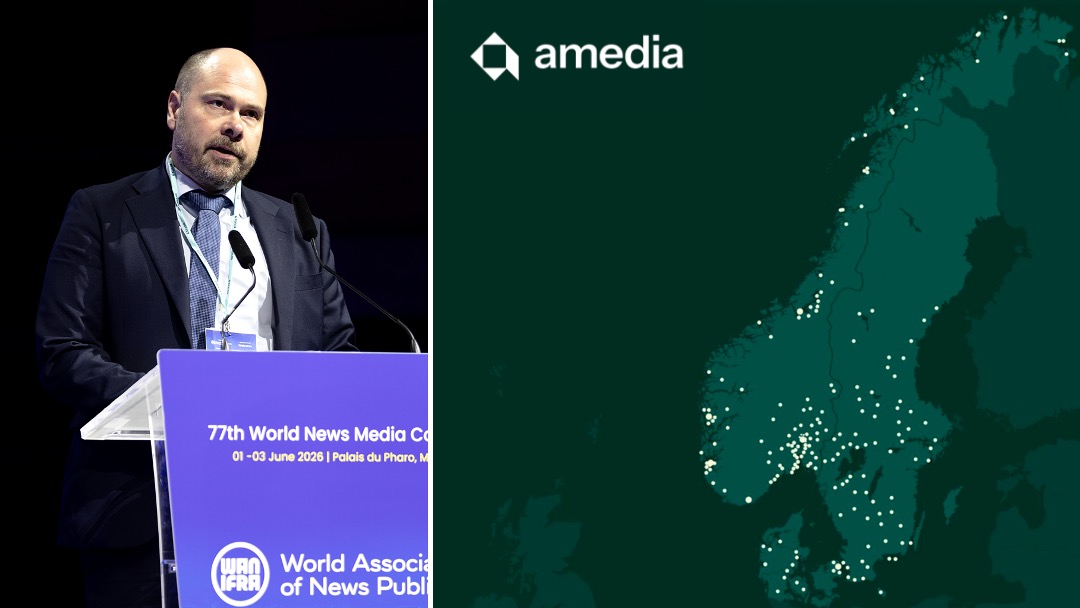
Amedia, Norway’s largest local media publisher, has defied industry trends by proving that long-term strategy—not short-term agility—can deliver sustainable digital subscription success. Fourteen years after facing near-bankruptcy, the company now generates 80% of its subscription revenue from digital products, with 60% of its 850,000 Norwegian subscribers using its bundled +Alt platform. The model, which combines cross-platform content access, first-party data, and revenue-sharing incentives, is now expanding into Sweden and Denmark—demonstrating that its lessons apply beyond Norway’s borders.
Unlike competitors chasing quick fixes, Amedia’s approach was built on three pillars: rejecting industry hype in favor of long-term investments, consolidating technical infrastructure, and creating a unified ecosystem where editorial and commercial teams share both risks and rewards. “We have been extremely loyal to the few decisions that were actually meaningful for us,” Anders Opdahl, Amedia’s CEO, told attendees at the World News Media Congress in Marseille. “And we have never deviated from them.”
The results speak for themselves: Amedia’s portfolio has grown from 70 newspapers in 2019 to nearly 260 titles across Norway, Sweden, and Denmark, with 87% of its pageviews coming from logged-in users—a testament to its data-driven approach. The company’s ability to scale this model internationally suggests a blueprint for media groups grappling with digital transformation in an era of declining print revenues.
Why Amedia’s Strategy Stands Out in a Fast-Changing Media Landscape
Amedia’s success hinges on three verified, data-backed principles that set it apart from peers:
- Long-term focus over short-term hype: The company rejected quick-fix trends, instead investing in a “really strong, consolidated technical backend” and first-party data infrastructure since 2013–2014, according to Opdahl.
- Cross-platform integration: Unlike competitors that synced only technical backends, Amedia extended integration to the frontend—allowing content from one title to appear seamlessly across others, as demonstrated by its +Alt bundle.
- Revenue-sharing incentives: All earnings from the bundled product are distributed back to individual newspapers, ensuring editorial and commercial teams remain aligned with the collective goal.
From Near-Bankruptcy to a Digital Powerhouse: The Crisis That Shaped Amedia’s Strategy
In 2013–2014, Amedia faced a dire financial situation. “We were basically about to go bankrupt,” Opdahl recalled. The company’s survival depended on two radical decisions: charging €20–25 for a digital subscription—a price point set not by market trends but by economic necessity—and then solving the harder problem of delivering enough content value to justify that cost.

This period forced Amedia to prioritize long-term investments over short-term gains. While competitors with stable finances moved cautiously, Amedia took calculated risks, such as:
- Building a unified technical infrastructure to support data collection and user personalization.
- Investing in first-party data, now covering 2.8 million of Norway’s 5.4 million inhabitants.
- Launching +Alt in 2020—a bundled subscription product offering access to over 100 newspapers, live sports (6,000 events annually), and a personalized news feed app.
Opdahl emphasized that the crisis was a catalyst: “Never underestimate the value of a good crisis.” The company’s ability to pivot quickly—while competitors deliberated—proved decisive. By 2019, Amedia had already achieved “quite high success in the digital news media market,” according to Opdahl.
How +Alt Became Norway’s Most Subscribed Digital News Bundle
The launch of +Alt in 2020 marked a turning point. The bundle’s basic tier costs 299 Norwegian kroner (≈€27) per month, while the Premium version—adding live sports and podcasts—costs 349 kroner (≈€32). Today, 60% of Amedia’s 850,000 subscribers in Norway use +Alt, with 80% of subscription revenue now coming from digital products.
Key features that drive adoption include:
- Unified content access: Users can seamlessly switch between titles without logging in repeatedly, thanks to Amedia’s integrated backend.
- Personalized feeds: The app aggregates stories from all titles based on user preferences, leveraging Amedia’s first-party data on 2.8 million Norwegians.
- Sports and multimedia: The Premium tier includes live broadcasts of 6,000 annual sporting events, a major draw for subscribers.
Pricing was another critical factor. Initially set at €20–25 during the crisis, the cost reflected both survival needs and the value proposition Amedia was building. By the time +Alt launched, the company’s digital transformation had already positioned it as a leader in Norway’s media market.
Data and AI: The Backbone of Amedia’s Scalable Model
Amedia’s investment in data has been central to its success. The company now holds first-party data on 52% of Norway’s population—enabling precise user segmentation, personalized content recommendations, and targeted advertising. “We know what the users are doing,” Opdahl noted. “That’s really important when it comes to creating commercial products and advertising.”
This data infrastructure also serves as a strategic asset in negotiations with global AI providers. Amedia’s consolidated backend allows it to leverage its scale when discussing terms with tech giants, ensuring fairer deals for its 260 titles across Norway, Sweden, and Denmark. “One thing is negotiating deals across our media companies toward the global players,” Opdahl said. “But it’s also important to create strong backends and infrastructures to have meaningful discussions.”
The company’s data capabilities extend to identifying regional and national trends, which inform both editorial priorities and commercial strategies. For example, Amedia’s ability to track user behavior across titles has helped refine its bundled offerings, ensuring they meet diverse reader needs.
Revenue Sharing: Aligning Editorial and Commercial Goals
Amedia’s revenue-sharing model is a cornerstone of its success. All earnings from the +Alt bundle are distributed back to the individual newspapers that sell it. This ensures that journalists, editors, and commercial teams are incentivized to support the collective product rather than competing for individual revenue.
“It’s highly important so that the whole organization—journalists, editors, commercial people—are highly incentivized to stand for the whole,” Opdahl explained. The same principle applies to cost distribution, which is based on transparent and fair metrics.
This approach has fostered collaboration across Amedia’s portfolio. While many media groups focus synergy efforts on technical backends, Amedia extends integration to the frontend—allowing content from one title to appear on another’s platform. For example, a reader of a regional newspaper might see relevant national news from Amedia’s broader portfolio without switching platforms.
Expanding Beyond Norway: Sweden and Denmark as Test Cases
Amedia is now testing whether its model can replicate success in other Nordic markets. In 2022, it launched a bundled subscription in Sweden through its co-owned partnership with Bonnier News Local. Early results have been “really, really impressive,” according to Opdahl, though exact figures were not disclosed.

In Denmark, Amedia acquired Berlingske Media in 2024 and plans to introduce the bundling strategy in 2026. The company’s cross-border expansion suggests that its approach is not limited to Norway’s market dynamics but has broader applicability.
“This is a model that works, and it’s not only a Norwegian phenomenon,” Opdahl stated. “It’s a cross-border phenomenon.” The success of +Alt in Sweden—and its planned rollout in Denmark—could serve as a blueprint for media groups globally seeking to monetize digital content.
What This Means for the Future of Media
Amedia’s story offers three key lessons for media organizations navigating digital transformation:
- Crisis can be a catalyst: Amedia’s near-bankruptcy forced it to make bold, long-term investments that now underpin its success.
- Data is the new currency: First-party data enables personalized content, targeted advertising, and stronger negotiations with tech partners.
- Alignment drives adoption: Revenue-sharing and cross-platform integration ensure that editorial and commercial teams work toward shared goals.
As AI and changing consumer habits reshape the media industry, Amedia’s model demonstrates that sustainable growth requires more than chasing trends—it demands a disciplined, data-driven strategy built on collaboration and long-term vision.
What Happens Next for Amedia and the Media Industry?
Amedia’s next major milestone is the 2026 launch of its bundled subscription model in Denmark, following the acquisition of Berlingske Media. The company has not yet disclosed specific targets for Denmark, but early results from Sweden suggest strong potential for cross-border expansion.
For media organizations watching Amedia’s progress, the next steps will likely include:
- Monitoring adoption rates in Sweden and Denmark to assess the model’s scalability.
- Evaluating how Amedia’s data infrastructure and AI negotiations evolve as global tech providers adapt to media-specific needs.
- Exploring whether other European media groups can replicate Amedia’s revenue-sharing approach to foster internal collaboration.
Opdahl’s emphasis on loyalty to core principles—rather than chasing fleeting trends—suggests that Amedia’s strategy will continue to evolve incrementally rather than through disruptive pivots. The company’s ability to turn a crisis into a blueprint offers a rare case study in media resilience.
How do you see Amedia’s model influencing the future of digital media? Share your thoughts in the comments below or discuss this story on X. For more on digital transformation in media, explore our coverage of global media trends.
Related reading