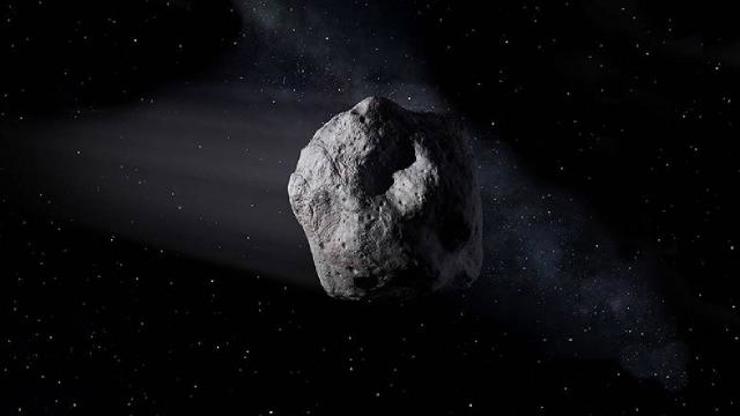
Frequent and intense asteroid bombardment during the Earth’s early history significantly delayed the formation of the planet’s continental crust, according to new research published in the journal Nature. Scientists have determined that these massive impacts effectively “recycled” the surface, preventing the stabilization of landmasses for hundreds of millions of years during the Hadean and Archean eons.
The study, led by researchers at Curtin University in Australia, utilized high-precision analysis of zircon crystals—the oldest known terrestrial materials—to map the timeline of early crustal development. By examining the chemical composition and physical damage within these grains, the team established a correlation between periods of intense extraterrestrial impact and the destruction of nascent geological formations. This finding provides a definitive answer to a long-standing debate in planetary science regarding why the geological record of Earth’s first 500 million to 1 billion years remains so fragmented.
The Role of Impact Cratering in Crustal Evolution
For decades, geologists have struggled to reconcile models of early Earth evolution with the scarcity of preserved crust from the planet’s infancy. The research team, led by Dr. Simone Marchi of the Southwest Research Institute and colleagues, suggests that the “Late Veneer” and subsequent heavy bombardment phases were far more destructive than previously estimated. According to the study published in Nature Geoscience, these impacts did not merely crater the surface; they caused widespread melting and tectonic disruption that effectively “reset” the crustal clock.
The researchers focused on the zircon record, which acts as a durable time capsule. Because zircon crystals are exceptionally resistant to weathering and thermal metamorphism, they survive even when the surrounding host rock is destroyed. By identifying a distinct lack of zircon formation during periods of peak bombardment, the team confirmed that the crust was being pulverized faster than it could solidify and thicken into stable continental platforms. This process, often described as “crustal recycling,” meant that the Earth was essentially a global magma ocean or a highly unstable, fractured surface for much longer than standard cooling models previously suggested.
Understanding the Zircon Evidence
Zircon crystals are essentially the “DNA” of early Earth. As tiny, chemically robust minerals, they incorporate trace elements like uranium that allow for precise isotopic dating. The researchers analyzed data from sites across Western Australia, including the Jack Hills region, which is home to some of the oldest terrestrial minerals discovered to date. By comparing the age distribution of these crystals against known impact signatures in the inner solar system, the study provides a robust framework for understanding the planet’s transition from a volatile, molten state to one capable of supporting stable landmasses.

The impact of these findings extends beyond mere geology. The timing of continental formation is intrinsically linked to the development of the atmosphere, the oceans, and eventually, the conditions necessary for life. If the continents were delayed by hundreds of millions of years due to asteroid strikes, it implies that the chemical weathering cycles—which help regulate Earth’s climate—also faced a significant delay. This challenges previous assumptions about how quickly the Earth became a habitable environment following its initial accretion 4.5 billion years ago.
Comparing Planetary Histories
The research also highlights a significant contrast between Earth and its neighbors. While Mars and the Moon bear visible scars of the same heavy bombardment period, Earth’s active plate tectonics and water-driven erosion have largely erased the physical craters. Consequently, the geological community has had to rely on indirect proxies like zircon chemistry to “see” the impact history. This study demonstrates that Earth was not an exception to the bombardment; rather, it was a participant that actively hid the evidence through its own internal geological activity.
According to data from the National Aeronautics and Space Administration (NASA), the early solar system was characterized by a chaotic environment where planetesimals were frequently redirected into the inner planets. The researchers argue that the intensity of this “bombardment” was sufficient to keep the Earth’s surface in a state of constant flux, preventing the formation of thick, buoyant crustal plates—the prerequisites for the modern continental system.
Future Directions in Geochronology
The next phase of this research involves refining the impact models to determine if specific types of asteroids—such as those originating from the outer solar system—had a more significant role in crustal destruction than those from the inner asteroid belt. Geologists are now planning further field campaigns to sample under-studied regions in Greenland and Canada, where remnants of the early crust may still be preserved in deep-seated rock formations.

As the scientific community continues to analyze these findings, the focus will shift toward integrating this data into global climate models of the Hadean Earth. Understanding the exact duration of this “bombardment delay” is essential for determining when the planet became cool enough to support liquid water on a global scale. Researchers are scheduled to present updated findings at the upcoming Goldschmidt Conference, where further isotopic analysis of lunar and terrestrial samples will be compared to solidify this timeline.
Readers interested in following the progress of this geological investigation can monitor the Geological Society of America for upcoming bulletins and peer-reviewed updates on early Earth crustal evolution. We invite our readers to share their thoughts on these findings in the comments section below.
Worth a look
- Twitch Backlash Erupts After Revealing Amazon Trained AI on Streamers’ Content by Default
- Doom Developer id Software Slams Xbox Leadership After Brutal Layoffs
- Dawn of War 4 Release Date Delayed: What to Expect from the Refining Process – Warhammer 40k Strategy Game Update” “Dawn of War 4 Launch Delayed: How the Game’s Delay Will Affect Fans – Warhammer 40k Strategy Game News” “Warhammer 40k Strategy Game Dawn of War 4 Delayed to Refine Experience Ahead of Release – Gaming News Update” “Dawn of War 4 Delayed: What the Delay Means for the Upcoming Warhammer 40k Game – Strategy Game Release News (archyworldys.com)
- Flushing Adult Daycare Owners Bill Medicaid Millions While Donating to Kathy Hochul (newsdirectory3.com)