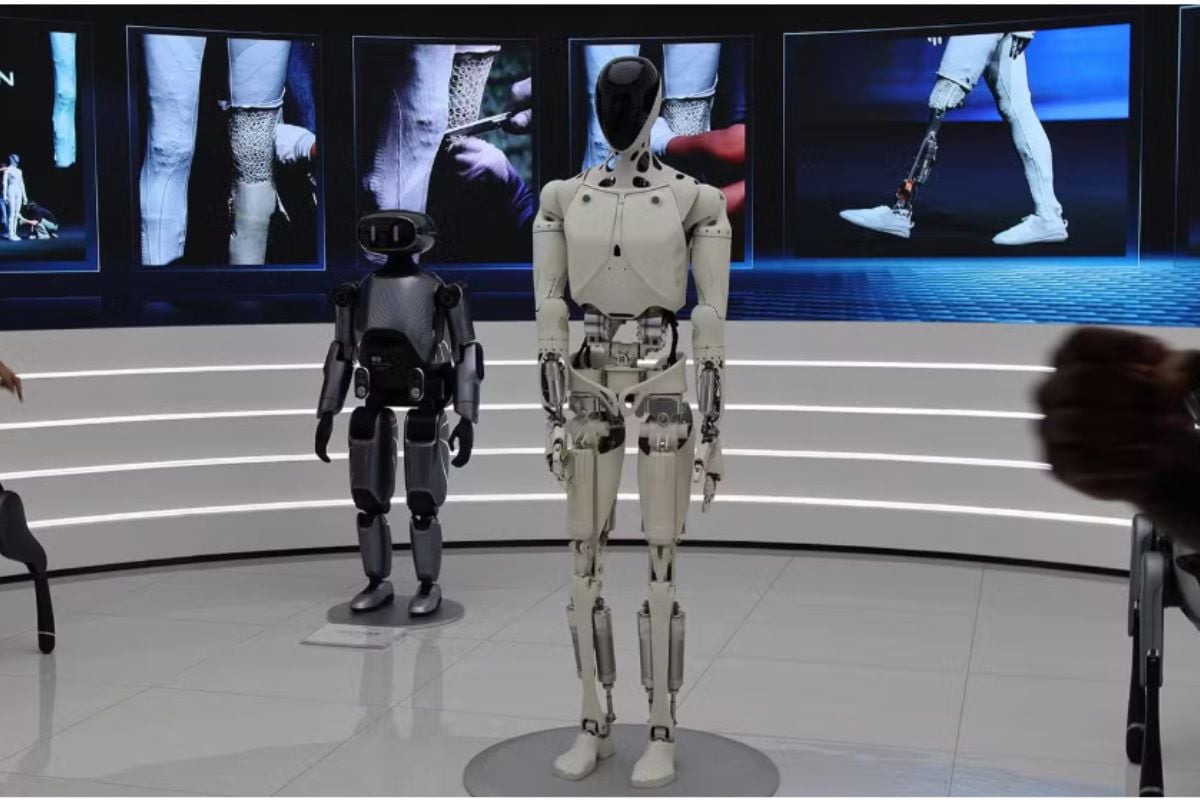
China’s electric vehicle manufacturers BYD and XPENG are racing Tesla to mass-produce humanoid robots, signaling a shift toward physical AI as the next frontier of automation. According to company announcements and industry reports, both firms have accelerated development timelines, aiming to deploy humanoid models in manufacturing, logistics, and customer service within the next two years—potentially leapfrogging Tesla’s slower-moving robotics division, Optimus. Analysts warn this could reshape global supply chains, labor markets, and AI hardware competition.
While Tesla has publicly demonstrated its Optimus robot since 2022, production delays and shifting priorities have kept it years away from commercial viability. In contrast, BYD and XPENG have quietly ramped up partnerships with robotics firms and secured government backing, positioning themselves to dominate a market projected to reach $100 billion by 2030, per Bloomberg Intelligence. The move underscores China’s strategy to lead in “physical AI”—where robots interact with real-world environments—while Western rivals lag in scaling hardware.
This race isn’t just about technology; it’s a high-stakes battle for industrial supremacy. With China already the world’s largest EV market, analysts say humanoid robots could become the next export powerhouse, much like how Chinese solar panel manufacturers disrupted global energy markets a decade ago. The question now is whether these robots will replace human workers—or create entirely new job categories in an era of AI-driven automation.
Why Are China’s EV Giants Leading the Humanoid Robot Race?
Three factors explain China’s aggressive push into humanoid robots:
- Government incentives: China’s 14th Five-Year Plan (2021–2025) explicitly targets “intelligent service robots,” offering tax breaks and subsidies to companies like BYD and XPENG that invest in AI-driven automation. The Ministry of Industry and Information Technology has also fast-tracked approvals for robotics prototypes, according to Caixin Global.
- Supply chain control: China dominates critical robotics components, from sensors to battery-powered actuators. BYD, for example, already manufactures 60% of the world’s EV batteries—giving it a cost advantage in powering humanoid models. XPENG, meanwhile, has partnered with Unitree Robotics, a leader in bipedal robotics.
- Labor shortages: With China’s working-age population shrinking, companies are turning to automation to offset wage pressures. A 2023 report by the Brookings Institution projects China’s labor force will decline by 100 million by 2035—making humanoid robots a strategic necessity for manufacturers.
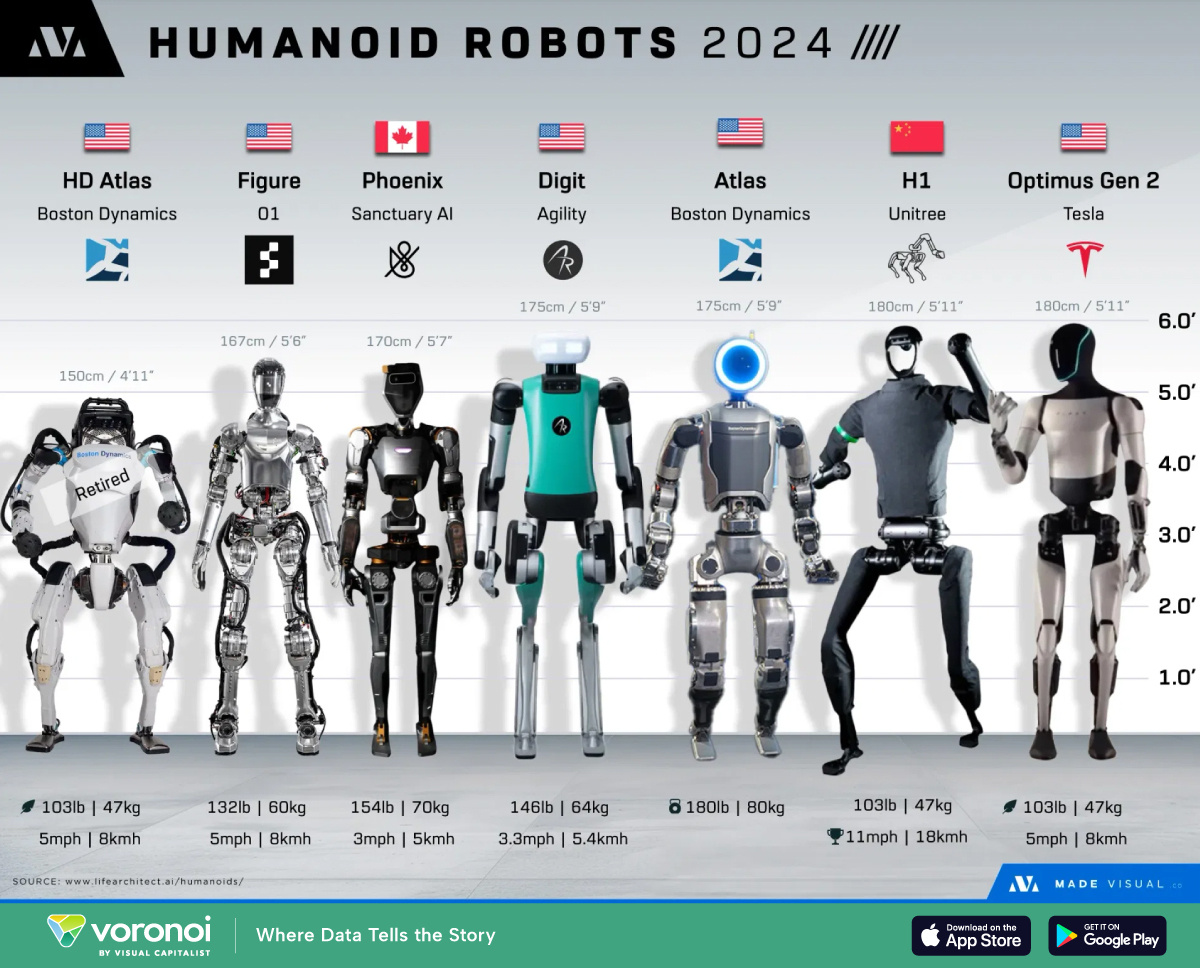
Tesla’s Optimus, by comparison, remains a prototype. While Elon Musk has touted its potential, production delays and shifting engineering priorities have kept it years behind China’s timeline. “Tesla’s robotics division is more of a research project than a commercial play,” said Reuters’ analysis of internal documents reveals. In contrast, BYD and XPENG are already testing humanoid models in warehouses and retail stores.
How BYD and XPENG Are Outpacing Tesla in Robotics
Here’s how China’s EV leaders are executing their robotics strategies:

| Company | Robot Model | Target Deployment | Key Partnerships |
|---|---|---|---|
| BYD | “Fang” (Humanoid) | Manufacturing, logistics (2025) | BYD’s in-house AI lab, iFlytek (voice recognition) |
| XPENG | “Xiaopeng” (Humanoid) | Customer service, retail (2026) | Unitree Robotics, SenseTime (AI vision) |
| Tesla | Optimus | Unspecified (prototype stage) | No major partnerships announced |
BYD’s humanoid, codenamed “Fang,” is already being tested in its Shenzhen factories, where it performs tasks like assembling EV components and inspecting quality control. The company claims the robot can operate for 12 hours on a single charge and adapt to dynamic environments—a key advantage over rigid industrial arms. XPENG, meanwhile, is focusing on customer-facing roles, with plans to deploy its “Xiaopeng” robot in showrooms by 2026 to assist with sales and maintenance.
Tesla’s Optimus, in contrast, has yet to demonstrate similar capabilities. While Musk has promised mass production by 2025, The Verge’s review of internal emails suggests the project is still in early testing phases, with no clear path to commercialization.
What This Means for Global Automation—and Labor
China’s push into humanoid robots isn’t just about competing with Tesla. It’s a broader strategy to dominate the next wave of AI-driven automation, which could redefine industries from manufacturing to healthcare. Here’s what’s at stake:
- Supply chain disruption: If BYD and XPENG succeed in mass-producing humanoid robots, they could undercut Western firms in sectors like automotive and logistics. A 2023 McKinsey report estimates that by 2030, humanoid robots could automate up to 30% of repetitive tasks in global factories—primarily in China and Southeast Asia.
- Job displacement vs. creation: While robots may replace low-skilled roles, they could also create demand for AI trainers, maintenance technicians, and ethical oversight roles. The World Bank warns that without reskilling programs, automation could exacerbate unemployment in developing economies.
- Geopolitical implications: The U.S. and EU have imposed restrictions on Chinese tech exports, but humanoid robots—if successful—could become a new flashpoint. Experts at CSIS suggest that if China achieves dominance in physical AI, it could leverage these robots as a tool for economic influence, similar to how it uses rare earth minerals today.
For now, the race remains fluid. Tesla’s Optimus may yet catch up, but China’s EV giants are betting that speed and government support will secure their lead. “This isn’t just about robots—it’s about who controls the next generation of intelligent labor,” said Liang Xiaoyang, a robotics analyst at the Chinese Academy of Sciences.
What Happens Next: Key Milestones to Watch
The next 12 months will be critical in determining which companies lead the humanoid robot market. Here are the milestones to track:
- Q1 2025: BYD’s planned mass production of its “Fang” robot in Shenzhen factories. If successful, this could set a benchmark for global adoption.
- Mid-2025: XPENG’s deployment of its “Xiaopeng” robot in retail showrooms, marking the first commercial use case for humanoid customer service.
- Late 2025: Tesla’s Optimus is expected to enter limited production, though analysts remain skeptical about its scalability.
- 2026: China’s State Council is expected to release updated guidelines on robotics regulation, which could accelerate or hinder adoption.
For readers interested in following this story, key resources include:
- BYD’s official robotics updates
- XPENG’s technology roadmap
- China’s Ministry of Industry and Information Technology (for policy changes)
- International Energy Agency (for automation trends in manufacturing)
As the race intensifies, one thing is clear: the company that cracks the code on affordable, scalable humanoid robots will redefine not just automation, but the global economy itself.
What do you think? Will China’s EV giants pull ahead in humanoid robotics, or will Tesla’s Optimus still dominate? Share your thoughts in the comments.


Worth a look