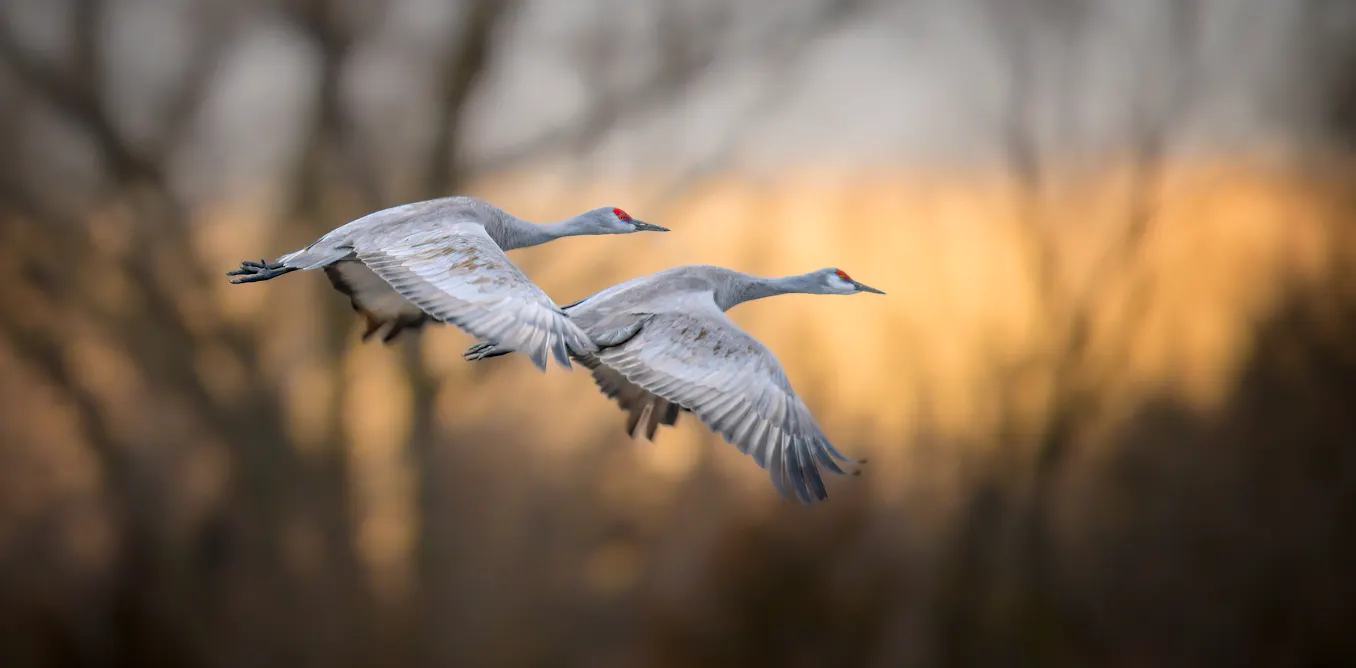
Spring migration has begun, but birds across North America are facing challenges as rising temperatures alter the timing of seasonal events, according to research by Morgan Tingley, a professor of ecology and evolutionary biology at the University of California, Los Angeles. Birds that rely on precise environmental cues to time their journeys are increasingly arriving at breeding grounds out of sync with local ecosystems, risking population declines and broader ecological consequences.
Tingley’s work, supported by the U.S. National Science Foundation, highlights how climate change is causing spring to happen earlier, creating mismatches between migratory birds and the availability of food and nesting resources. “About 70% of the bird species found in the United States are migratory. Some migrate just 50 to 100 miles, and others migrate all the way from the farthest tip of South America in order to breed in Canada. Our work has found that the birds that migrate the farthest are the ones that are having the hardest time keeping up with climate change,” Tingley explained.
Rising Temperatures and Migratory Disruptions
For migratory birds, earlier springs can result in birds falling behind local springtime because they arrive too late on their breeding grounds. “They try to time their migration so that they can arrive at their breeding grounds, build their nests and lay their eggs at the time of year when there’s going to be maximum food available,” Tingley said. “When the timing is off, it could mean that there’s not enough food available for their young, or it could be that they’re more susceptible to really extreme summer temperatures.”

Whether it is high temperatures or missing peak insect food, birds that are out of sync with the seasons may respond by laying fewer eggs or suffering reduced hatch success. Once the eggs hatch, the birds might not be able to raise as many young.
Long-Distance Migrants Struggle More
Research by Tingley reveals that long-distance migrants are having the hardest time keeping up with climate change. “If you’re a bird living in Argentina and then migrating all the way to New York in the springtime, the temperatures and seasons in Argentina versus New York are going to be very disconnected from each other,” Tingley explained. “So a bird in Argentina might not actually have the information it needs to arrive on time and keep up with the local pace of a changing climate in New York.”
As a result, when birds become mismatched with climate and changing seasons, it can lead to population declines. In North America, many bird populations have declined over the past 40 years.
Consequences for Ecosystems and Humans
Population declines in migratory birds have cascading effects on ecosystems. Birds can be key pollinators, important seed dispersers and critical consumers of insect pests.
Additionally, birds generally make people happy, and recent work has shown that bird-watching can help prevent mental decline in older adults.
What Can Be Done?
Wildlife managers are trying to sustain bird populations as much as possible and help them grow. Tingley emphasized the importance of conserving land to keep populations high.
Individual actions also matter. Simple steps like keeping pets indoors and installing bird-friendly glass can mitigate threats and allow birds to adapt to this changing world as best as they possibly can.
Looking Ahead
As climate change accelerates, the need for adaptive conservation strategies grows. “A lot of the greatest effects of climate change are not in the past. They’re going to happen in the future,” Tingley said. “These effects are coming next year, or five years from now, or 10 years from now.”