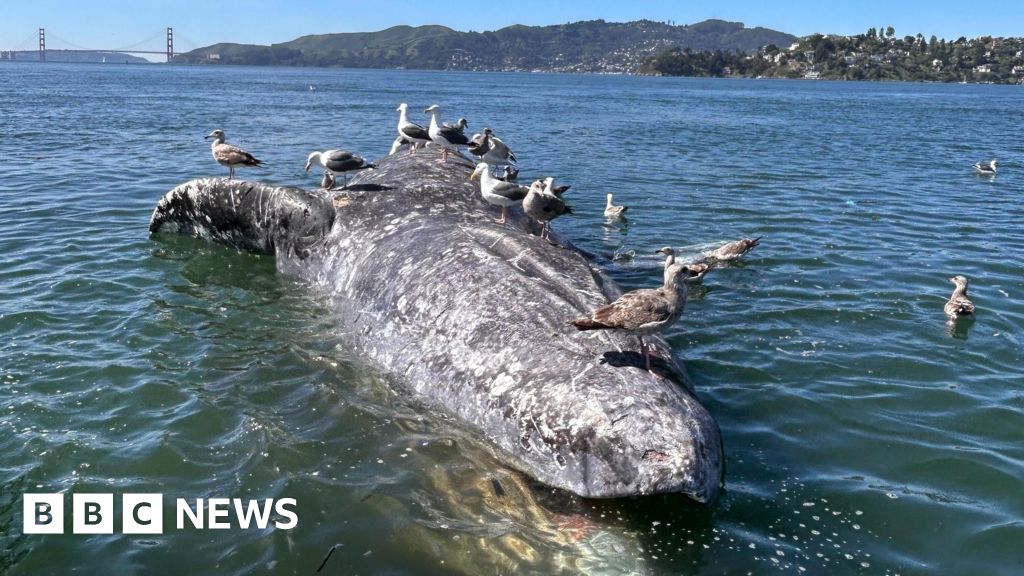
Gray whales washing up dead along the shores of San Francisco Bay have raised urgent questions among marine scientists and conservationists. In recent months, an unusual number of emaciated carcasses have been found, prompting investigations into whether climate change, shifting food sources, or other environmental stressors are disrupting one of the ocean’s most remarkable migrations. Researchers from the National Oceanic and Atmospheric Administration (NOAA) and local institutions are working to understand what is behind this troubling trend.
The eastern North Pacific gray whale population, which migrates annually from feeding grounds in the Arctic to breeding lagoons in Baja California, has long been considered a conservation success story after recovering from near-extinction due to whaling. However, since 2019, scientists have documented an Unusual Mortality Event (UME) affecting this population, with hundreds of whales stranding along the West Coast of North America. The San Francisco Bay area, while not a primary stranding hotspot, has seen a notable increase in deaths, drawing attention to localized changes in ocean conditions that may be affecting the whales’ ability to feed and survive.
Dr. Sue Moore, a marine mammal scientist formerly with NOAA’s Alaska Fisheries Science Center, explained that gray whales are particularly vulnerable to shifts in their prey base because they rely heavily on benthic amphipods—small, shrimp-like creatures living in Arctic seabed sediments. “When the ice retreats earlier or doesn’t form as expected, it changes the timing and availability of the food they need to build up blubber for their long journey,” she said in a 2023 interview with NOAA Fisheries. “If they don’t get enough to eat in the summer, they start their migration already weakened.”
Recent satellite data from the National Snow and Ice Data Center shows that Arctic sea ice extent has been declining at a rate of about 13% per decade relative to the 1981–2010 average, with 2023 marking one of the lowest summer extents on record. This loss of ice affects not only the timing of algal blooms that feed amphipods but also the physical access whales have to feeding grounds. Scientists at the University of California, Santa Cruz’s Institute of Marine Sciences have noted that warmer water temperatures may also be altering the distribution and abundance of prey species, forcing whales to expend more energy to find food.
In addition to nutritional stress, researchers are examining other potential contributors to the strandings, including entanglement in fishing gear, vessel strikes, and exposure to pollutants. The Marine Mammal Center in Sausalito, which responds to strandings along the Northern California coast, has conducted necropsies on several gray whales found near San Francisco Bay. While many showed signs of emaciation, some also had evidence of human interaction, such as propeller wounds or gear scars. However, officials emphasize that not all deaths can be attributed to direct human causes, and underlying health conditions often play a role.
Dr. Padraig Duignan, Chief Pathologist at the Marine Mammal Center, noted in a 2022 report that while trauma from ships or fishing gear is identifiable in some cases, “a significant number of whales we examine are in poor body condition, suggesting they were unable to meet their energetic needs.” He added that linking strandings to climate change requires careful analysis, as multiple stressors often interact. “It’s rarely just one thing,” he said. “It’s the combination of reduced food availability, longer migration routes due to shifting ice, and possibly increased disease susceptibility that creates a perfect storm.”
The timing of these deaths also raises questions about changing migration patterns. Traditionally, gray whales pass through California waters between December and May, with peak sightings in January and February as they head south, and again in March through May on their return north. However, anecdotal reports from whale watchers and researchers at San Francisco State University’s Estuary & Ocean Science Center suggest that some whales are appearing earlier or later than expected, possibly due to altered cues from warming waters or changes in prey distribution.
While the UME investigation continues, NOAA has urged the public to report any sightings of distressed or dead marine mammals to the West Coast Marine Mammal Stranding Network. The agency also advises boaters to maintain a safe distance from whales to reduce the risk of collisions, especially in high-traffic areas like the Golden Gate and San Francisco Bay entrance. Educational outreach efforts by groups such as the Gulf of the Farallones National Marine Sanctuary aim to increase awareness about how climate change affects marine life and what individuals can do to support conservation.
Scientists stress that while the current situation is concerning, it also presents an opportunity to learn more about how marine ecosystems respond to environmental change. Long-term monitoring programs, such as those conducted by the Scripps Institution of Oceanography and the Pacific Marine Environmental Laboratory, are collecting data on ocean temperature, salinity, and productivity to better understand the broader context of these strandings. Researchers hope that by connecting offshore conditions with coastal observations, they can improve predictions about future risks to gray whales and other marine species.
As of the latest update from NOAA’s Office of Protected Resources, the UME investigation remains active, with no definitive conclusion yet reached about the primary causes of the increased mortality. The next scheduled review of stranding data and preliminary findings is expected in early 2025, when experts will convene to assess trends and consider potential management responses. Until then, monitoring teams along the California coast continue their work, documenting each stranding with the hope that the accumulated evidence will eventually point toward clearer answers.
Understanding why gray whales are dying in San Francisco’s waters is not just about one species—it reflects broader challenges facing ocean health in a warming world. For readers interested in following developments, NOAA’s UME webpage and the Marine Mammal Center’s stranding blog provide regular updates. Staying informed and supporting science-based conservation efforts are meaningful ways to engage with this ongoing story.
Keep reading