The pursuit of fairness in game design is a surprisingly complex undertaking. Players crave challenge, but are easily frustrated by perceived unfairness, particularly when randomness is involved. Developers often walk a tightrope, attempting to create systems that *feel* equitable even if they aren’t strictly adhering to the laws of probability. This delicate balance was recently highlighted by revelations about how both the acclaimed strategy game XCOM and the recently shuttered superhero comedy game Dispatch subtly manipulated random number generation (RNG) to enhance player experience.
The discussion resurfaced following the unexpected closure of Midsummer Studios, the development team behind Dispatch, and a post from its creative lead, Jake Solomon, sharing a glimpse of the game and its underlying mechanics. Solomon, previously renowned for his work on the XCOM franchise at Firaxis Games, explained that his new studio adopted a similar approach to Firaxis, subtly influencing the odds to create a more enjoyable experience for players. This practice, initially popularized by XCOM, demonstrates a growing awareness within the industry of the psychological impact of randomness in gaming.
The XCOM Precedent: Cheating to Feel Fair
The original XCOM, released in 1994, was known for its unforgiving difficulty and reliance on chance. When Firaxis rebooted the series with XCOM: Enemy Unknown in 2012, they faced the challenge of modernizing the gameplay even as retaining the strategic depth that fans loved. Though, early player feedback revealed a common complaint: the game felt unfairly difficult, with seemingly impossible misses occurring with frustrating frequency. Players accused the game of “cheating” against them, even suggesting that lead designer Jake Solomon was personally manipulating the RNG.
As it turned out, the accusations weren’t entirely unfounded. While Solomon wasn’t actively sabotaging players, Firaxis *was* subtly adjusting the probabilities behind the scenes. A detailed analysis posted on Reddit in 2016 revealed that XCOM 2, the sequel, actively boosted the player’s chances of success, particularly on lower difficulty levels. The reasoning was simple: true randomness can feel unfair, and a little bit of “cheating” in the player’s favor could make the game more enjoyable without sacrificing strategic depth. This meant that, for example, a shot with a 95% hit chance was more likely to succeed than a purely random calculation would dictate.
Dispatch’s Approach: A Superheroic Tilt
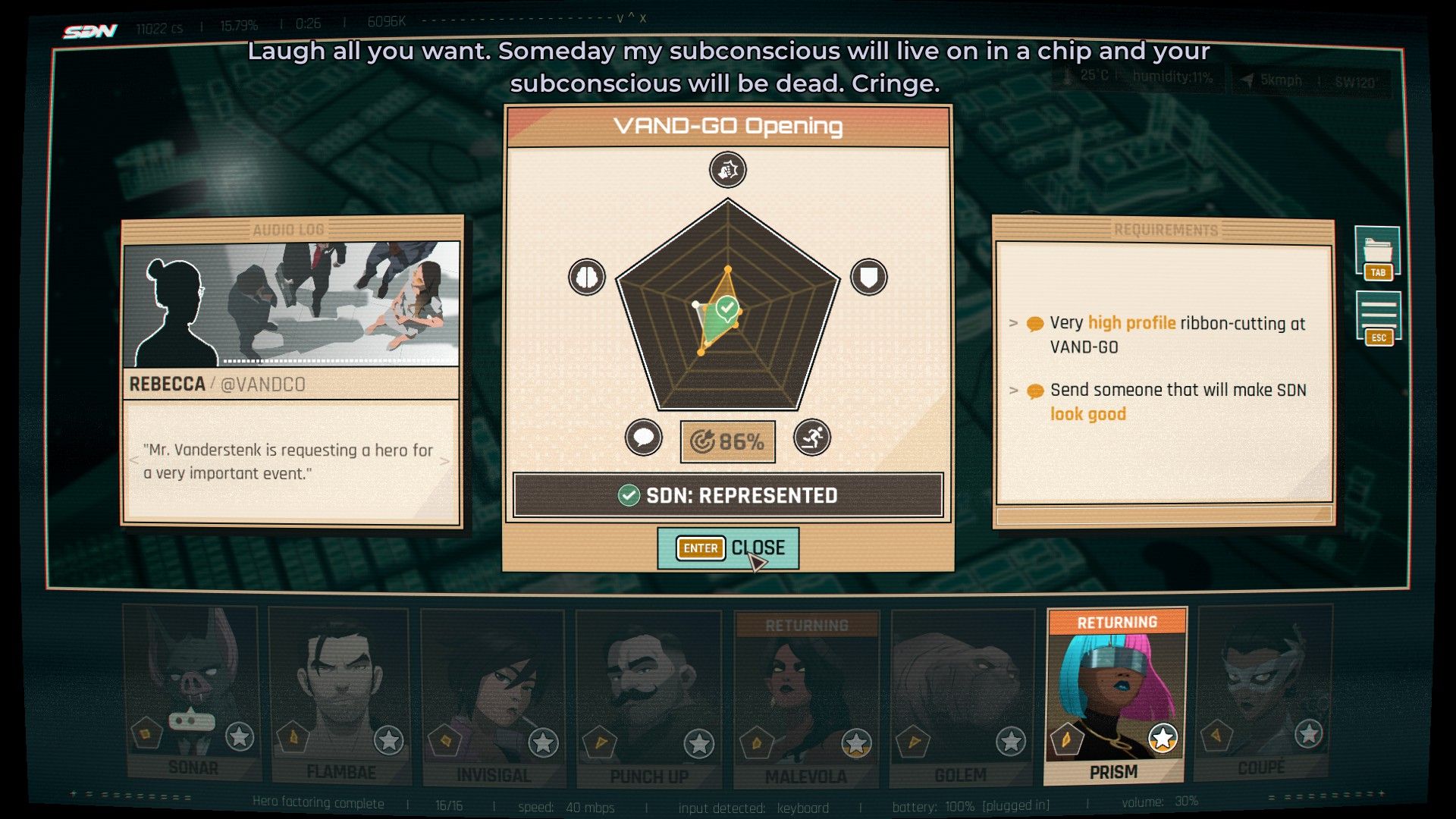
Dispatch, a narrative-driven superhero comedy game developed by Midsummer Studios, took a similar approach to managing player frustration. The game features a dispatching minigame where players assign heroes to missions based on their abilities, with each assignment having a percentage chance of success. According to a presentation by directors Nick Herman and Dennis Lenart at the Game Developers Conference (GDC), the team deliberately tweaked the RNG to ensure a smoother experience.
Herman explained that they were aware of the techniques used in XCOM and sought to replicate them. “We knew that there were some tools to mitigate these frustrating experiences, like missing a 99-percenter,” he said. “As any hardcore XCOM fan knows, one of the tricks Firaxis implemented was to secretly boost the numbers behind the scenes so that it felt fair, even if it was unearned. Those guys are pretty smart, so we thought we’d do the same.”
The team tested several variations before settling on a system where any mission with a greater than 76% chance of success would automatically succeed. However, they too implemented a safeguard to prevent players from becoming overly reliant on this “auto-win” mechanic. After three successful missions boosted by this system, the auto-win was temporarily disabled, restoring the game to true random odds. This ensured that players still experienced the thrill of overcoming challenging odds, while also mitigating the frustration of repeated failures.
Dispatch also subtly increased the minimum success chance for low-probability missions. Any assignment with a chance of success between 1% and 14% was automatically bumped up to 15%. This prevented players from feeling completely helpless in hopeless situations, while still maintaining a sense of risk and reward.
The Finale: Removing the Training Wheels
Interestingly, Midsummer Studios didn’t maintain this manipulated RNG throughout the entire game. For the final episode of Dispatch, when the stakes were at their highest and the city was facing a major crisis, the developers deliberately disabled all of these “invisible helpers.” Lenart explained that this was a conscious decision to increase the tension and challenge. “For the first time in the entire season the training wheels are off, the result of which is that the game feels a lot harder at base level, which is exactly what we wanted from our finale.”
This approach highlights a key understanding of game design: manipulating randomness isn’t about eliminating challenge, but about managing player perception. By subtly influencing the odds, developers can create a more enjoyable and engaging experience, while still preserving the strategic depth and sense of accomplishment that players crave. The decision to remove these assists during the finale served to emphasize the gravity of the situation and provide a truly climactic experience.
The Closure of Midsummer Studios and Jake Solomon’s Journey
Despite the positive critical reception of Marvel’s Midnight Suns, a tactical RPG released prior to Dispatch, sales were reportedly muted. This, coupled with Solomon’s desire to explore new creative avenues, led to his departure from Firaxis in May 2024, as reported by Video Games Chronicle. He subsequently founded Midsummer Studios with the intention of developing a “next-generation entry to the life sim genre.”
However, just 21 months later, Midsummer Studios announced its closure and the apparent cancellation of its life simulation project on February 20, 2026, as detailed by IGN. Solomon shared a trailer of the unfinished game, dubbed “Burbank,” describing it as a blend of “Life Sims + The Truman Display,” emphasizing its focus on player storytelling. The closure underscores the inherent risks of independent game development, even for seasoned industry veterans.
Solomon’s career trajectory is a testament to his innovative spirit and willingness to experiment. From revolutionizing the turn-based strategy genre with XCOM to attempting to redefine the life simulation genre with Burbank, he has consistently pushed the boundaries of game design. His willingness to openly discuss the manipulation of RNG, and the reasoning behind it, provides valuable insight into the often-invisible forces that shape our gaming experiences.
The story of Dispatch and Midsummer Studios serves as a reminder that even the most talented developers can face unforeseen challenges. While the studio may be gone, the lessons learned from its brief existence – particularly the importance of managing player perception and the delicate balance between randomness and fairness – will undoubtedly influence game design for years to come.
The industry will be watching closely to see what Jake Solomon does next. His departure from Firaxis and the subsequent closure of Midsummer Studios have left many wondering what the future holds for this influential game designer. Further updates on Solomon’s future projects are expected in the coming months.
What are your thoughts on developers subtly manipulating RNG to improve player experience? Share your opinions in the comments below, and be sure to share this article with your fellow gamers!