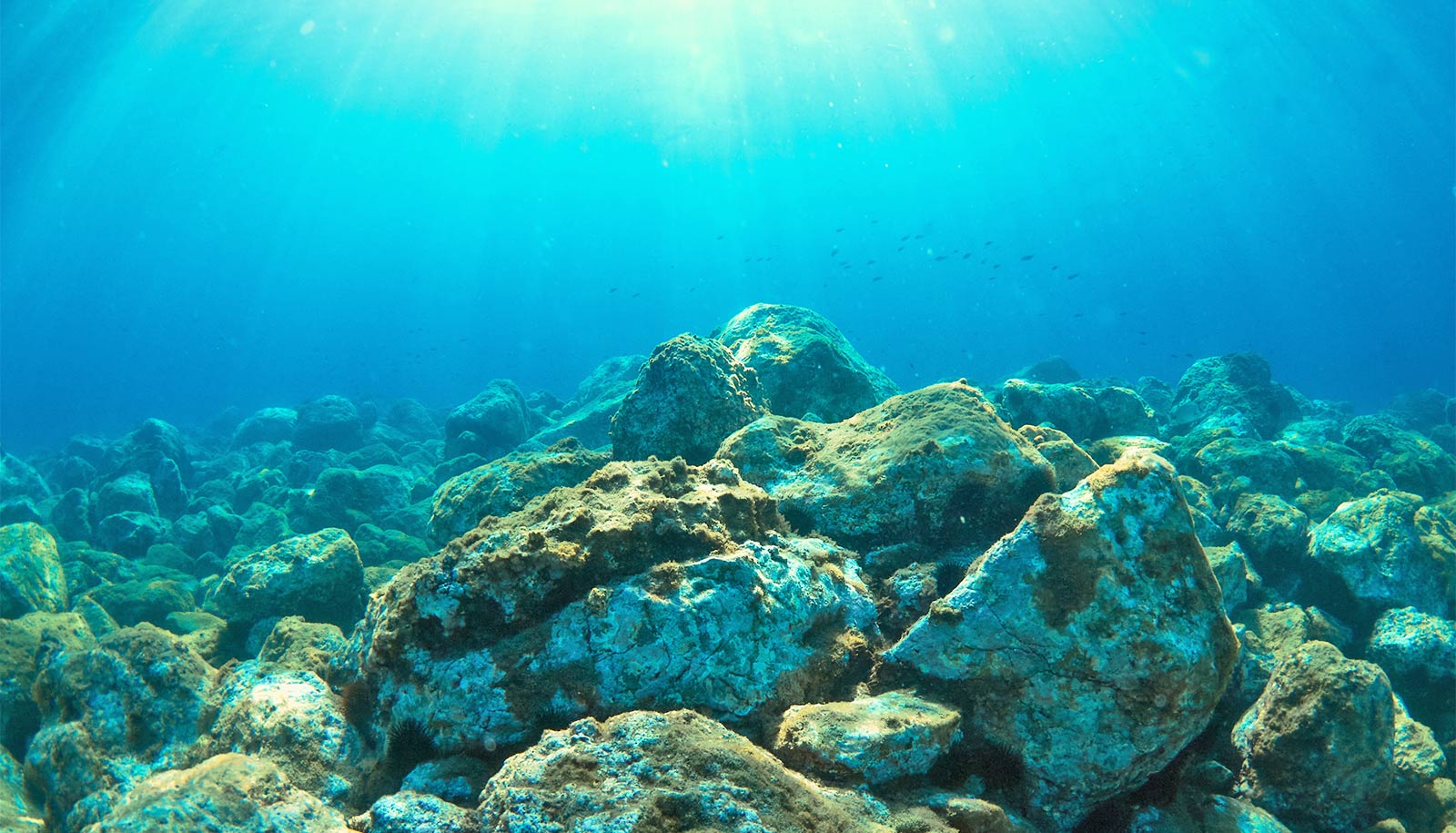
In the quiet, shifting sands of the deep past, the story of life on Earth took a turn that would eventually lead to the complex biodiversity we recognize today. For years, the scientific consensus regarding the earliest eukaryotes—the domain of life that includes animals, plants, and fungi—suggested these organisms thrived in the open water column, much like their modern planktonic counterparts. However, recent geological and geochemical analysis of ancient rock deposits is challenging this narrative, pointing to a much more grounded origin for our early ancestors: the seafloor.
New research published in the journal Nature indicates that these primitive, single-celled organisms were not drifting through the open ocean but were instead restricted to the seafloor for millions of years. By studying microfossils preserved in the McArthur and Birrindudu basins of Australia, researchers have begun to piece together a clearer picture of where these organisms lived, how they interacted with their environment, and when they began to demand oxygen to survive. This discovery helps resolve a long-standing mystery in evolutionary biology: why, despite the early emergence of eukaryotic life, the group remained relatively stagnant in diversity for nearly a billion years.
Rewriting the Evolutionary Map
The study, led by paleontologists at the University of California, Santa Barbara (UCSB), marks a significant shift in our understanding of early life. For decades, the conventional wisdom held that eukaryotes, characterized by their membrane-bound organelles and complex cell structures, were likely oxygen-breathing organisms that occupied the water column early in their history. “We found that the oldest eukaryotes that we’ve seen so far already needed oxygen in some capacity,” explains Dr. Leigh Anne Riedman, a paleontologist at UCSB and co-lead author of the research. Her work, alongside senior author Professor Susannah Porter, reveals that these organisms were essentially “seafloor dwellers” long before they ever ventured into the broader, oxygen-rich surface waters.

The research team focused on sediment layers dating back between 1.75 and 1.4 billion years. During this era, the region now known as Australia’s Northern Territory was a shallow, inland sea. By analyzing the mineral composition of the surrounding rock—specifically the presence or absence of iron pyrite and other metal elements like vanadium and molybdenum—the researchers were able to reconstruct the oxygen levels of these ancient environments. Their findings suggest that these early eukaryotes were constrained to oxygenated seafloor environments, likely because that was the only place where the necessary, albeit patchy, oxygen was available.
The Mystery of the Billion-Year Stagnation
One of the most compelling aspects of this research is its potential to explain the “boring billion,” a period in Earth’s history where eukaryotic diversity remained remarkably low. If these organisms were strictly tied to the seafloor, their geographic and environmental range would have been severely limited, preventing the rapid diversification that might have occurred had they colonized the open ocean earlier. “The fossils that are 800 million years old, and the ones 1.7 billion years old are, for the most part, the same cast of characters,” note the researchers, highlighting a surprising lack of evolutionary change over an immense span of time.

This period of limited expansion only began to shift after the dramatic climate events of the Cryogenian period, approximately 720 to 635 million years ago. As the planet emerged from this “Snowball Earth” phase, massive environmental shifts likely cleared out old ecological niches, paving the way for the emergence of complex, multicellular life during the Ediacaran Period. This transition from a restricted, seafloor-bound existence to a more global distribution is a fundamental piece of the puzzle regarding how complex life eventually dominated the planet.
Mitochondria and the Engine of Complexity
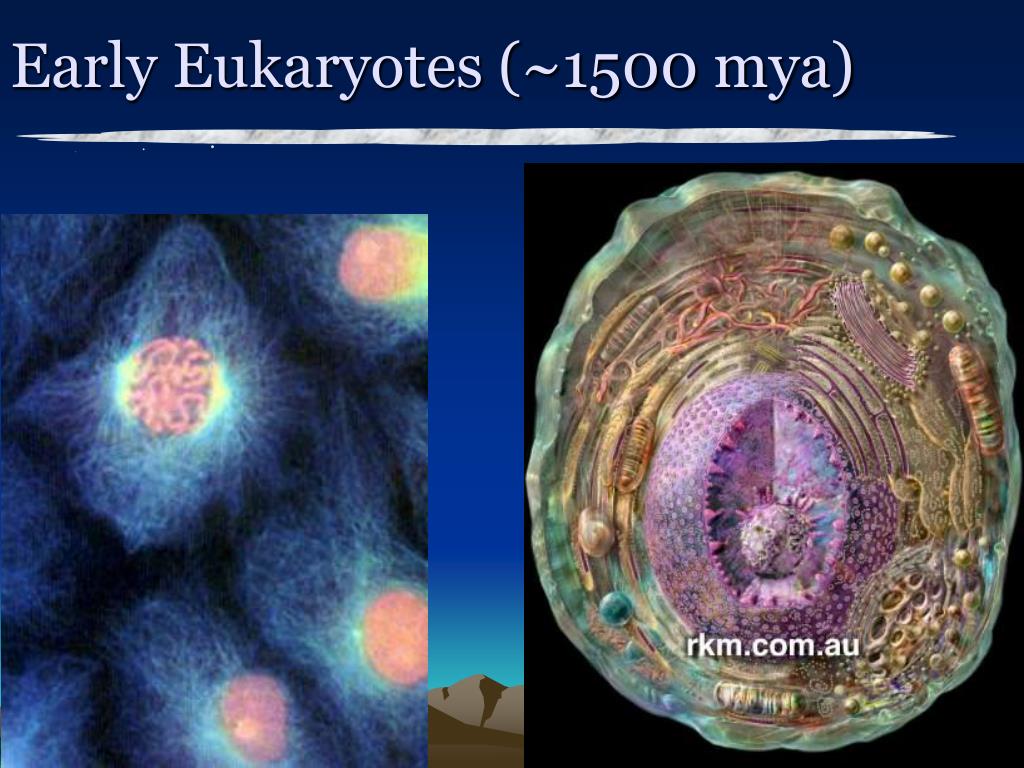
The study also provides insight into the acquisition of mitochondria, the “powerhouse” of the cell. The leading scientific theory posits that these organelles were once free-living bacteria that were incorporated into a host cell. The fact that early eukaryotes were clustered on the seafloor suggests they were in constant, close proximity to other organisms, a condition that would have facilitated this symbiotic event. This acquisition of mitochondria likely provided the energy boost necessary for these cells to develop the complex morphology observed in fossils as old as 1.75 billion years.
While this research clarifies much about our early origins, the work is far from finished. The team, which includes collaborators from McGill University and is supported by organizations like the Simons Foundation and the Gordon and Betty Moore Foundation, continues to examine even older rock layers. Their goal is to look back further in time to identify the specific moment when these organisms attained the level of sophistication seen in the McArthur and Birrindudu samples.
Key Insights into Early Eukaryotic Life
- Seafloor Origins: Evidence suggests the earliest eukaryotes were not planktonic but were restricted to the seafloor, likely due to oxygen availability.
- Oxygen Dependence: The presence of these organisms in specific, oxygenated sediment layers confirms that early eukaryotes required oxygen for at least part of their lifecycle.
- Evolutionary Stagnation: The geographic restriction to the seafloor helps explain why eukaryotic life showed little diversity for nearly a billion years.
- Mitochondrial Symbiosis: The close-quarters environment of the seafloor likely facilitated the integration of mitochondria, a critical step in the evolution of complex life.
As scientists continue to drill into the Earth’s history, each microfossil provides a new data point in our collective origin story. By moving away from the assumption that early life looked and acted like modern, free-swimming organisms, researchers are gaining a much more accurate, nuanced understanding of the biological hurdles our ancestors had to overcome. This ongoing investigation into the origins of the eukaryotic cell remains a cornerstone of modern paleontology, supported by NASA’s Exobiology program and other international scientific bodies. We invite our readers to share their thoughts on these findings in the comments section below as we continue to track developments in this fascinating field.
Related reading