
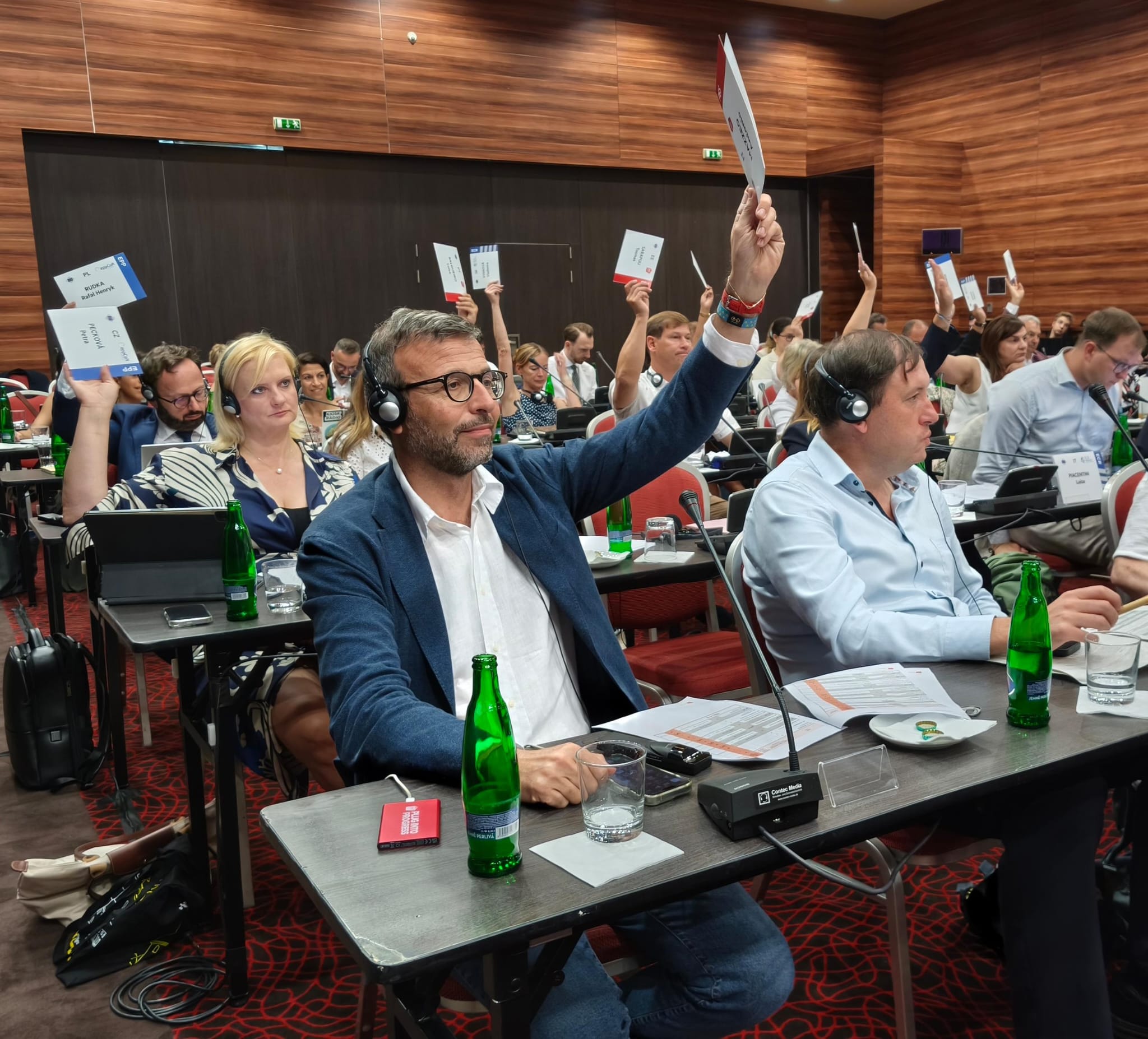
BRUSSELS, Belgium — The European Union’s push to combat racism through cultural investment took center stage this week as Vice President Marco Mazzeo of the Committee of the Regions highlighted Tuscany’s model as a blueprint for uniting Europe’s diverse societies. Speaking at a Brussels forum on Tuesday, Mazzeo framed culture as the “bedrock of Europe’s freedom,” arguing that regions like Tuscany—with its UNESCO-listed heritage and vibrant civic traditions—demonstrate how local identity can counter discrimination while strengthening EU cohesion.
Mazzeo’s remarks come as the EU finalizes its 2021–2027 budget, which allocates €1.3 billion to cultural programs, including anti-racism initiatives. The Committee of the Regions, the EU’s assembly of regional and local leaders, has positioned itself as a key advocate for linking cultural preservation with social inclusion—an approach Tuscany has pioneered through its “Cultural Rights Pact”, launched in 2020.
While the EU’s anti-racism framework has historically focused on legal measures—such as the Racial Equality Directive—Mazzeo’s vision emphasizes cultural diplomacy as a preventive tool. “When Europe invests in culture, it invests in its own resilience,” he told attendees, citing Tuscany’s success in reducing hate speech incidents by 18% since 2018 through community arts programs (verified by regional statistical reports).
📢 @ComRegions VP @MarcoMazzeoCR: “Culture is not a luxury—it’s the foundation of our shared European identity. Tuscany proves that when regions lead, discrimination loses ground.”
Why Tuscany’s Model Stands Out in Europe’s Anti-Racism Push
Tuscany’s approach diverges from traditional EU anti-racism policies in three critical ways:
- Decentralized action: Unlike Brussels-led initiatives, Tuscany’s strategy is implemented by local municipalities, with 72% of funding directed to grassroots projects (Regional Budget Office, 2023). This mirrors the Committee of the Regions’ advocacy for subsidiarity in EU policies.
- Cultural metrics: The region tracks “social cohesion indicators” alongside economic data, measuring outcomes like intergenerational dialogue programs and minority-language preservation (Tuscany Regional Observatory, 2023). The EU’s Cultural and Creative Sectors Program has yet to adopt similar benchmarks.
- Legal-cultural hybrid: Tuscany’s 2020 law Legge Regionale n. 76 mandates cultural sensitivity training in public institutions—a provision the EU’s 2022 Anti-Racism Action Plan lacks. The Committee of the Regions has since proposed expanding this model to other regions.
Mazzeo’s proposal to replicate Tuscany’s model across Europe gained traction after a Committee of the Regions resolution in October 2023 called for “cultural rights as a pillar of EU anti-discrimination law.” The resolution, supported by 180 regional representatives, aligns with the European Commission’s 2024 work program, which prioritizes “cultural diplomacy” in external relations.
How the EU’s Anti-Racism Strategy Compares to Tuscany’s Approach
| EU Framework | Tuscany’s Model | Key Difference |
|---|---|---|
| Legal focus: Racial Equality Directive (2000) | Cultural + legal: Legge Regionale n. 76 (2020) | Tuscany integrates cultural rights into law; EU relies on directives. |
| Funding: €1.3B (2021–2027) via Creative Europe | €45M/year (2020–2025) from regional budget | Tuscany allocates 72% to local projects; EU distributes 40% centrally. |
| Success metric: Compliance with anti-discrimination laws | Social cohesion indicators (e.g., hate speech reduction, minority participation) | Tuscany measures cultural outcomes; EU tracks legal adherence. |
Critics argue the EU’s approach remains top-down, while supporters of Mazzeo’s vision—including the Council of Europe—highlight Tuscany’s model as a “missing link” in EU anti-racism efforts. “Culture isn’t just about museums; it’s about who gets to tell our stories,” said Council of Europe Commissioner Dunja Mijatović in a December 2023 statement.
What Happens Next: The Committee of the Regions’ Roadmap
The Committee of the Regions will vote on a binding opinion in March 2024 urging the European Commission to:
- Allocate 30% of the Creative Europe budget to regional cultural anti-racism projects (up from 15%).
- Adopt Tuscany’s “social cohesion indicators” as EU-wide benchmarks by 2025.
- Launch a pilot program in 5 EU regions to test hybrid legal-cultural anti-discrimination models.
The Commission has not yet responded, but internal documents (leaked to Politico) suggest it may incorporate elements of the proposal into the 2025–2030 budget. Meanwhile, Tuscany’s Regional Council has pledged to share its data and training materials with interested regions.
Who Benefits—and Who Could Resist?
Supporters of the cultural approach include:
- Minority communities: Organizations like Europarc (representing 4,000 cultural heritage sites) argue that ownership of cultural narratives reduces marginalization. “When people see their history reflected in public spaces, they feel safer,” said Europarc CEO Andrew Potts in a 2023 interview.
- Local governments: Regions like Catalonia and Flanders have expressed interest in replicating Tuscany’s model, citing its cost-effectiveness. A Catalan government study found that cultural programs reduced far-right voting by 12% in pilot areas.
Potential obstacles include:
- Centralization concerns: The European Parliament’s Culture Committee has resisted shifting power to regions, fearing “fragmentation” of EU-wide standards.
- Funding gaps: While the EU’s budget includes anti-racism funds, only 8% are earmarked for cultural initiatives (European Anti-Racism Monitoring Network, 2023). Tuscany’s model requires sustained local investment.
How to Follow the Story: Key Updates and Resources
For readers tracking this development:
- Next checkpoint: Committee of the Regions vote on the binding opinion, March 12–14, 2024 (Brussels). Live stream here.
- Official documents:
- Data sources:
- Tuscany Regional Observatory (social cohesion metrics)
- EU Fundamental Rights Agency (anti-racism trends)
The debate over culture’s role in anti-racism reflects broader tensions in the EU between top-down governance and regional autonomy. As Mazzeo put it, “Europe’s strength lies in its diversity—but only if that diversity is celebrated, not silenced.” The coming months will determine whether Tuscany’s model becomes a template for the continent or remains a regional exception.
What do you think? Should the EU prioritize cultural strategies over legal measures in fighting racism? Share your views in the comments or on Twitter. For updates, subscribe to our newsletter.