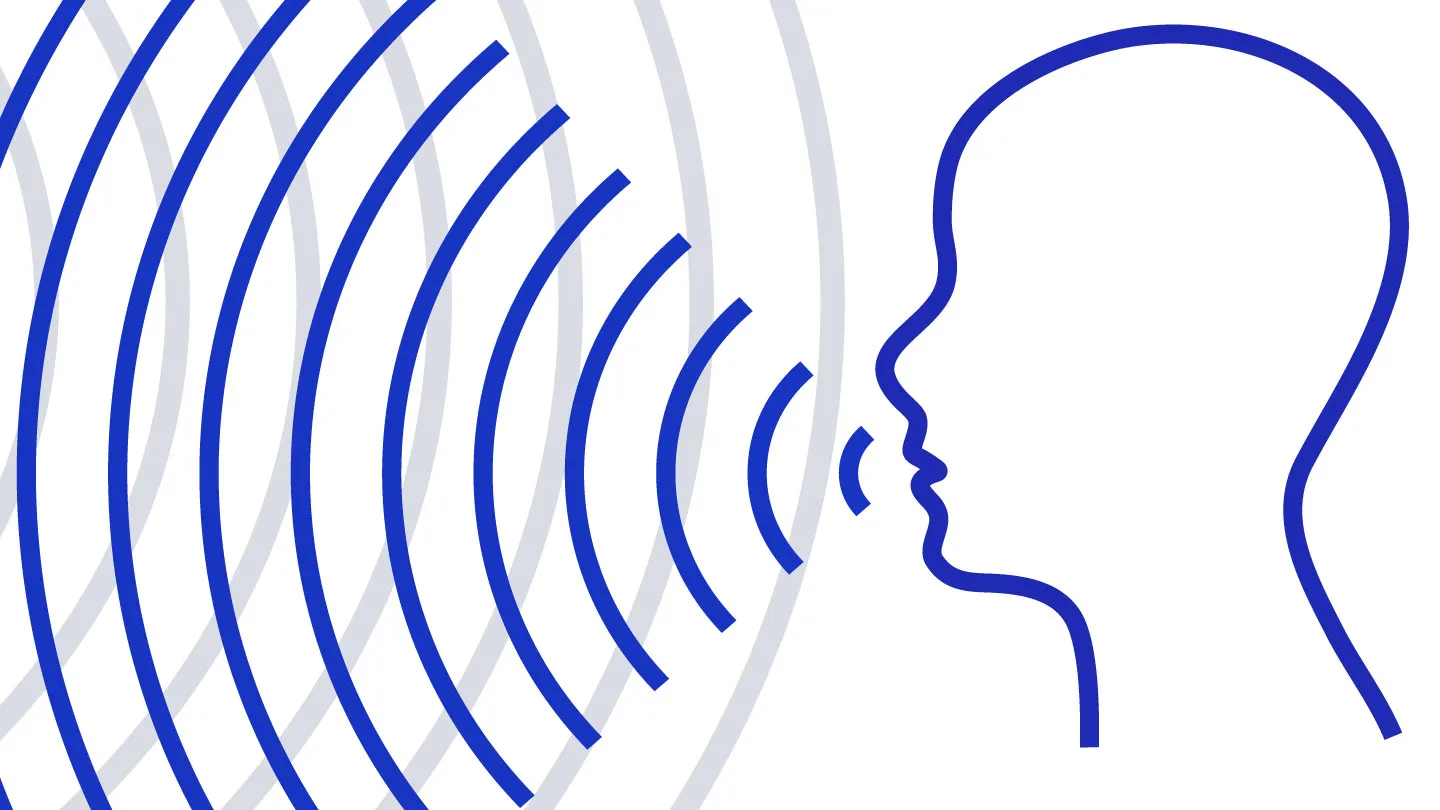
For most of us, navigating a room in total darkness is a tentative process of feeling for walls and hoping we don’t trip over a stray piece of furniture. However, for some individuals, the darkness is not a barrier but a canvas that can be painted with sound. This capability, known as human echolocation, allows people to “see” their surroundings by emitting sounds and interpreting the echoes that bounce back to them.
As a physician and health journalist, I have long been fascinated by the brain’s remarkable capacity for adaptation. Human echolocation is a profound example of this plasticity. While we often associate this ability with bats or dolphins, it is a latent human skill that some blind individuals have refined into a precise tool for independence, allowing them to identify not just the presence of an object, but its size, shape, and even its density.
Recent research is finally pulling back the curtain on how the brain processes these auditory signals. We are discovering that echolocation is not a simple “ping” and “response” system, but an iterative process of information gathering that transforms sound into a stable spatial map.
The Step-by-Step Process of Active Echolocation
Active echolocation is a deliberate process where the individual creates their own sound source to probe the environment. While some may use a cane to tap the ground or snap their fingers, the most precise method involves “palatal clicks”—sharp, clicking noises made with the mouth. The process unfolds in several distinct stages:
- Sound Emission: The user produces a sharp sound, such as a mouth click. This creates a sound wave that travels outward from the source.
- Wave Propagation and Reflection: These sound waves travel through the air until they strike an object. Depending on the object’s characteristics, the sound waves bounce back toward the user as echoes.
- Echo Reception: The user’s ears capture these returning echoes. The timing, intensity, and quality of the echo provide the raw data needed to interpret the environment.
- Information Summation: This is the critical “build-up” phase. Rather than relying on a single click, expert echolocators use a sequence of sounds. According to a study published in eNeuro, the brain accumulates information across these successive clicks, with each additional sound acting like a “brushstroke” to create a higher-resolution mental image Neuroscience News.
- Perceptual Interpretation: The brain processes the summed data to identify the object’s location (where it is), dimensions (size and shape), and density (whether it is solid or porous).
The Neural Blueprint: How the Brain “Sees” Sound
One of the most striking aspects of human echolocation is where the processing happens in the brain. Neuroimaging has revealed that when blind echolocation experts process echoes, the activity occurs in brain regions that typically support vision in sighted individuals PubMed. This suggests a high degree of neuroplasticity, where the brain repurposes the visual cortex to handle spatial information delivered via the auditory system.
Research led by Haydee Garcia-Lazaro and Santani Teng from the Smith–Kettlewell Eye Research Institute has further clarified this mechanism. Their study found that neural activity strengthens with every successive click, a phenomenon described as “summation” Neuroscience News. By combining repeated sound information, the brain creates a stable spatial map of the surroundings.
The precision of this system is significant. In a controlled experiment, four blind expert echolocators significantly outperformed 21 sighted individuals at identifying the location of objects in a pitch-black room Neuroscience News. The accuracy of their object localization improved linearly with the number of mouth clicks they produced, proving that echolocation is an active, iterative process of construction.
Capabilities and Practical Applications
Human echolocation is far more than a way to avoid bumping into walls. For those who have mastered the skill, it provides a detailed understanding of the environment that allows for a high degree of independence. Experts can detect a wide variety of environmental features, including:
- Architectural Details: Doorways, recesses, overhangs, pillars, and ascending curbs or steps.
- Urban Obstacles: Fire hydrants, parked or moving vehicles, and pedestrians.
- Natural Elements: Trees and other foliage.
Beyond simple navigation, experts can differentiate between objects of various sizes and shapes, and can even distinguish between objects made of different materials PubMed. This level of sensory detail enables some blind individuals to engage in activities previously thought impossible without sight, such as basketball, rollerblading, football, skateboarding, and even navigating wilderness areas through hiking or mountain biking Wikipedia.
Passive vs. Active Echolocation
While active echolocation involves creating a sound, many blind individuals also use “passive echolocation.” This is the ability to sense details about the environment by listening to the natural echoes produced by existing sounds—such as the hum of traffic or the sound of one’s own footsteps—without actively producing a clicking sound Wikipedia. Both methods are essential mobility strategies that help blind individuals perceive their surroundings.
Sighted individuals often struggle to perceive these echoes due to a phenomenon called “echo suppression,” brought on by the precedence effect. This is a biological mechanism that causes the brain to ignore the trailing echoes of a sound to focus on the primary source. However, research indicates that echolocation is a general human ability; with proper training, sighted individuals with normal hearing can learn to avoid obstacles using only sound Wikipedia.
Key Takeaways: The Human Echolocation Process
| Phase | Action/Mechanism | Result |
|---|---|---|
| Generation | Active production of sound (e.g., palatal clicks) | Sound waves are emitted into the environment |
| Interaction | Waves strike objects and bounce back | Echoes carry data on object density and shape |
| Accumulation | Multiple clicks (Summation) | Neural activity strengthens; resolution increases |
| Processing | Visual cortex activation | Auditory data is converted into a spatial map |
| Perception | Interpretation of echoes | Identification of location, size, and material |
The study of human echolocation does more than just highlight a fascinating skill; it offers a window into the resilience and adaptability of the human brain. By understanding how the brain can shift its processing from one sense to another, medical researchers can better develop assistive technologies and rehabilitation strategies for those with sensory impairments.
As we continue to map these neural pathways, the goal is to make these training methods more accessible, potentially providing more blind individuals with the tools for greater autonomy and mobility.
World Today Journal will continue to monitor modern findings in neuroplasticity and sensory substitution. We encourage readers to share their thoughts or experiences with assistive technologies in the comments below.
Worth a look