
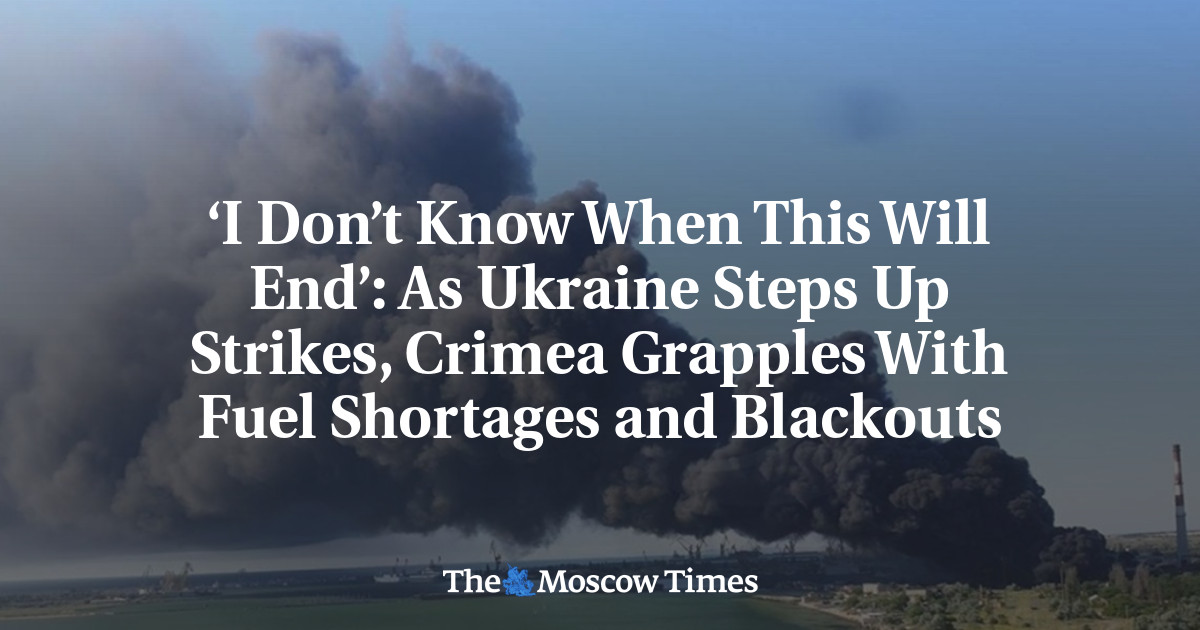
Residents of Crimea are facing increasing disruptions to daily life as Ukrainian military strikes target energy infrastructure and logistical hubs across the Russian-annexed peninsula. The intensification of these operations, which aim to isolate the region and strain Moscow’s supply chains, has resulted in localized fuel shortages and periodic power outages, forcing civilian populations to adapt to an increasingly unstable environment.
According to reports from both regional monitoring groups and international news agencies, the strategic targeting of oil depots and electrical substations has begun to affect the availability of essential goods. While Russian-appointed officials in Crimea have frequently characterized these incidents as manageable, local accounts suggest a growing sense of uncertainty regarding the durability of the peninsula’s remaining infrastructure.
Infrastructure Under Pressure
The recent campaign against Crimean infrastructure centers on degrading the logistics that support Russian military operations. By striking fuel storage facilities, Ukrainian forces aim to complicate the distribution of resources required for the Black Sea Fleet and regional garrisons. As reported by Reuters, a significant fire broke out at an oil terminal in Feodosia in October 2024, following a drone strike that local authorities described as an attack on critical infrastructure. This facility served as one of the largest petroleum storage sites on the peninsula, and its partial neutralization has contributed to the reported tightening of fuel supplies at local service stations.
Beyond fuel, the electrical grid remains a focal point of concern. The reliance of the peninsula on power lines originating from mainland Russia—and the vulnerability of internal substations—means that even minor technical failures are now being viewed by residents through the lens of potential sabotage or kinetic strikes. The BBC has documented how these disruptions, coupled with the broader impacts of the ongoing conflict, have created a climate where residents are stockpiling necessities, reflecting a deepening anxiety about the long-term sustainability of basic services.
Life Amidst Escalating Tensions
For the average resident, the transformation of Crimea into a frontline logistics hub has manifested in tangible, daily inconveniences. The cost of living has seen fluctuations as supply chains are rerouted, and the presence of increased security measures has altered the atmosphere of urban centers like Sevastopol and Simferopol. According to information gathered by the Kyiv Post, movement across the peninsula is more heavily monitored, and the psychological weight of the conflict is frequently cited by residents who express frustration over the lack of clear timelines for stability.
The uncertainty is compounded by the messaging from the Russian-installed administration. Officials, including those serving under the regional head Sergei Aksyonov, have consistently claimed that the situation remains under control and that repairs to damaged facilities are prioritized. However, these assurances often clash with the lived experience of citizens who encounter empty pumps or flickering lights. The disconnect between official narratives and the reality on the ground has become a recurring theme in the discourse surrounding the peninsula’s status.
The Strategic Objective
The broader goal behind these strikes, as outlined by Ukrainian military analysts, is to make the occupation of Crimea untenable for Russian forces. By systematically hitting fuel depots, ammunition dumps, and command centers, Kyiv seeks to degrade the peninsula’s utility as a staging ground for the Southern Front. This strategy, often described as “asymmetric warfare,” leverages long-range drones and missile systems to force Moscow to expend significant resources on air defense and logistics protection.
This approach has forced a shift in how the Russian military manages its assets in the region. The necessity of dispersing fuel reserves and hardening infrastructure has placed a heavy burden on the local economy. As noted in the Atlantic Council’s recent analysis, the peninsula is increasingly becoming a strategic liability for the Kremlin, as the costs of maintaining the territory continue to rise while its operational value as a secure base is diminished.
Looking Ahead
The situation in Crimea remains fluid, with both sides preparing for continued engagements as the winter months approach. The next major checkpoint for the region involves the maintenance of critical heating and power infrastructure during the colder season, which will serve as a stress test for the peninsula’s degraded systems. International observers and humanitarian groups continue to monitor the humanitarian impact on the civilian population, though access to the region for independent verification remains severely restricted.

Updates on the status of Crimean infrastructure are expected to follow official announcements from the regional administration regarding energy grid stability. Readers are encouraged to monitor verified government advisories and major international news outlets for ongoing developments. We welcome your perspectives and analysis in the comments section below regarding the evolving situation on the peninsula.