
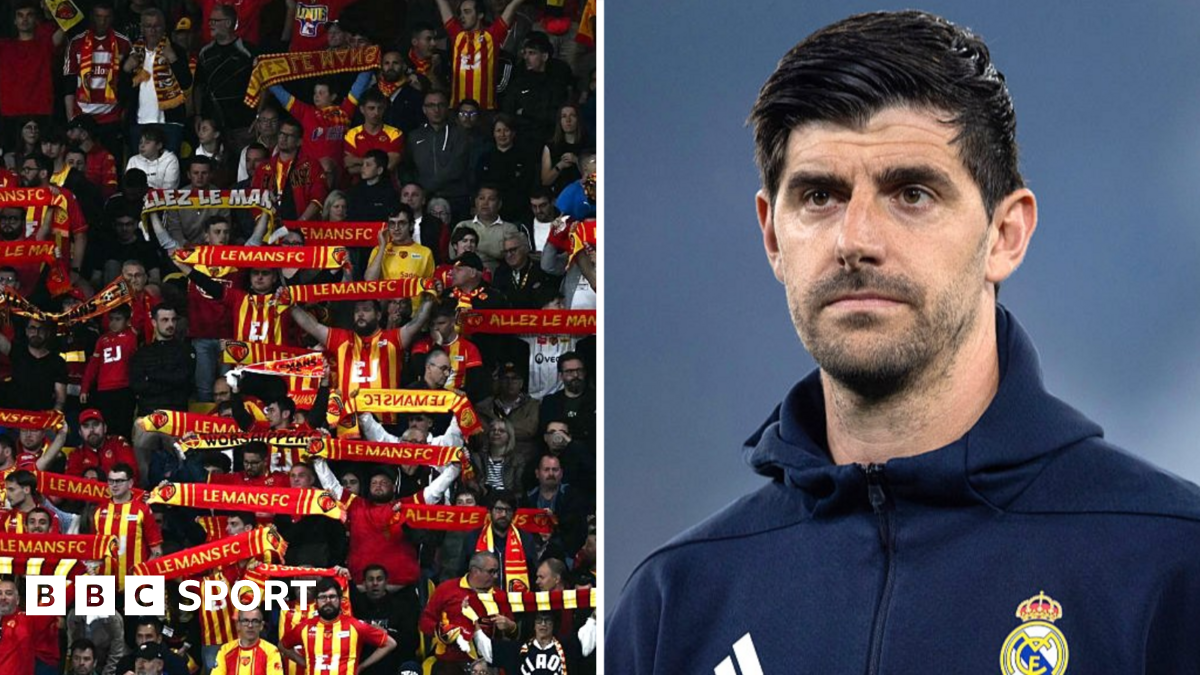
For most of the world, the name Le Mans evokes the high-octane scream of engines and the grueling endurance of the iconic 24-hour race. However, in recent years, a different kind of acceleration has been taking place in the town. The local football club, Le Mans FC, is currently navigating a rapid ascent through the ranks of French football, attempting to reclaim a glory that seemed lost for over a decade.
The journey back to prominence has not been linear. It is a story of complete collapse and a meticulously planned resurrection, fueled by a unique blend of Brazilian investment and the star power of some of the world’s most elite athletes. The Le Mans FC rise from the depths of the amateur leagues back to the professional stage serves as a case study in how modern sports branding and strategic networking can revitalize a legacy institution.
Having spent years in the wilderness of the lower divisions, the club has recently returned to Ligue 2, positioning itself on the cusp of a return to the top flight. This resurgence is not merely a product of on-pitch performance but the result of a sophisticated ownership model designed to leverage global visibility to drive local success.
From the Top Flight to the Sixth Tier
The decline of Le Mans FC was as precipitous as its current rise. The club was a fixture of the top tier of French football, last featuring in Ligue 1 in 2010. However, the stability of the club evaporated quickly following their exit from the elite division. By 2013, the club was hit by bankruptcy, a devastating blow that resulted in them being dropped to the sixth tier of the French football pyramid verified by official records of the club’s trajectory.
For years, the club operated far from the spotlight, fighting through the grueling regional and semi-professional leagues. This period of instability stripped the club of its professional status and its standing in the national game, leaving it to rebuild its identity from the ground up. The road back required more than just tactical adjustments on the field; it required a complete financial and structural overhaul.
The turning point arrived last summer when the club successfully returned to Ligue 2. This promotion coincided with a change in ownership that shifted the club’s trajectory from mere survival to aggressive growth. The arrival of OutField, a group of Brazilian investors, provided the capital and the vision necessary to transform the club into a high-profile project.
The OutField Strategy: Branding Through Athletics
The acquisition of Le Mans FC by OutField was not a traditional takeover. Instead of relying solely on corporate capital, the Brazilian investors sought to integrate high-profile sports figures into the ownership structure to increase the club’s global footprint. This strategy aimed to use the prestige of world-class athletes to elevate the club’s brand and attract further interest.
Pedro Oliveira, a co-founder of OutField, explained the rationale behind this approach, stating, “We wanted to bring really high-profile people that could help us leverage the project from a branding perspective.” By associating the club with names recognized in every corner of the globe, OutField transitioned Le Mans FC from a provincial French side into an international sports asset.
This approach created a synergy between different sporting disciplines. The investment group didn’t just look for football expertise; they looked for “winners” across the sporting spectrum, believing that the mentality of elite competition in tennis or Formula 1 could translate into the boardroom and the locker room of a football club.
A Star-Studded Investment Portfolio
The list of investors associated with the project reads like a “who’s who” of modern sports. Among the most notable is tennis legend Novak Djokovic, whose involvement brings immense global visibility to the club. The connection to Djokovic was facilitated by Georgios Frangulis, the founder and CEO of Oakberry and an investor and operating partner at Le Mans. Frangulis, who is the husband of world number one tennis player Aryna Sabalenka, noted that Djokovic is “crazy about football,” which made the project an easy sell to the Serbian star.
The club’s connection to motorsport is equally strong, a fitting tribute to the town’s heritage. Former Formula 1 drivers Felipe Massa and Kevin Magnussen joined the project, with Massa’s existing investment in Frangulis’ company, Oakberry, serving as the initial bridge. The alignment of F1 prestige with a town synonymous with the 24-hour race creates a powerful local and international narrative.
Further strengthening the project is the addition of Thibaut Courtois. The Real Madrid and Belgium goalkeeper joined the investment group in February, having been drawn to the specific vision of what the club is building as reported during the project’s expansion. Courtois’ involvement provides the club with a direct link to the current pinnacle of professional football, offering both financial backing and elite-level insight.
Key Stakeholders in the Le Mans Project
| Name | Role/Background | Connection to Project |
|---|---|---|
| OutField | Brazilian Investment Group | Primary owners and strategic leads |
| Pedro Oliveira | Co-founder, OutField | Operational lead on branding and growth |
| Georgios Frangulis | CEO of Oakberry | Investor and operating partner; key connector |
| Novak Djokovic | Professional Tennis Player | High-profile investor |
| Thibaut Courtois | Professional Footballer | Investor (joined February) |
| Felipe Massa & Kevin Magnussen | Former Formula 1 Drivers | Investors leveraging motorsport heritage |
The Path Forward: Targeting the Top Flight
With a stable financial foundation and a global marketing engine, Le Mans FC is no longer the club that suffered a bankruptcy-induced collapse in 2013. The current objective is clear: a return to Ligue 1. The club is leveraging its new identity to attract better talent and increase its commercial viability, using the “halo effect” of its celebrity investors to stand out in a crowded football market.
The integration of athletes from different sports suggests a broader vision for the club—one where Le Mans FC becomes a hub for sporting excellence and investment. By blending the discipline of tennis, the precision of Formula 1, and the expertise of top-flight football, the ownership group is attempting to create a sustainable model for club growth that avoids the financial pitfalls of the past.
As the club competes in Ligue 2, the focus remains on maintaining the momentum of their rapid rise. The transition from the sixth tier to the professional leagues is complete; the final step is the return to the summit of French football, where the club last stood over fifteen years ago.
The next major milestone for the club will be its performance in the upcoming fixtures of the Ligue 2 season, as it seeks to secure the points necessary for promotion. Updates on the club’s standings and official announcements regarding further investments can be monitored through official league channels.
Do you think the “celebrity investor” model is the future of football club ownership, or is it a branding exercise? Share your thoughts in the comments below.