
Australia’s kangaroo population fluctuates significantly based on environmental conditions, with estimates often ranging between 30 and 50 million individuals at any given time. These numbers are not static; they depend heavily on rainfall patterns, vegetation availability, and the specific species being counted, such as the Eastern grey or the Red kangaroo.
Determining an exact count of kangaroos across the Australian continent remains a complex task for biologists and government agencies. Because the animals are highly mobile and inhabit vast, often inaccessible arid regions, researchers rely on aerial surveys, satellite imaging, and ground-based sampling to generate population estimates. These figures change rapidly in response to the “boom and bust” cycles characteristic of the Australian climate.
Environmental scientists note that the population density of these marsupials is closely tied to the El Niño-Southern Oscillation (ENSO) cycle. During periods of high rainfall, vegetation flourishes, leading to rapid breeding cycles and population surges. Conversely, prolonged droughts can cause massive die-offs, significantly lowering the total number of individuals across the continent.
How many kangaroos live in Australia?
While there is no single, permanent number, many ecological assessments suggest the total population of various kangaroo species sits in the tens of millions. The variability of these estimates stems from the fact that different species occupy different niches and respond to weather events at different rates.
According to various wildlife management reports, the population is not distributed evenly. For example, the Eastern grey kangaroo (*Macropus giganteus*) tends to have much higher concentrations in the more temperate, coastal, and forested regions of the east and south. In contrast, the Red kangaroo (*Osphranter rufus*), the largest of the species, is more characteristic of the vast, arid interior of the country.
During “boom” years following heavy rainfall, the population can swell toward the higher end of scientific estimates. During severe droughts, these numbers can plummet. This volatility makes the kangaroo a primary indicator of the overall health and resource availability within the Australian ecosystem.
Why do kangaroo numbers fluctuate so drastically?
The primary driver of kangaroo population shifts is rainfall. In the Australian outback, water availability dictates the growth of grasses and shrubs, which serve as the primary food source for macropods (the family to which kangaroos belong). When significant rain events occur, the resulting explosion in plant matter allows for increased survival rates of “joeys” (young kangaroos) and higher female fertility rates.
Biologists describe this as a biological response to environmental pulse events. When the environment provides a surplus of energy, the population expands to fill the available niche. However, when the cycle shifts to drought, the carrying capacity of the land drops. This leads to increased competition for limited food and water, causing mortality rates to rise among the young and the elderly.
Beyond weather, human-managed landscapes also influence these numbers. Land clearing for agriculture and the modification of water sources can create localized “hotspots” where kangaroo populations are higher than they would be in a purely wild state. These animals often move toward agricultural fringes where supplemental water or crops may be available, even during drier periods.
Which species dominate the Australian landscape?
To understand the total population, it is necessary to distinguish between the different species that make up the kangaroo family. While the term “kangaroo” is often used generically, it covers several distinct animals with different habitats and population densities.
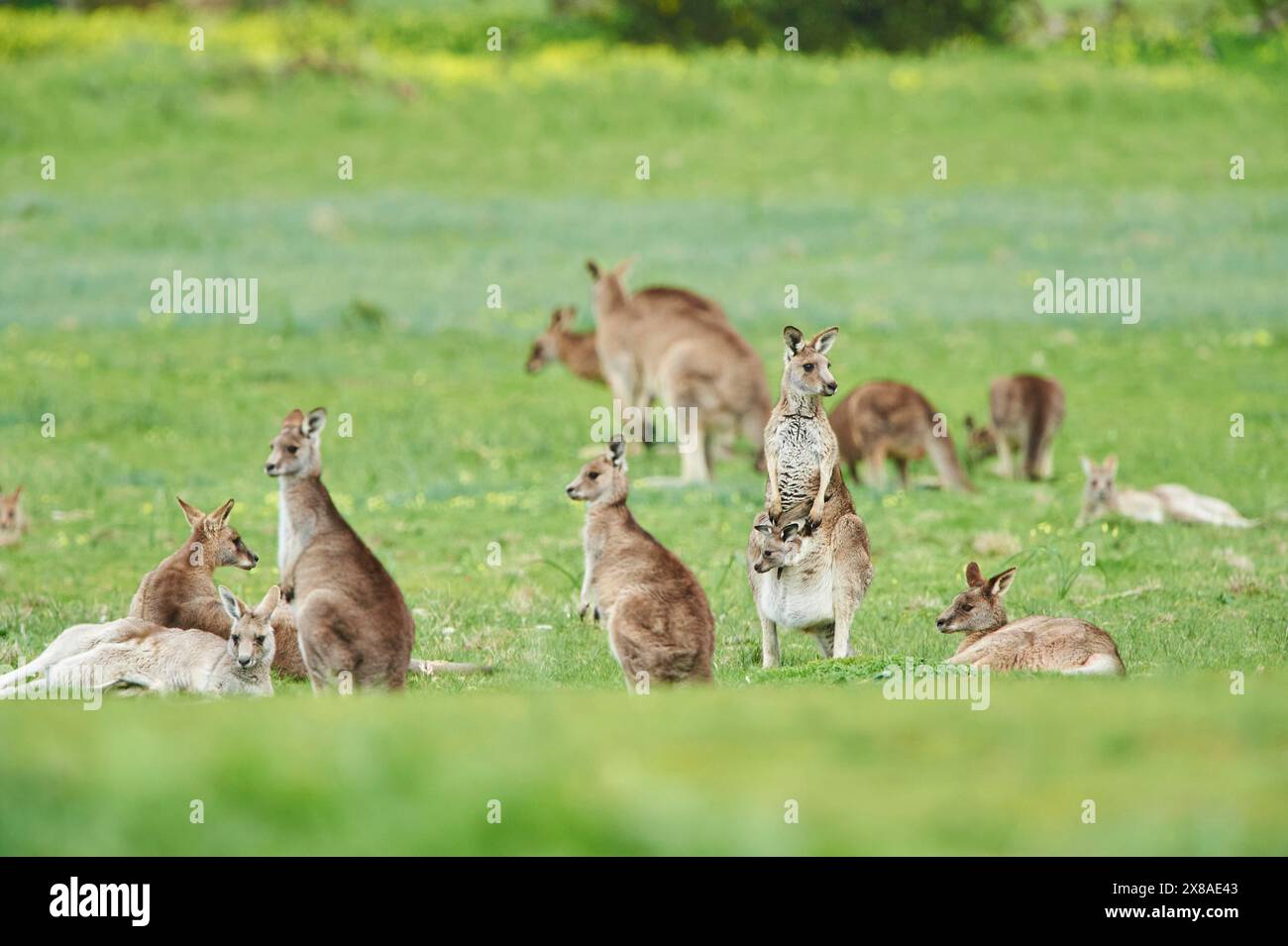
- Eastern Grey Kangaroo (Macropus giganteus): Found predominantly in the eastern states, including New South Wales and Victoria, these kangaroos thrive in woodlands and grasslands. They are among the most visible species due to their proximity to human settlements.
- Red Kangaroo (Osphranter rufus): As the largest extant marsupial, the Red kangaroo is adapted to the harsh, arid conditions of central Australia. They are highly mobile, traveling long distances to find food and water.
- Western Grey Kangaroo (Macropus fuliginosus): These are found across much of southern and western Australia, occupying a range of habitats from coastal scrub to more arid woodlands.
- Wallaroos: While often grouped with kangaroos, wallaroos like the Euro are more specialized for rocky, mountainous terrain and represent a smaller portion of the total macropod biomass.
Different species respond to environmental changes at different speeds. The Eastern grey, living in more predictable rainfall zones, may show more stable population trends compared to the Red kangaroo, whose numbers are more violently impacted by the extreme weather of the interior.
How is the kangaroo population managed?
The management of kangaroo populations is a significant and often controversial aspect of Australian land and wildlife policy. Because large numbers of kangaroos can impact both biodiversity and the agricultural sector, state and territory governments implement various management strategies.
One of the primary reasons for intervention is the protection of native vegetation. In certain areas, overgrazing by large kangaroo populations can lead to the degradation of habitats, making it difficult for other native species to survive. Additionally, in agricultural regions, kangaroos can compete with livestock for pasture, leading to economic concerns for farmers.
To address these issues, several Australian states permit a regulated commercial harvest of kangaroos. This practice is monitored by government agencies to ensure that the harvest does not threaten the long-term viability of the species. The harvest is typically conducted during specific seasons and is subject to strict quotas based on current population estimates.
While the commercial harvest is a standard tool for population control, it remains a subject of debate among animal welfare organizations and environmental groups. Critics often raise concerns regarding the methods used during the harvest, while proponents argue it is a necessary component of sustainable land management and provides a source of organic protein and leather.
The impact of climate change on marsupial populations
As global climate patterns shift, the traditional “boom and bust” cycles of the Australian continent are facing new pressures. Climate change is expected to increase the frequency and intensity of both extreme droughts and heavy rainfall events, potentially making kangaroo population swings even more unpredictable.
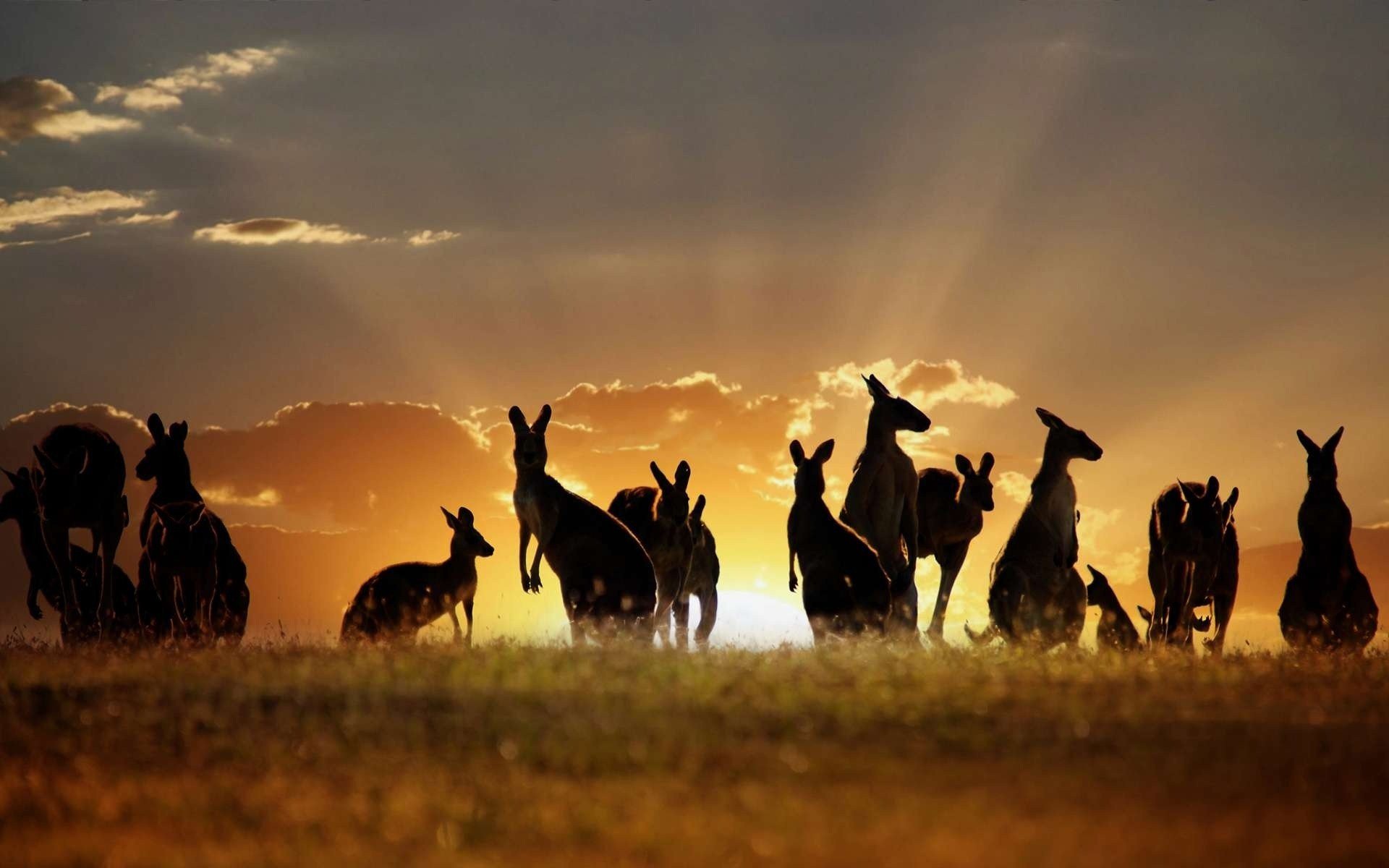
Increased temperatures can also affect the physiological limits of certain species. While kangaroos are well-adapted to heat, the combination of extreme thermal stress and reduced water availability during prolonged droughts can increase mortality rates beyond historical norms. This poses a challenge for ecologists attempting to model future population trends and for land managers trying to maintain ecological balance.
Furthermore, changes in vegetation patterns caused by shifting climate zones may force certain species to migrate or face localized extinction if their specific habitat requirements can no longer be met. The ability of these animals to adapt to a rapidly changing landscape remains a key area of ongoing scientific research.
Quick Comparison: Major Kangaroo Species
| Species | Primary Habitat | Climate Sensitivity |
|---|---|---|
| Red Kangaroo | Arid/Central Deserts | High (Extreme drought impact) |
| Eastern Grey | Woodlands/Coastal | Moderate (Rainfall dependent) |
| Western Grey | Southern/Western Grasslands | Moderate |
Frequently Asked Questions
Are kangaroos an endangered species in Australia?
Generally, no. Most common kangaroo species are not listed as endangered. However, certain localized populations or smaller, less common species may face conservation challenges due to habitat loss or environmental changes.
Why do kangaroos move so much?
Kangaroos are highly mobile to find food and water in an unpredictable environment. In the arid interior, being able to travel long distances is a survival necessity when local resources are exhausted.
Do kangaroos compete with sheep and cattle?
Yes, in many grazing regions, kangaroos compete with livestock for the same types of grasses and shrubs. This competition is one of the primary drivers for population management in agricultural areas.
The next major update regarding Australian wildlife population trends is expected following the release of updated state-level ecological monitoring reports, typically scheduled during annual environmental reviews.
What are your thoughts on wildlife management in changing climates? Share your views in the comments below and share this article with your network.
Keep reading