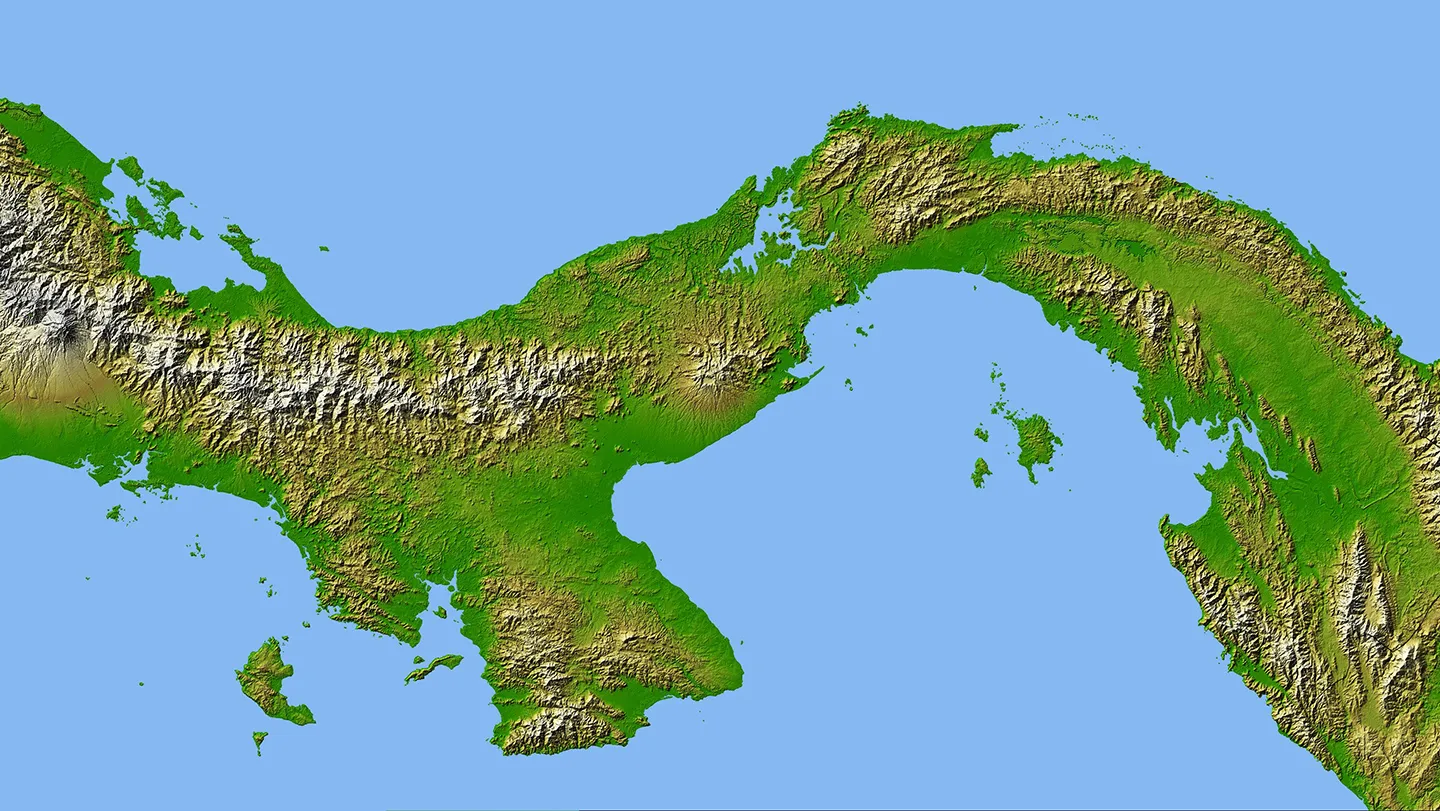
The migration of ancient mammals between North and South America was not a singular, uniform event, but a complex biological process significantly influenced by the regional climate of Mexico. New paleontological research suggests that the Isthmus of Panama served as a gateway for the Great American Biotic Interchange, yet the environmental conditions across the Mexican landmass acted as a critical filter for species moving southwards during the Pliocene and Pleistocene epochs.
As an internal medicine physician and journalist, I have long observed how environmental factors dictate the movement and survival of populations. In the context of evolutionary biology, the “filter bridge” model—a concept supported by researchers at the Smithsonian National Museum of Natural History—explains that while land bridges connect continents, they do not guarantee the passage of all inhabitants. For ancient mammals, the climate of Mexico created a variable corridor that favored specific adaptations over others.
The Great American Biotic Interchange and the Role of Mexico
The Great American Biotic Interchange (GABI) remains one of the most significant macroevolutionary events in Earth’s history. According to data published in Proceedings of the National Academy of Sciences (PNAS), the formation of the Isthmus of Panama approximately 2.8 to 3 million years ago allowed for the terrestrial exchange of fauna that had been isolated for millions of years. However, the success of these migrating lineages depended heavily on their ability to traverse the diverse ecosystems of Mexico and Central America.
Paleoclimatic reconstructions indicate that the climate in Mexico during these periods shifted between arid grasslands and humid tropical forests. This environmental mosaic meant that mammals moving from the temperate north required physiological plasticities to survive the transition. Evidence from the Florida Museum of Natural History highlights that taxa such as gomphotheres, peccaries, and camelids were among the successful migrants, largely because their ancestral traits allowed them to exploit the shifting habitats found throughout the Mexican corridor.
Physiological Adaptations for Tropical Transitions
The transition from a temperate climate to a tropical environment presented a significant metabolic challenge for mammalian species. Research into fossil records across Mexico and northern Central America shows that species which successfully crossed these regions often exhibited specialized dietary habits. This aligns with broader ecological studies that suggest environmental stability in specific “refugia” during the Pleistocene allowed certain mammalian groups to pause, adapt, and eventually continue their southward migration into South America.
Furthermore, the Science journal has documented how the timing of these migrations was not immediate upon the closure of the Panama portal. Instead, there was a staggered entry, suggesting that species required time to evolve or adjust to the climatic conditions of the intervening territories. For the ancient mammals, Mexico was not merely a path, but a testing ground for survival in a changing world.
Environmental Constraints on Biodiversity
While the Isthmus of Panama is often credited as the primary driver of GABI, it is the climatic conditions of the broader region that explain the specific composition of the current South American mammalian fauna. Analysis from the Natural History Museum in London emphasizes that the “filter” effect of the climate restricted the movement of animals that were highly sensitive to temperature fluctuations or moisture levels. This led to a disproportionate representation of hardy, generalist species in the southern reaches of the continent.
The study of these ancient migration patterns continues to evolve as new isotopic analysis techniques allow researchers to better understand the diets and environments of extinct mammals. By examining the chemical signatures in fossilized teeth, scientists can now map the specific routes and habitats occupied by these animals during their transit through Mexico. These findings are regularly updated in paleontological databases, providing a more granular view of how climate change influenced the distribution of life on Earth.
As we continue to analyze the fossil record, the importance of regional climate as a determinant of biological success becomes increasingly clear. Understanding these historical precedents provides a vital framework for observing how modern species may respond to current global climatic shifts. For further updates on recent findings in the field of paleontology and evolutionary biology, readers are encouraged to follow the official research bulletins from the Geological Society of America.
What are your thoughts on how historical climate shifts shaped modern biodiversity? Share your insights in the comments section below or join the discussion on our social media channels.
Worth a look