
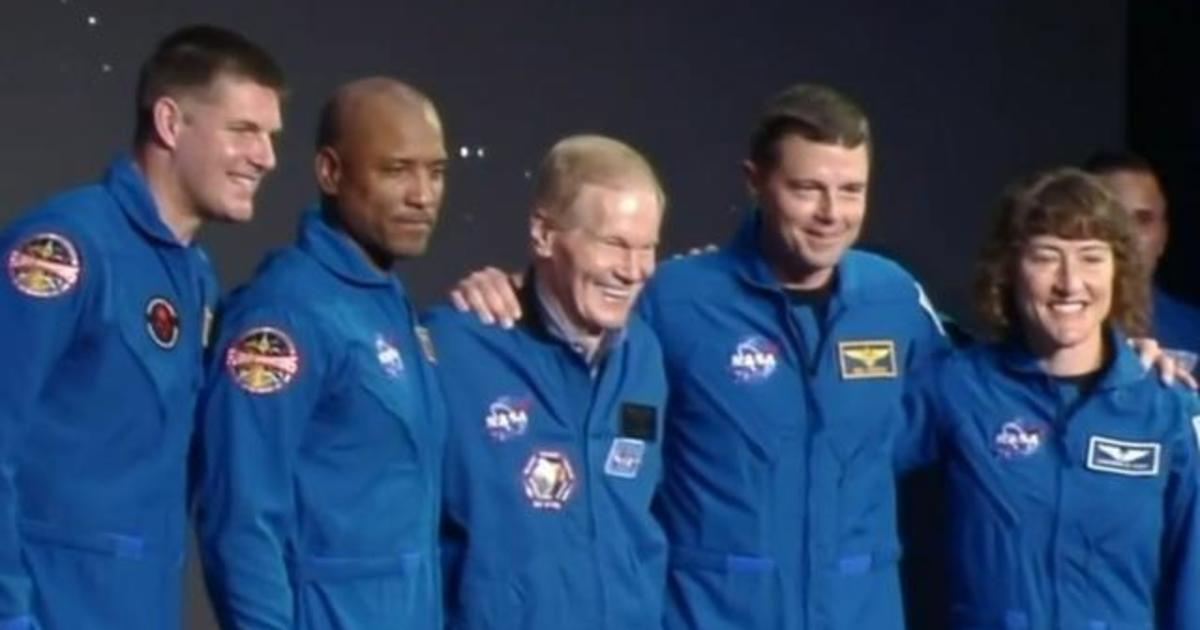
The Artemis II mission has officially pushed the boundaries of human exploration, marking the first time people have ventured toward the Moon since 1972. Launched from the Kennedy Space Center in Florida on April 1, 2026, the crew is currently navigating a historic free-return trajectory that has already shattered long-standing records for human distance from Earth NASA.
As the world watches the Orion spacecraft journey through the void, a recurring question has surfaced regarding the compensation of these explorers. While some reports suggest specific figures for the salary of NASA astronauts, the reality of their pay is tied to a structured federal scale rather than a flat “bonus” for visiting the Moon. This distinction is critical for understanding the professional nature of the Artemis program, which treats lunar exploration as a high-stakes government assignment rather than a commercial venture.
The mission is commanded by Reid Wiseman, with Pilot Victor Glover and Mission Specialists Christina Koch and Jeremy Hansen. Together, they represent a diverse coalition of expertise, including the first woman and the first non-U.S. Citizen to travel to the vicinity of the Moon Artemis II Mission Tracker. Their journey is not merely a feat of engineering but a testament to international cooperation between NASA and the Canadian Space Agency (CSA).
By April 6, 2026, the crew achieved a monumental milestone, reaching a distance of 400,171 km from Earth, surpassing the record held by the Apollo 13 crew since 1970 G1. With an estimated maximum distance of approximately 407,000 km, the mission is providing unprecedented views of the lunar far side and the Orientale Basin.
The Economics of Space Exploration: How Astronauts Are Paid
Public curiosity regarding the salary of NASA astronauts often stems from the perceived risk of the mission. However, NASA astronauts are civil servants, and their compensation is governed by the U.S. Federal government’s General Schedule (GS) pay scale. They do not receive a specific “lunar bonus” or a flat fee of 11,000 euros for the trip. instead, they earn a monthly salary based on their grade, years of experience, and professional rank.

The pay scale is designed to reflect the high level of education and technical expertise required for the role. Most astronauts hold advanced degrees in STEM fields and undergo years of rigorous training before being assigned to a flight crew. Their compensation covers their living expenses and professional stability, but the primary “reward” for these individuals is the scientific contribution and the historical significance of their mission.
The Artemis II crew, for instance, consists of seasoned veterans. Commander Reid Wiseman and Mission Specialist Christina Koch are NASA astronauts, while Jeremy Hansen is an astronaut with the Canadian Space Agency Artemis II Mission Tracker. This means their payrolls are managed by different national agencies, following the respective civil service regulations of the United States and Canada.
Artemis II: A Timeline of Lunar Encounter
The trajectory of the Orion spacecraft is a precision-engineered path designed to ensure the crew’s safety. The mission began with a successful liftoff on April 1, 2026, followed by a Perigee Raise Burn and a Trans-Lunar Injection (TLI) on April 2 Artemis II Mission Tracker. These maneuvers were essential to propel the crew out of Earth’s orbit and toward the lunar sphere of influence.
On April 5, 2026, the spacecraft reached the lunar sphere of influence—the point where the Moon’s gravity exerts more force on the Orion spacecraft than Earth’s gravity NASA. This transition marked the beginning of the most critical phase of the journey: the lunar flyby.
The crew’s experience has been documented through high-resolution imagery. On April 6, 2026, the crew captured views of the Moon’s far side, including the Orientale Basin, a crater nearly 1,000 kilometers in diameter G1. Astronaut Christina Koch noted during a live transmission that the Moon they were seeing was entirely different from the one visible from Earth.
Key Mission Milestones
| Date | Event | Detail |
|---|---|---|
| April 1 | Liftoff | Launched from Kennedy Space Center, Florida NASA |
| April 2 | TLI | Trans-Lunar Injection cleared for 7:50 PM EDT Artemis II Mission Tracker |
| April 5 | Lunar Influence | Moon’s gravity becomes dominant over Earth’s NASA |
| April 6 | Far Side Flyby | Reached 400,171 km from Earth; viewed Orientale Basin G1 |
The Human Element: Risks, Rewards, and Inspiration
While the financial aspect of the salary of NASA astronauts is a point of public interest, the psychological and physical risks are the more pressing considerations. The Artemis II crew is operating in a high-radiation environment, far from the protective magnetosphere of Earth. The mission’s “free-return trajectory” is a critical safety feature, ensuring that the spacecraft can return to Earth even if the main engine fails during the lunar encounter Artemis II Mission Tracker.
The impact of this mission extends beyond the four individuals on board. By including the first woman and first non-U.S. Citizen to venture to the Moon’s vicinity, NASA is signaling a new era of inclusivity in space exploration. The imagery captured by the crew—from high-resolution “selfies” of the Orion spacecraft to views of a sliver of the Earth—serves to inspire a new generation of students and aspiring scientists to pursue careers in aerospace.
The mission’s success depends on the nominal performance of the Orion vehicle, which has a maximum reentry speed of 25,000 mph and a splashdown target in the Pacific Ocean off the coast of San Diego Artemis II Mission Tracker. Every detail, from the crew’s daily routines—such as Jeremy Hansen shaving in microgravity—to the complex orbital mechanics, is being monitored in real-time by Mission Control.
As the mission continues, the focus shifts from the records broken to the data gathered. The ability to see the lunar far side with human eyes for the first time in decades provides invaluable context for future Artemis missions, which aim to establish a sustainable human presence on the lunar surface.
The next confirmed checkpoint for the mission is the spacecraft’s return trajectory and subsequent reentry into Earth’s atmosphere, leading to the final splashdown in the Pacific. We will continue to provide updates as the crew begins their journey home.
What do you think about the risks and rewards of lunar exploration? Share your thoughts in the comments below and share this story with other space enthusiasts.