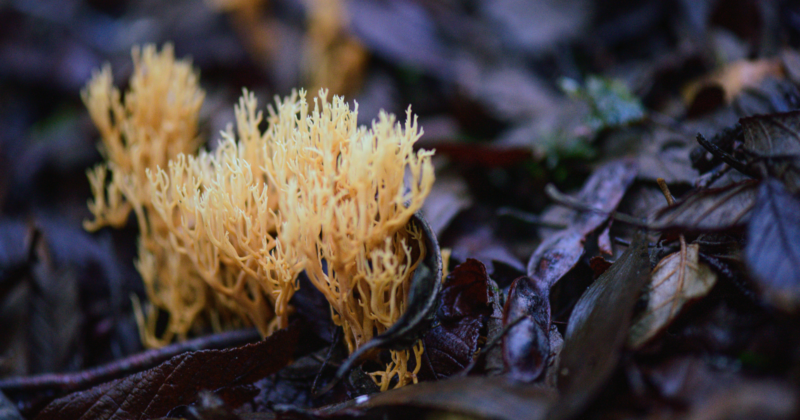
Land plants colonized the Earth’s surface approximately 450 million years ago, a transition made possible by a symbiotic partnership with mycorrhizal fungi, according to research published in Science. These early organisms lacked traditional roots, relying instead on fungal threads to extract essential minerals from bare rock. This ancient biological alliance provided the foundation for the evolution of complex plant life, including the forests that dominate the modern landscape.
The transition from aquatic environments to terrestrial life represents one of the most significant events in evolutionary history. Paleobotanists and evolutionary biologists at the Royal Botanic Gardens, Kew, have identified that early land plants, known as bryophytes, utilized fungal networks to survive in mineral-poor environments. By trading photosynthetic sugars for phosphorus and nitrogen harvested by the fungi, these plants were able to thrive on the harsh terrain of the Ordovician period.
The Origins of Terrestrial Vegetation
Before the emergence of deep-rooted trees, the Earth’s surface was largely barren rock. Scientific consensus, supported by studies from the University of Oxford, suggests that the first land plants were simple, tissue-based organisms that lacked the complex vascular systems found in modern species. These early colonizers maintained a stable existence by forming a mutually beneficial relationship with glomeromycotina fungi.

This partnership allowed plants to overcome the primary barrier to land colonization: the lack of accessible soil nutrients. According to a study published in Proceedings of the National Academy of Sciences (PNAS), the fungal networks acted as an extension of the plant’s own biological structure, effectively mining the mineral-heavy substrate. This process not only sustained the plants but also accelerated the weathering of rocks, which in turn contributed to the formation of the first true soils.
How Fungi Shaped Modern Ecosystems
The legacy of this 450-million-year-old relationship is still visible in the structure of every forest on Earth. Mycorrhizal networks remain essential for the nutrient cycling that supports giant redwoods, tropical rainforests, and the vast boreal belt. Research from the Max Planck Institute for Chemical Ecology indicates that modern plants continue to allocate up to 20% of their photosynthetic carbon to their fungal partners in exchange for mineral support.

This dependency is not merely a historical remnant but a functional requirement for forest stability. In ecosystems such as the Amazon, the rapid turnover of nutrients is mediated by these subterranean networks. Without the continuous exchange of phosphorus and nitrogen facilitated by fungi, the high-density growth observed in these regions would be biologically unsustainable under current environmental conditions.
Evolutionary Implications for Plant Diversity
The survival of early plants paved the way for the diversification of ferns, conifers, and eventually, flowering plants. By establishing a foothold on land, these organisms altered the global climate by sequestering atmospheric carbon and increasing oxygen levels, according to findings from the Natural History Museum, London. This geochemical shift created the conditions necessary for the subsequent evolution of land-dwelling animals.
The evolutionary trajectory from moss-like ancestors to the complex, towering trees of today is marked by the refinement of this fungal partnership. While plants eventually evolved sophisticated root systems, the reliance on mycorrhizal associations persists in over 90% of all extant plant species. This highlights a rare instance in evolutionary biology where a fundamental survival strategy has remained largely unchanged for nearly half a billion years.
Current Research and Future Directions
Modern studies are now focusing on how these ancient symbioses might assist in climate change adaptation. As researchers at the United States Geological Survey continue to monitor soil health and carbon sequestration, the role of soil fungi in stabilizing ecosystems against environmental stress has become a primary area of investigation. Understanding these ancient networks provides a blueprint for how ecosystems might respond to shifting global temperatures and soil depletion.

The next major update on the genetic mapping of these plant-fungal interactions is expected at the upcoming International Botanical Congress. Scientists aim to determine if specific fungal strains can be utilized to improve crop resilience in arid, nutrient-poor soils, potentially mirroring the same survival strategies that allowed plants to conquer the Earth 450 million years ago.
For those interested in the latest developments in evolutionary botany, the Botanical Society of America provides ongoing updates on peer-reviewed research and upcoming symposia. Readers are encouraged to share their thoughts on the interplay between ancient biological history and modern environmental challenges in the comments section below.
Keep reading