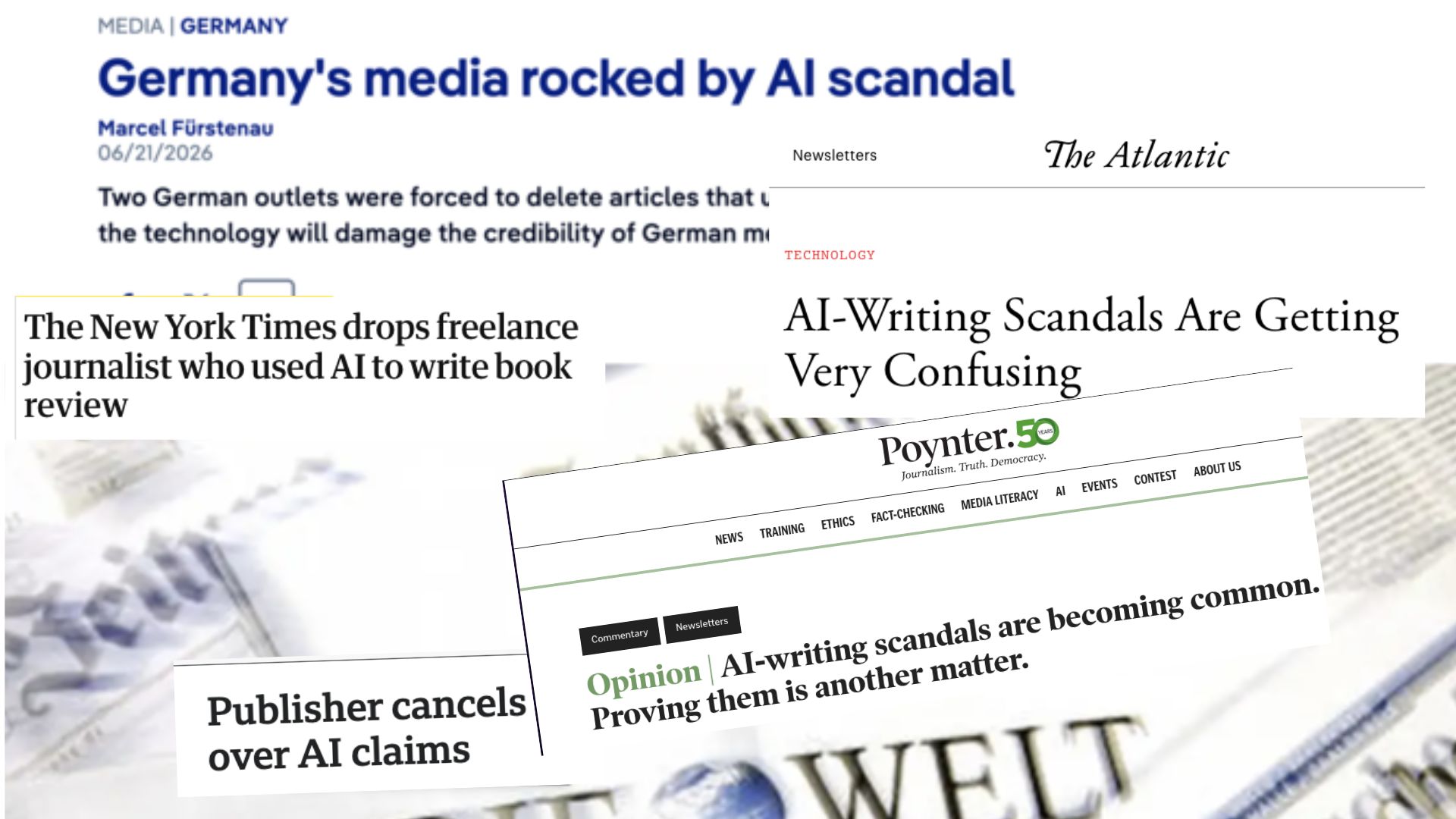
Newsrooms globally are grappling with the integrity of their opinion pages as instances of undisclosed artificial intelligence usage, fake bylines, and hallucinated quotes continue to rise. As publishers move to protect the quality of public debate, the challenge remains to balance the efficiency of new technology with the necessity of human accountability in journalism.
The recent surge in AI-related editorial scandals has forced several high-profile media organizations to retract content. In Germany, the daily Tagesspiegel removed opinion contributions from Stephan-Andreas Casdorff, stating they would remain deleted “until further notice.” Similarly, the Frankfurter Allgemeine Zeitung (FAZ) withdrew an op-ed piece from the state premier of Thuringia, Mario Voigt, after determining the text was generated with AI assistance. These incidents reflect a broader industry trend where the line between human-authored commentary and machine-generated output has become increasingly blurred.
The Impact of AI on Public Debate
The concerns regarding AI in opinion journalism extend beyond simple disclosure; editors argue that the technology alters the fundamental nature of discourse. Ingrid Skovdahl, Christian Andersen, and Lukas Marklund, editors at the politically focused outlet Altinget, have noted that AI-generated submissions often lack the concrete argumentation and unique voice required for meaningful debate. According to the editors, the “human dimension” of the debate has weakened, resulting in content that is more uniform in structure and tone but often incoherent in its reasoning.

This decline in quality is compounded by the risk of “hallucinations”—a phenomenon where AI models generate false information or fake quotes. Earlier this year, Peter vanderMeersch, retired CEO of Mediahuis Ireland, faced scrutiny after it was discovered that columns he published on Substack contained hallucinations in quotes. Such errors undermine the credibility of the platform and the author, highlighting the dangers of relying on generative tools for content that requires factual rigor.
Establishing New Editorial Standards
In response to these challenges, some newsrooms are moving toward formalizing their policies on AI usage. Altinget, which operates in Denmark, Norway, and Sweden, has introduced five specific guidelines for its contributors to ensure that the “role of the Altinget media house is to facilitate debate between people, not machines.” These guidelines emphasize that while AI may be used for brainstorming or grammar checks, the core of the argumentation must remain the author’s own.

The framework established by Altinget includes the following requirements for contributors:
- Language and thought are viewed as inextricably linked; therefore, the author’s own voice is essential for creating engagement.
- AI may be used as a tool for research and language correction, but reasoning and formulations must be human-generated.
- All factual information and sources must be verified by the contributor before a manuscript is submitted.
- The publication requires full transparency from contributors regarding any use of AI.
- Content that is deemed entirely or largely AI-generated will be rejected or returned to the author for reformulation.
A Global Challenge for Publishers
The issue is not limited to European media. In the United States, the Mississippi Free Press reported in April that it had inadvertently published an opinion column written by AI under a fake byline. Furthermore, in March, The New York Times ended its relationship with freelance journalist Alex Preston after discovering he had used AI to write a book review. These cases demonstrate that even well-established outlets are vulnerable to the rapid proliferation of automated content.

As media organizations continue to refine their editorial policies, the focus remains on maintaining trust with readers. While guidelines like those adopted by Altinget provide a potential roadmap for the industry, the responsibility for verifying content continues to rest heavily on the editorial teams tasked with reviewing submissions. The industry-wide conversation regarding AI transparency is ongoing, with further updates expected as newsrooms adjust their submission workflows to account for the capabilities of generative models.
Readers are encouraged to engage with the evolving standards of journalism by monitoring updates from their preferred news outlets and participating in the discussion regarding the role of technology in public discourse.
Keep reading