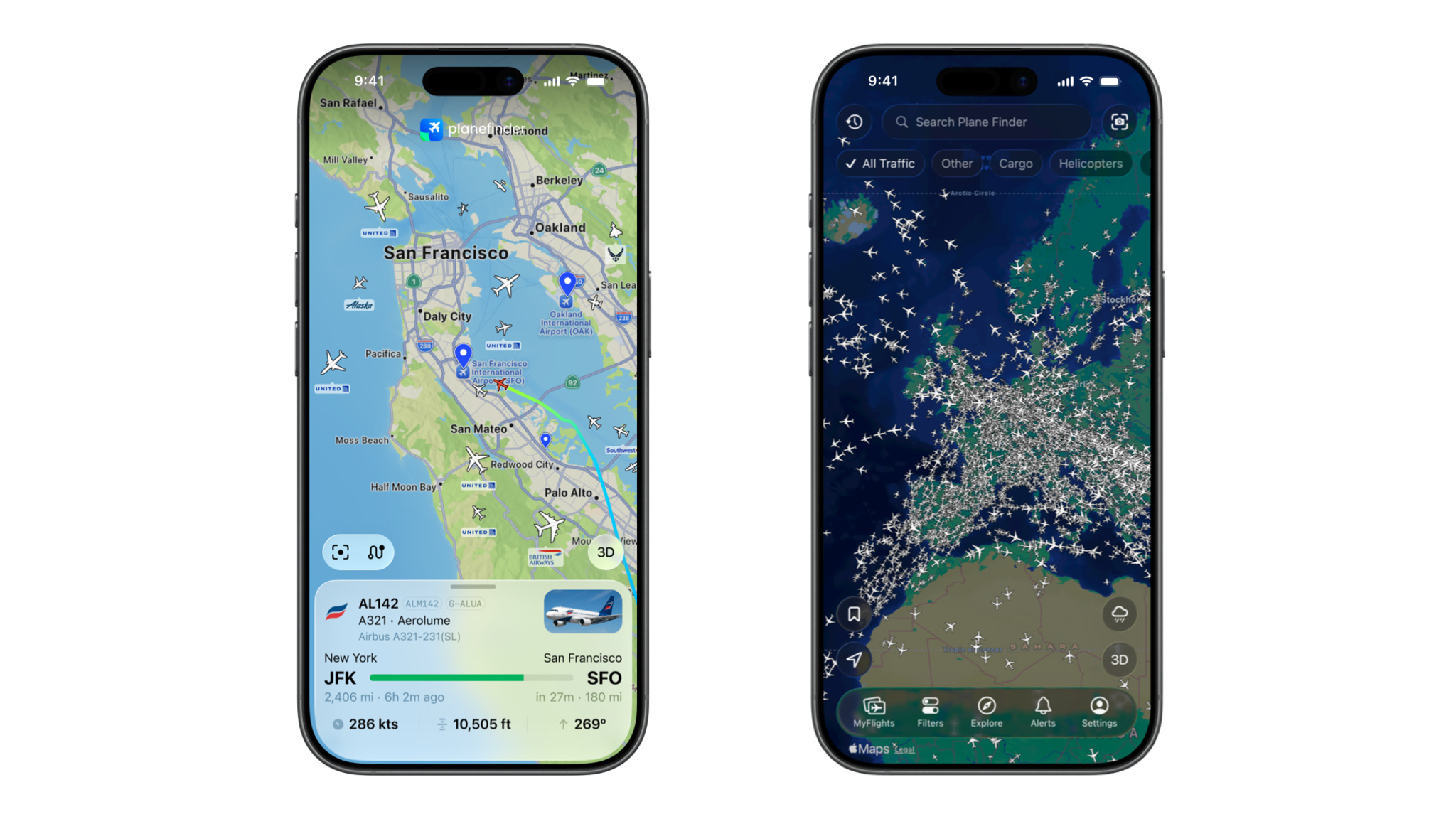
In the competitive landscape of global aviation telemetry, most companies scale by expanding their headcount, adding third-party vendors, and embracing platform agnosticism. However, Plane Finder has taken a radically different path. Since its launch in 2009, the UK-based company has grown from a simple “planes on a map” application into a full complete-to-end flight-tracking business, all while maintaining a lean team of just eight people according to Apple Developer.
Founded by married couple Jodie and Lee Armstrong, Plane Finder is a case study in deep vertical integration. While many modern software-as-a-service (SaaS) firms prioritize being available on every possible operating system, the Armstrongs made a long-term strategic bet on Apple’s native ecosystem. By sticking close to first-party tools and reading platform signals early, they have built a proprietary network that rivals major data aggregators without the typical corporate bloat.
The company’s evolution is not merely a software success story; it is a feat of radio frequency (RF) engineering. Today, Plane Finder does not simply license data from others. Instead, it operates its own global network of physical hardware, collecting positional information directly from aircraft and selling that data commercially. This transition from a consumer app to a primary data provider has created a defensive moat that allows a small team to compete on a global scale.
The “Steamroller” Philosophy: Betting on Native Tech
The technical architecture of Plane Finder is built entirely on Apple’s native frameworks, avoiding cross-platform frameworks or third-party middleware. This approach is driven by a specific leadership mindset. Jodie Armstrong describes her strategy using a metaphor: when new technologies emerge, a company can either be “part of the steamroller or part of the road.” Plane Finder consistently chooses to be the steamroller, evaluating and adopting new tools as quickly as possible to maintain a competitive edge.

Several specific Apple technologies have been instrumental in this growth. MapKit serves as the core of the user experience, providing the essential mapping functionality that allows users to visualize aircraft positions. For more complex visualizations, such as the app’s 3D globe view, the team leverages Metal, Apple’s low-overhead graphics API. To handle the complexities of global monetization and subscriptions, the company relies on StoreKit 2, which allows them to manage promotional offers and payments without external vendors.
Most recently, the team has leaned into the Liquid Glass UI paradigm. This emerging design language is intended to modernize the interface and improve user interaction. The adoption of Liquid Glass involved a tight collaboration between their design and engineering teams to ensure the new aesthetic aligned with the functional requirements of aviation tracking.
Owning the Data: The RF-to-UI Pipeline
The most significant differentiator for Plane Finder is its ownership of the data layer. Many flight-tracking services act as aggregators, paying markups to middlemen for data feeds. Plane Finder, however, has constructed a proprietary network of ADS-B (Automatic Dependent Surveillance-Broadcast) receivers as detailed by Archyde.
These receivers are physical antennas that decode Mode S and ADS-B signals at 1090 MHz. By designing and manufacturing their own receivers and antennas, the Armstrongs control the entire pipeline from the raw binary stream in the sky to the pixels on the user’s screen. This vertical integration reduces latency, eliminates API rate limits, and protects profit margins from the rising costs of data licensing.
The growth of this hardware network was organic and driven by the user base. The company began with a single receiver covering the south of the UK. As users in other regions—such as Scotland, Sweden, the United States, Africa, and Asia—expressed a desire for better local coverage, Plane Finder sent them receivers to host. This symbiotic relationship uses the app to identify coverage gaps and leverages the community to expand the physical infrastructure.

From a 2007 Spark to Global Scale
The origins of the business date back to the very beginning of the smartphone era. Lee Armstrong recalls that the spark for the company came from the 2007 unveiling of the original iPhone. While visiting the United States during the launch, he purchased a device that, at the time, could not even function as a phone in the UK and lacked an App Store. Despite these limitations, the experience of the hardware inspired the couple to launch Plane Finder on the App Store shortly after its opening in 2008, with the app officially launching in 2009 according to Apple Developer.
The company’s ability to scale with a team of only eight people is attributed to the efficiencies provided by the App Store ecosystem. By utilizing built-in tools for localization, credit card processing, and global distribution, the team avoided the need to build a massive internal operations department. This allows them to focus their limited headcount on high-value tasks: RF engineering, software development, and data analysis.
Key Technical Components of Plane Finder
| Component | Technology Used | Purpose |
|---|---|---|
| Mapping Interface | MapKit | Core “planes on a map” visualization |
| 3D Globe View | Metal | High-performance graphics rendering |
| Monetization | StoreKit 2 | Subscription and promotional offer management |
| Data Collection | ADS-B Receivers | Decoding 1090 MHz Mode S signals |
| User Interface | Liquid Glass | Modernized UI paradigm and design |
What Happens Next: “Double Glazed” and Machine Learning
Plane Finder is not resting on its current achievements. The company is currently working on an internal project code-named “Plane Finder Double Glazed.” This project represents the next iteration of their user interface, introducing wider UI changes that were held back during the initial rollout of Liquid Glass to ensure stability.
Beyond visual updates, the company is exploring the integration of machine learning and foundation models to enhance their flight-tracking capabilities. While the specific applications of these models have not been detailed, the move suggests a shift toward more predictive analytics and automated data processing within their aviation telemetry pipeline.
For users and aviation enthusiasts, Plane Finder remains available on iPhone, iPad, and Apple Watch. The company continues to use its app to identify strategic locations for new receiver deployments, ensuring that their global network grows in tandem with their audience’s needs.
The next major milestone for the company will be the rollout of the “Double Glazed” UI updates and the integration of their machine learning initiatives.
Do you use flight-tracking apps for work or travel? Share your thoughts on the evolution of aviation telemetry in the comments below.