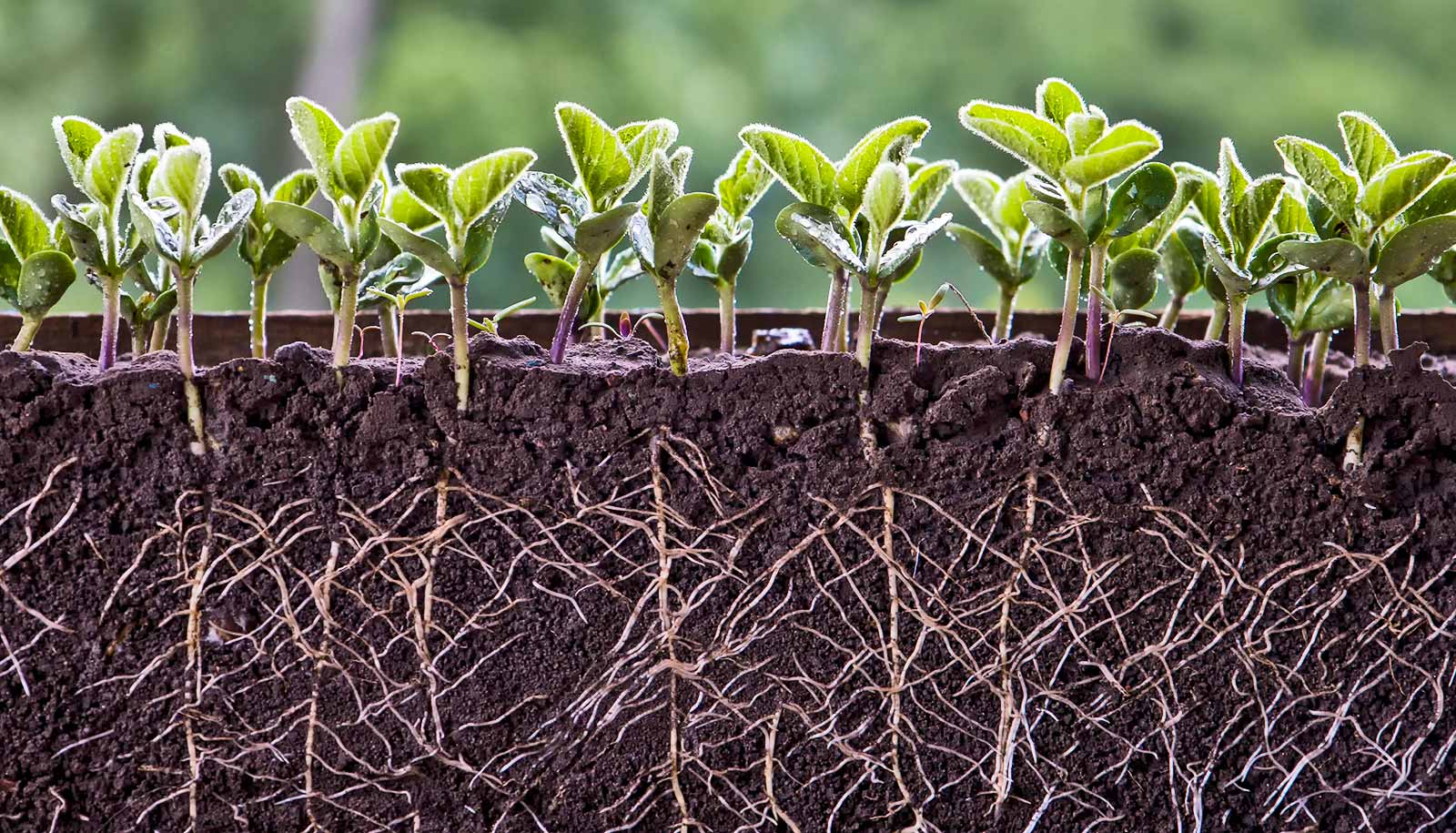
How Plants Conquer Compacted Soil: A Breakthrough in root biology with Implications for Sustainable Agriculture
(Original research published in Nature,November 2025)
The escalating challenges of soil compaction and climate-induced drought are threatening global food security. But a fascinating new revelation reveals that plants possess an inherent ability to overcome these obstacles, leveraging principles of engineering to navigate even the most densely packed soils. Researchers have, for the frist time, fully elucidated the mechanism behind this remarkable adaptation, opening exciting new avenues for crop development and sustainable agricultural practices.
The Growing Crisis of Soil compaction
Modern agriculture, reliant on heavy machinery, is increasingly contributing to widespread soil compaction. This compression reduces pore space, hindering root growth, limiting water infiltration, and ultimately diminishing crop yields.The problem is further exacerbated by increasingly frequent and severe droughts, particularly in regions experiencing aridification (as highlighted by recent climate studies). Compacted soil restricts access to vital water resources, creating a vicious cycle of stress for plants. For decades, agricultural scientists have sought solutions, focusing on minimizing compaction through machinery improvements and soil management techniques. However,this new research suggests a powerful complementary approach: enhancing the plant’s intrinsic ability to thrive in challenging conditions.
Unlocking the Plant’s Engineering Secret
Plants respond to compacted soil by thickening their roots – a phenomenon long observed, but poorly understood. the key, researchers now demonstrate, lies in a sophisticated interplay of hormonal signaling and cellular reinforcement, guided by the plant hormone ethylene. The study, led by researchers at the university of Copenhagen, the University of Nottingham, and Shanghai Jiao Tong University, reveals that plants essentially “tune” their root structure to function like a biological wedge.
“We’ve discovered that plants aren’t simply reacting to compaction; they’re actively engineering a solution,” explains Staffan Persson,Professor at the University of Copenhagen and senior author of the study. “The root increases in diameter and strengthens its outer cell walls, mirroring a fundamental engineering principle: a wider, more robust pipe is better equipped to resist buckling under pressure.”
This isn’t just an analogy. The research team found that the root’s response directly correlates with the mechanics of resisting compression. Bipin Pandey, Associate Professor at the University of nottingham and co-senior author, elaborates: “Think of pushing a flimsy straw into hard ground versus pushing a thick, reinforced tube. The plant is essentially building the reinforced tube.”
The Role of Transcription Factors and Cellulose Production
The breakthrough extends beyond simply observing the structural changes. researchers pinpointed a specific protein – a transcription factor – that, when increased, significantly enhances the root’s ability to penetrate compacted soil. Transcription factors are crucial regulators of gene expression, essentially acting as “on/off” switches for cellular processes.
“By manipulating the levels of this transcription factor, we can effectively ‘prime’ the root to better withstand compression,” says Jiao Zhang, the study’s first author and a postdoctoral researcher at Shanghai Jiao Tong University. “This opens up exciting possibilities for redesigning root architecture through targeted crop breeding.”
Crucially, the study also reveals that this mechanism is deeply connected to cellulose production – the primary component of plant cell walls. the team identified numerous additional transcription factors that appear to regulate cellulose synthesis,suggesting a vast potential for manipulating plant cell wall properties.
Broad Applicability and Future Implications
While the initial experiments where conducted on rice, the researchers believe the underlying mechanism is broadly conserved across plant species.Evidence supporting this comes from observations in Arabidopsis thaliana, a model plant species evolutionarily distant from rice, where similar mechanisms were identified.
“This isn’t just about rice,” emphasizes Wanqi Liang, Professor at Shanghai Jiao Tong University. “Our findings have the potential to revolutionize crop development, creating varieties better suited to withstand the pressures of modern agriculture and a changing climate. This is a critical step towards ensuring future food security.”
The implications extend beyond simply improving root penetration. the ability to manipulate cellulose production and cell wall structure could led to:
* Drought resistance: Stronger cell walls can definitely help plants retain water more effectively.
* Improved Nutrient uptake: Enhanced root systems can access a wider range of nutrients.
* Novel Plant Forms: Precisely controlling cell wall development could allow for the creation of plants with tailored shapes and structures, optimizing light capture or resource allocation.
A “Goldmine” for plant Biology
The research team is optimistic about the future. “The transcription factors we’ve discovered are a goldmine for cell-wall biology,” concludes Professor Persson. “There’s a wealth of knowledge to be gained, and this is just
Related reading