
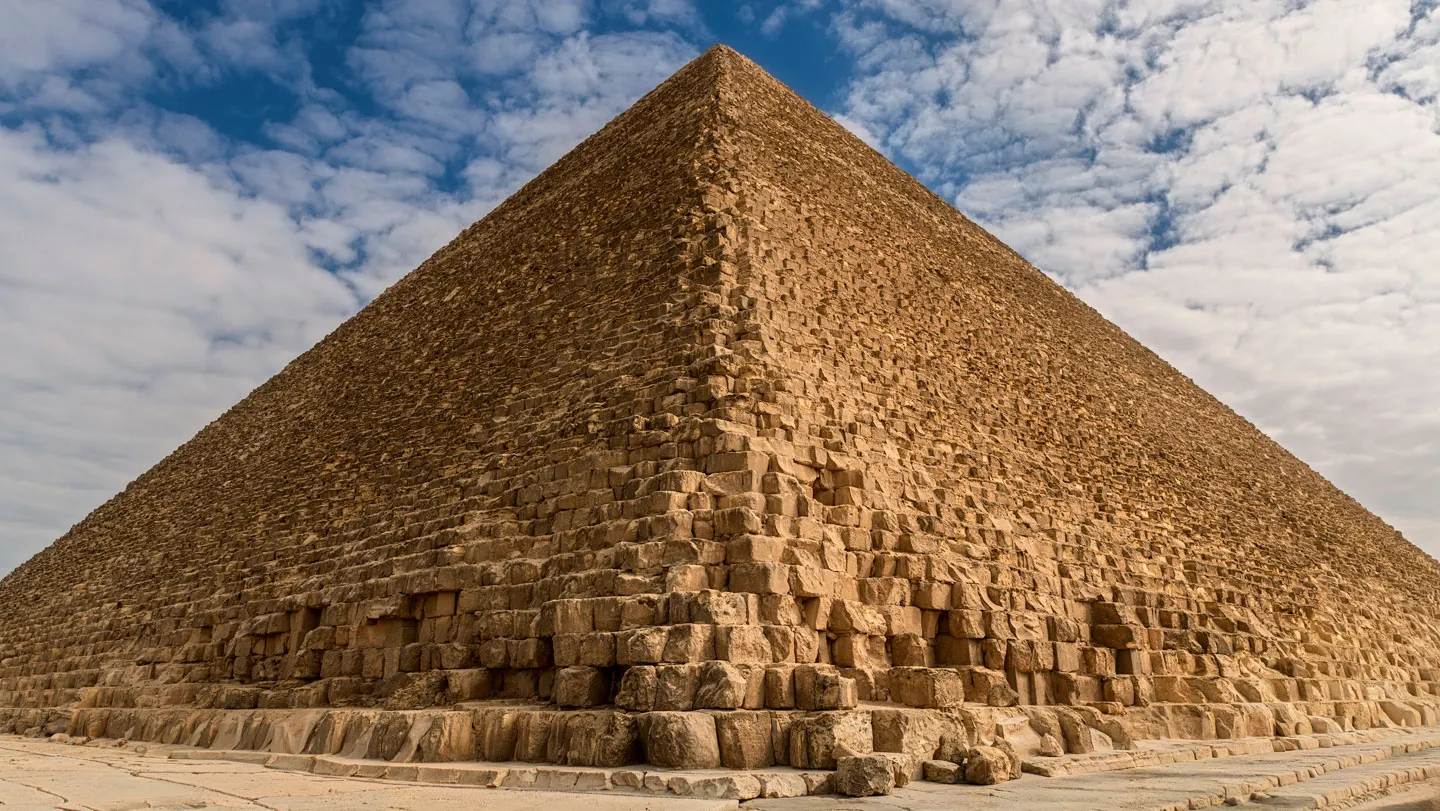
The Great Pyramid of Giza, a monumental feat of ancient engineering, has long captivated historians and structural engineers alike. While its sheer scale—rising to an original height of 146.6 meters—remains a testament to human ambition, scientists have increasingly turned their attention to the structural secrets that have allowed this limestone giant to withstand millennia of seismic activity. Understanding why the Great Pyramid of Giza has remained standing for over 4,500 years requires looking beyond its iconic geometry to the subtle interplay between its foundational design and the geological environment of the Giza Plateau.
Recent research into the longevity of the Great Pyramid of Giza has highlighted how the structure interacts with the ground beneath it. By examining the physical properties of the site, experts have identified that the pyramid’s interaction with the surrounding soil and bedrock acts as a natural dampening system. This phenomenon, often discussed in the context of soil-structure interaction, suggests that the pyramid was not merely placed upon the earth but was effectively integrated into a landscape that mitigates the destructive energy of seismic waves. According to the UNESCO World Heritage Centre, the Giza necropolis has survived countless tectonic shifts, serving as an unintended laboratory for earthquake-resistant design.
For those interested in the history of this site, the official Ministry of Tourism and Antiquities provides ongoing updates regarding preservation efforts and archaeological findings at the Giza Plateau. As we explore the engineering marvels of the ancient world, the pyramid’s survival is not a matter of luck, but a reflection of sophisticated, albeit intuitive, structural planning that continues to inform modern seismic research.
The Mechanics of Seismic Resistance
At the heart of the pyramid’s durability is a combination of mass, friction, and vibrational frequency. Unlike modern high-rise buildings, which are often designed to sway with seismic forces using complex dampening systems, the Great Pyramid relies on its immense base and the compressive strength of millions of limestone blocks. When seismic waves propagate through the earth, the way a building responds is heavily influenced by its fundamental frequency. If the building’s frequency matches the ground’s vibration, resonance can lead to catastrophic failure. The Great Pyramid’s massive footprint and low center of gravity ensure that its natural frequency is far removed from the typical energy peaks of seismic events in the region.

the physical contact between the pyramid’s base and the underlying limestone bedrock creates a unique interface. In geotechnical engineering, the study of how soil and rock properties affect the transmission of waves is critical for evaluating site response. The Giza Plateau’s dense, solid limestone foundation provides a stable platform that minimizes the amplification of seismic shaking. This represents a stark contrast to structures built on softer, alluvial soils, which can liquefy or oscillate violently during an earthquake. The United States Geological Survey notes that the local geology is a primary factor in determining the intensity of ground motion experienced by any structure, regardless of its design.
Design Choices and Structural Longevity
Beyond the foundation, the internal arrangement of the pyramid’s core also plays a role in its resilience. The use of massive, precisely cut stone blocks distributed the weight of the structure in a way that prevented the accumulation of stress concentrations. By avoiding rigid, brittle connections in favor of a gravity-based system, the builders created a structure that is inherently stable. Even as the outer casing stones have been stripped away over centuries, the core remains largely intact, demonstrating the efficacy of its load-bearing design.
Modern architectural studies often look to such ancient structures to understand “passive” survival strategies. While we now utilize advanced technologies like base isolation—where buildings are decoupled from their foundations using bearings—the Great Pyramid achieved a similar, albeit passive, result through its sheer geometry. The slope of the sides, calculated to reach the apex at a specific angle, helps redirect vertical and horizontal forces downward into the bedrock, effectively shedding energy that would otherwise threaten to topple a less stable construction.
Implications for Modern Engineering
The lessons learned from the Great Pyramid are not merely historical curiosities; they are actively informing how we approach infrastructure safety today. As urbanization increases in seismically active zones, engineers are increasingly looking at how site-specific soil conditions and simple, robust structural forms can provide a first line of defense against natural disasters. The goal of modern seismic engineering, as outlined by global bodies like the National Information Centre of Earthquake Engineering, is to create structures that protect life and property by managing energy dissipation effectively.

By studying the Giza Plateau, researchers gain insights into long-term durability that computer models alone cannot always capture. The endurance of the pyramid serves as a benchmark for what is possible when structural design is perfectly harmonized with the surrounding environment. As we continue to face the challenges of climate change and shifting tectonic landscapes, the ancient wisdom of the Old Kingdom provides a foundational perspective on sustainability and resilience in the built environment.
What Happens Next
The study of the Great Pyramid is an ongoing process, with new non-invasive scanning technologies, such as muon tomography, being used to map the internal structure of the monument without disturbing its integrity. These efforts, coordinated by international research teams under the oversight of Egyptian authorities, aim to uncover any remaining hidden chambers and further analyze the structural composition of the core. Readers interested in the latest findings can monitor the official announcements from the Egyptian Ministry of Tourism and Antiquities for updates on research expeditions and site-wide management plans.
We invite our readers to share their thoughts on these remarkable engineering feats. How do you believe ancient techniques can continue to shape modern sustainable architecture? Join the conversation in the comments section below or share this article with your network to keep the discussion on ancient innovation alive.