A federal rule change announced on July 10, 2026, has fundamentally altered the interpretation of the Endangered Species Act (ESA) by narrowing the definition of “harm” to exclude habitat modification. Under this new regulatory framework, while the government maintains protections against the direct killing of threatened and endangered species, it no longer classifies the destruction of their essential habitats as a prohibited “take” under the law. This shift marks a significant departure from 50 years of federal policy, which previously utilized the definition of harm to prevent actions that rendered ecosystems uninhabitable for protected species.
The Supreme Court of the United States affirmed the reasonableness of this interpretation in its 1995 decision in Babbitt v. Sweet Home Chapter of Communities for a Great Oregon, ruling that the federal government acted within its authority to define harm to include indirect habitat destruction.

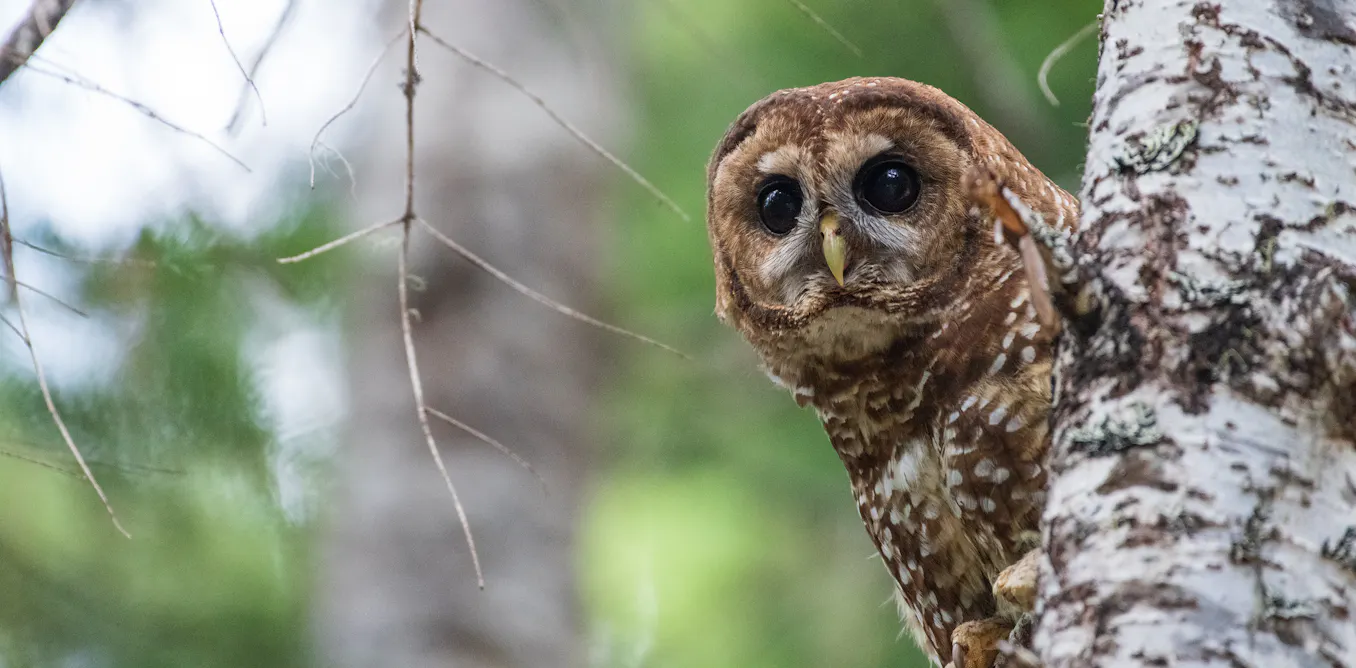
Northern spotted owls living in old growth forests in the Pacific Northwest were listed as threatened species because of habitat loss. Kyle Sullivan/Bureau of Land Management, CC BY
It wouldn’t make much sense to prohibit people from shooting a threatened woodpecker while allowing its forest to be cut down, or to bar killing endangered salmon while allowing a dam to dry out their habitat.
The practical implications of this policy shift are significant, given that the primary driver of extinction risk in the United States is the loss of natural environments. A 2019 study analyzing the reasons for listing species under the ESA between 1975 and 2017 found that only 17% were primarily threatened by direct killing, such as hunting or poaching. In contrast, 81% of species were listed due to habitat loss and degradation, according to the same research. As natural landscapes are converted to agriculture, urban sprawl, or industrial use, ecosystems become fragmented, leaving species without the space required to survive and reproduce.

Green sea turtles, like this hatchling in Florida, are endangered due in part to habitat destruction and fishing nets. Keenan Adams/USFWS
Currently, more than 107 million acres of land in the U.S. are designated as critical habitat for species listed under the Endangered Species Act, as reported by the U.S. Fish and Wildlife Service. While industry groups and developers have long argued that strict habitat protections can impede economic development, the removal of habitat destruction from the definition of “harm” effectively accelerates land use changes in areas previously shielded by federal oversight. The administrative change does not include a formal environmental impact analysis, a procedural step that often accompanies major regulatory shifts, meaning the long-term consequences for biodiversity remain unquantified by the government.
The Catalina Island fox is endemic to Catalina Island. Habitat loss, diseases introduced by domestic dogs, and predators have diminished the population of these small foxes to threatened status. Catalina Island Conservancy/Wikimedia Commons, CC BY-SA
The administration’s shift in policy has been accompanied by statements from officials regarding the role of technology in species conservation. Secretary of the Interior Doug Burgum has previously suggested that advancements in genetic technology, such as the modification of gray wolf genomes to reflect extinct dire wolves, could provide a pathway for future population management. However, critics of the rule change argue that such measures are not a substitute for the protection of existing wild populations and their natural habitats. The Center for Biological Diversity has noted that the ESA has historically been credited with preventing the extinction of 99% of the species under its protection, largely through the preservation of critical environments.

The golden-cheeked warbler breeds only in Texas, primarily in Texas Hill Country. It has been losing habitat as development expands in the region. Steve Maslowski/USFWS, CC BY
The legal landscape surrounding this change is expected to be contentious. Wildlife advocacy groups have indicated plans to initiate litigation, arguing that the new rule contradicts the original congressional intent of the 1973 act, which specifically aims to conserve the ecosystems upon which endangered species depend. As the rule takes effect, the focus will shift to the federal courts, where judges will determine whether the executive branch’s narrowed definition of “harm” remains consistent with the statutory language of the Endangered Species Act and the precedent established by the Supreme Court.
Keep reading