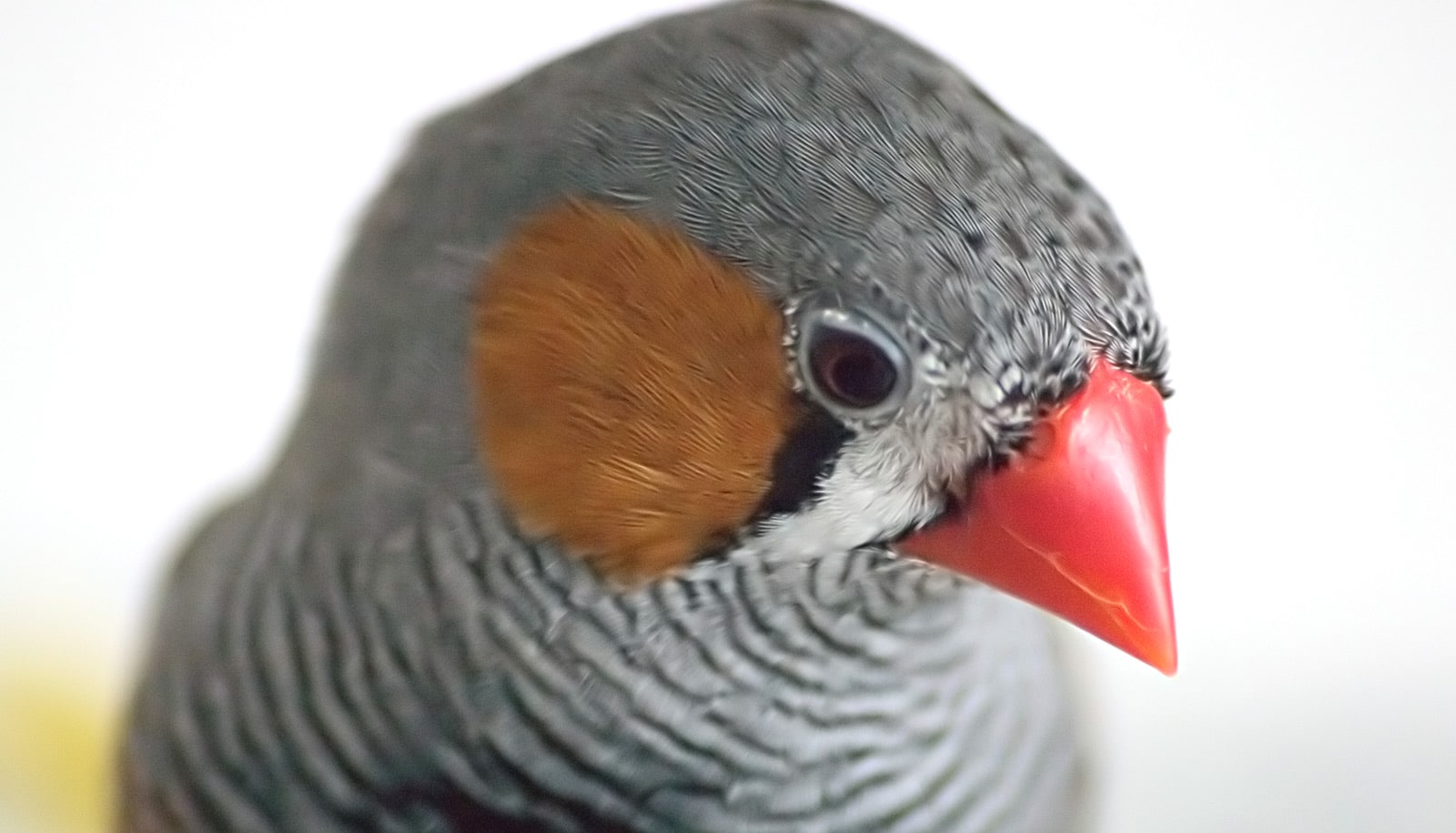
How do songbird brains create new neurons? This question has intrigued neuroscientists for years, especially given the stark contrast between mammals and other vertebrates. Whereas the human brain largely stops producing new neurons after birth, many animals—including songbirds like the zebra finch—continue generating fresh neurons throughout life. A recent study from Boston University sheds new light on this process, revealing surprising insights into how these birds refresh their brains and what it might mean for understanding human neurodegenerative disorders.
The zebra finch, a small songbird native to Australia, has long been a favorite model for studying vocal learning and neural plasticity. Despite its modest size—typically only several inches from beak to tail—it demonstrates a remarkable capacity to learn and perfect new sounds. Researchers at Boston University turned to this species not only for its song-learning prowess but because it is considered a “champion” of adult neurogenesis, the biological process by which new neurons are born, migrate and mature in the brain.
Using electron microscopy-based connectomics—a high-resolution imaging technique—the team observed something unexpected: rather than gently navigating around existing brain structures, new neurons in the zebra finch brain actively tunnel through tissue, displacing and reshaping mature cells as they migrate to integrate into neural circuits. This behavior, described by lead researcher Benjamin Scott as resembling “explorers forging a path through a dense jungle,” contrasts sharply with the assumed migratory patterns in mammals, where young neurons were thought to rely on glia scaffolds—supportive structures that act like highways for cell movement.
In humans and most mammals, these glia scaffolds largely disappear after birth, which scientists once believed explained why adult neurogenesis is so rare. However, the Boston University findings challenge that assumption. The study shows that zebra finch neurons can migrate effectively even without these scaffolds, suggesting that the absence of such structures may not be the primary barrier to brain regeneration in mammals. Instead, the researchers propose that the disruptive nature of tunneling neurons—while beneficial for repair and learning—could pose risks to existing neural networks, including memory storage.
This trade-off may help explain why evolution favored limiting neurogenesis in mammalian brains. As Scott suggests, one hypothesis is that restricting neuron integration after birth serves as a protective mechanism, preventing potentially damaging incursions into established circuits. “This potentially disruptive behavior may help explain why humans and other mammals have limited capacity to regenerate brain tissue in adulthood, leaving us more vulnerable to neurodegenerative disorders such as Alzheimer’s disease,” Scott said in a statement accompanying the study’s release.
Yet there is an alternative, more optimistic interpretation. The discovery that neurons can migrate without glia scaffolds opens new possibilities for regenerative medicine. If scientists can harness or mimic this tunneling ability in human cells, it might one day enable stem cell therapies that promote brain repair without requiring complex scaffolding systems. Such approaches could theoretically support recovery from injury or slow the progression of diseases involving neuron loss.
To understand the molecular mechanisms behind this process, Scott’s team is now using single-cell RNA sequencing to analyze which genes are active in migrating neurons. This technique allows researchers to track how new neurons communicate with neighboring cells during transit—whether they signal their arrival, how they know when to stop, and how they integrate into existing circuits. The work bridges disciplines, combining tools from biomedical engineering, neuroethology, and comparative cognition.
The study also involved collaboration with researchers from the MRC Laboratory of Molecular Biology in the United Kingdom and the Max Planck Institute for Biological Intelligence in Germany. Funding was provided by the BU Neurophotonics Center. The findings were published in Current Biology, a peer-reviewed journal known for rigorous biological research.
While the research does not yet offer direct treatments for human brain disorders, it provides a critical foundation for rethinking the limits of neural plasticity. By studying how songbirds balance renewal with stability, scientists may uncover principles applicable to enhancing brain resilience in humans. As Scott reflects, “We share a lot with our animal relatives on this planet… by learning more about the biology of songbird brains, we could learn some remarkable things about our own.”
The next steps in this research involve completing ongoing gene expression analyses and testing whether insights from zebra finch neurogenesis can inform experimental models of brain repair. No clinical trials or therapeutic applications are currently underway based on this work, but the fundamental discoveries contribute to a growing body of knowledge about evolutionary differences in brain maintenance across species.
For readers interested in the latest developments in neuroscience and brain health, following updates from Boston University’s Laboratory of Comparative Cognition and the BU Neurophotonics Center offers a reliable path forward. These institutions regularly publish findings related to neural plasticity, imaging innovations, and cross-species brain studies.
What does this mean for our understanding of the aging brain? While we cannot yet songbird-proof human neural circuits, the research invites a shift in perspective: rather than viewing the adult brain as a static organ, we may begin to notice it as one whose potential for renewal is constrained not by absolute inability, but by evolutionary trade-offs between stability and adaptability. The zebra finch, in its quiet persistence of renewal, offers a glimpse of what might be possible.
If you found this explanation helpful, consider sharing it with others curious about how the brain works—and what we might learn from the animal world. Comments and discussions are welcome below as we continue to explore the frontiers of neuroscience together.