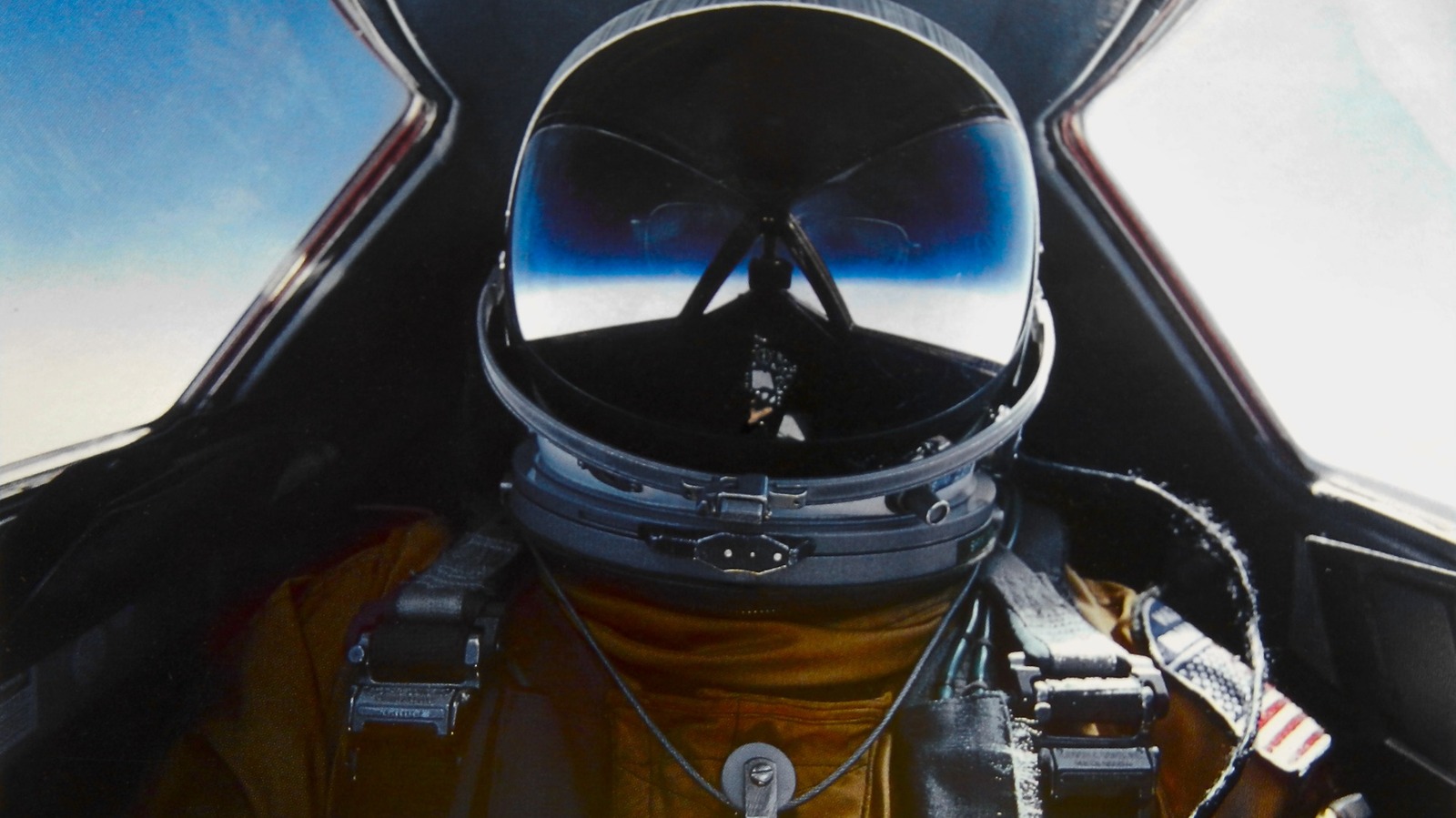
Crews of the Lockheed SR-71 Blackbird underwent specialized physiological and psychological training that mirrored astronaut protocols more than standard flight school, according to records from the Smithsonian National Air and Space Museum. Because the aircraft operated at altitudes exceeding 85,000 feet and speeds surpassing Mach 3, pilots and reconnaissance systems officers required full-pressure suits and rigorous decompression training to survive an emergency cockpit breach.
The SR-71 was not merely a fast airplane; it was a high-altitude platform that operated in a near-vacuum environment. To manage these risks, the U.S. Air Force implemented a training regime focused on life-support systems, G-force tolerance, and the psychological demands of extreme isolation. This preparation shifted the role of the crew from traditional aviators to operators of a complex, integrated weapon system where the suit was as critical as the engine.
The necessity for this “astronaut-style” preparation stemmed from the physics of the stratosphere. At the Blackbird’s operational ceiling, the atmospheric pressure is so low that blood would boil at body temperature without a pressurized environment—a phenomenon known as the Armstrong Line. According to the Smithsonian National Air and Space Museum, this required the development and mandatory use of the S-1030 pressure suit, which served as a personal spacecraft for the crew.
The S-1030 Pressure Suit and Life Support Integration
Unlike standard flight suits, the S-1030 was a complex piece of engineering designed to keep the pilot alive if the cockpit lost pressure. The suit was a full-body enclosure that required a lengthy “donning” process, often involving a ground crew to ensure a perfect seal. According to NASA and Air Force historical records, the suit provided a pressurized oxygen environment and protected the crew from the extreme temperatures generated by skin friction at Mach 3.
The preparation for wearing these suits was grueling. Crews had to train in pressure chambers to understand how their bodies reacted to rapid decompression. This training ensured that if a window cracked or a seal failed at 80,000 feet, the pilot would not panic and could execute the emergency descent procedures while the suit automatically inflated to provide life-sustaining pressure.
The suit also managed the “thermal soak” of the aircraft. At top speeds, the SR-71’s titanium skin could reach temperatures over 600 degrees Fahrenheit. While the cockpit was pressurized and cooled, the suit provided an additional layer of thermal protection and managed the flow of 100% oxygen to prevent hypoxia, a condition where the brain is deprived of oxygen due to low pressure.
Physiological Demands of Mach 3 Flight
Flying at three times the speed of sound introduced physical stressors rarely encountered by other pilots of the era. The SR-71 crews faced significant G-loads during high-speed turns and the immense psychological pressure of operating in hostile airspace where their only defense was speed. According to the National Museum of the U.S. Air Force, the physical toll included extreme fatigue from the long-duration missions and the mental strain of monitoring complex systems while traveling at 3,000+ mph.

The training regimen included centrifugal training to prepare pilots for the G-forces experienced during the aircraft’s climb and maneuvers. Because the SR-71 was an unstable platform that required constant adjustment, the cognitive load on the pilot was immense. The Reconnaissance Systems Officer (RSO) also faced high stress, managing high-resolution cameras and electronic intelligence sensors while navigating the aircraft’s precise flight path to avoid detection.
Furthermore, the crews had to be trained in “fuel management” in a way that was unique to the Blackbird. The aircraft’s JP-7 fuel was designed to be stable at high temperatures, but the fuel tanks actually leaked on the ground because the airframe was designed to seal only when the titanium expanded due to frictional heat at high speeds. Pilots had to be psychologically prepared to take off in an aircraft that was literally dripping fuel, knowing the seals would only tighten once they hit Mach 2.
Psychological Conditioning and Mission Isolation
The SR-71 program operated under extreme secrecy, which added a layer of psychological isolation to the crew’s experience. Pilots and RSOs were often stationed at remote bases and operated under “Need to Know” protocols that limited their interaction with other military units. This environment mirrored the isolation of early space missions, where the crew relied entirely on their training and a small team of ground controllers.
The missions themselves were exercises in precision and endurance. A typical mission involved flying thousands of miles over contested territory, often alone in the sky. The mental discipline required to maintain a precise heading and speed—essential for the cameras to capture usable intelligence—while knowing that a single mistake could lead to a catastrophic failure, required a level of focus akin to that of an astronaut during a lunar landing.
Training also emphasized the “crew concept.” The pilot and RSO functioned as a single unit. The RSO was not just a passenger; they were responsible for the mission’s success, handling navigation and sensor operation. This interdependence was fostered through joint simulator training that emphasized communication and mutual trust under extreme stress.
Comparison of SR-71 and Traditional Fighter Pilot Training
The distinction between a “pilot” and an “SR-71 operator” can be seen in the priorities of their training. While a fighter pilot focuses on dogfighting, agility, and tactical engagement, the SR-71 crew focused on systems management, physiological survival, and strategic endurance.

| Feature | Traditional Fighter Pilot | SR-71 Crew (Astronaut-Style) |
|---|---|---|
| Primary Gear | G-suit / Flight helmet | Full-pressure S-1030 suit |
| Critical Risk | Enemy aircraft / Surface-to-air missiles | Rapid decompression / Thermal failure |
| Training Focus | Combat maneuvers / Tactical engagement | Systems management / Physiological survival |
| Flight Environment | Troposphere / Lower Stratosphere | Upper Stratosphere (Near-vacuum) |
This shift in training philosophy recognized that the SR-71 was less like a plane and more like a reusable spacecraft. The emphasis on the “man-machine interface” meant that the crew had to understand the chemistry of their fuel and the physics of their pressure suits as deeply as they understood the aerodynamics of the aircraft.
The Legacy of High-Altitude Human Performance
The lessons learned from the SR-71 crews contributed significantly to the understanding of human performance in extreme environments. The data collected on how pilots handled hypoxia, G-load, and long-term isolation helped refine the protocols used by NASA for subsequent space missions. The integration of the pressure suit as a primary safety system proved that humans could operate effectively at the edge of space, provided the training was sufficiently rigorous.
The SR-71 was retired in 1998, but its influence persists in the design of modern high-altitude drones and the training of pilots for experimental aircraft. The transition from “flying a plane” to “managing a system” began with the Blackbird crews, who proved that the limit of flight is not just the machine’s capability, but the human’s ability to survive the environment.
For those interested in the technical specifications of the aircraft, the NASA archives provide detailed insights into the aerodynamic challenges of sustained supersonic flight. The SR-71 remains a benchmark for the intersection of aerospace engineering and human physiology.
The history of the SR-71 is preserved through various museum exhibits and official Air Force histories. There are no further scheduled flight operations for the Blackbird, as the fleet has been retired to museums and storage. For updated information on aerospace history and current high-altitude research, readers can follow official updates from the U.S. Air Force and NASA.
Do you have experience with aviation history or high-altitude technology? Share your thoughts or questions in the comments below.
Worth a look