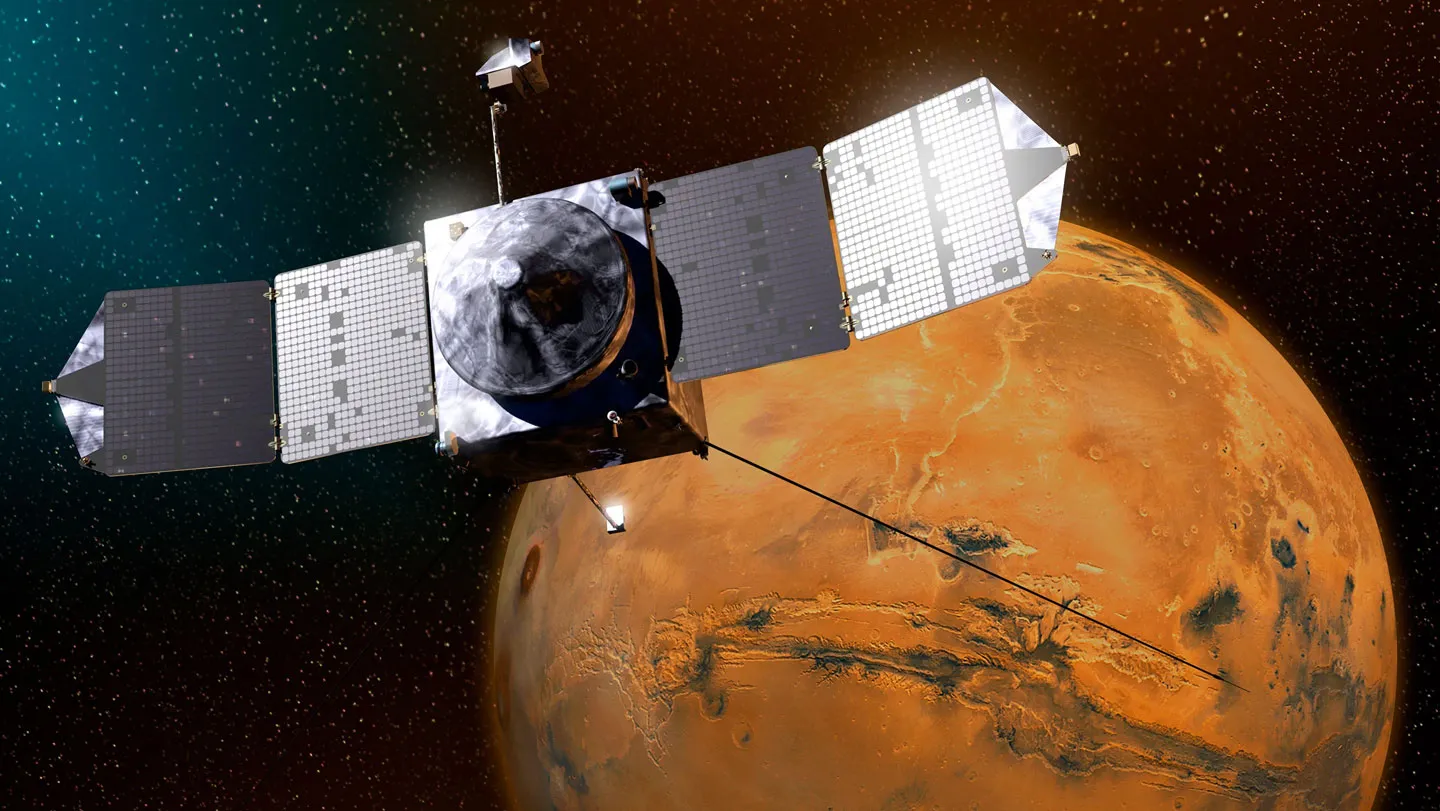
As a physician, I have long been fascinated by how we study the fragility of environments—whether it is the complex climate of our own planet or the thinning air of our neighbors in the solar system. For over a decade, the Mars Atmosphere and Volatile Evolution (MAVEN) orbiter served as a vital instrument for planetary science, providing us with unprecedented data regarding the Martian atmosphere. Recently, NASA confirmed the conclusion of the MAVEN mission, marking the end of a highly productive chapter in space exploration that fundamentally changed our understanding of the Red Planet.
The MAVEN orbiter was designed to investigate the history of the Martian climate, specifically focusing on how the solar wind strips away the planet’s atmosphere and why the world lost its water. Since its arrival at Mars in 2014, the spacecraft has acted as a sentinel, monitoring the interaction between the sun and the planet’s upper atmosphere. According to official documentation from NASA, the mission successfully achieved its primary science objectives, providing a comprehensive look at the processes that transformed a potentially habitable world into the arid environment we observe today.
Deciphering the Martian Climate
The core scientific contribution of the MAVEN mission lies in its ability to quantify atmospheric loss. By studying the escape of gases into space, scientists were able to reconstruct the history of Mars’ environment. This research is not merely an exercise in astronomy; it provides critical context for planetary habitability. Understanding how a planet transitions from a water-rich environment to a barren landscape offers lessons on the dynamics of atmospheric retention and solar influence, which are central themes in modern planetary science and astrobiology.
During its tenure, the orbiter utilized a suite of instruments to sample the Martian ionosphere and magnetosphere. The data collected confirmed that the solar wind—a stream of charged particles released from the sun—is a primary driver in the stripping of the Martian atmosphere. This discovery explains why Mars, which once possessed a thicker atmosphere and liquid water on its surface, now features an atmospheric pressure less than 1% of that found on Earth at sea level, as noted in reports by the NASA Science Mission Directorate.
The Legacy of MAVEN
The end of the MAVEN mission serves as a reminder of the inherent risks and the finite lifespans of our robotic explorers. Operating in the harsh radiation environment of Mars for more than ten years is a testament to the engineering prowess of the teams at NASA and the University of Colorado Boulder, which led the mission’s science operations. The data archives generated by MAVEN will remain a cornerstone for researchers for decades, serving as a baseline for future missions that seek to explore the potential for past life on Mars.
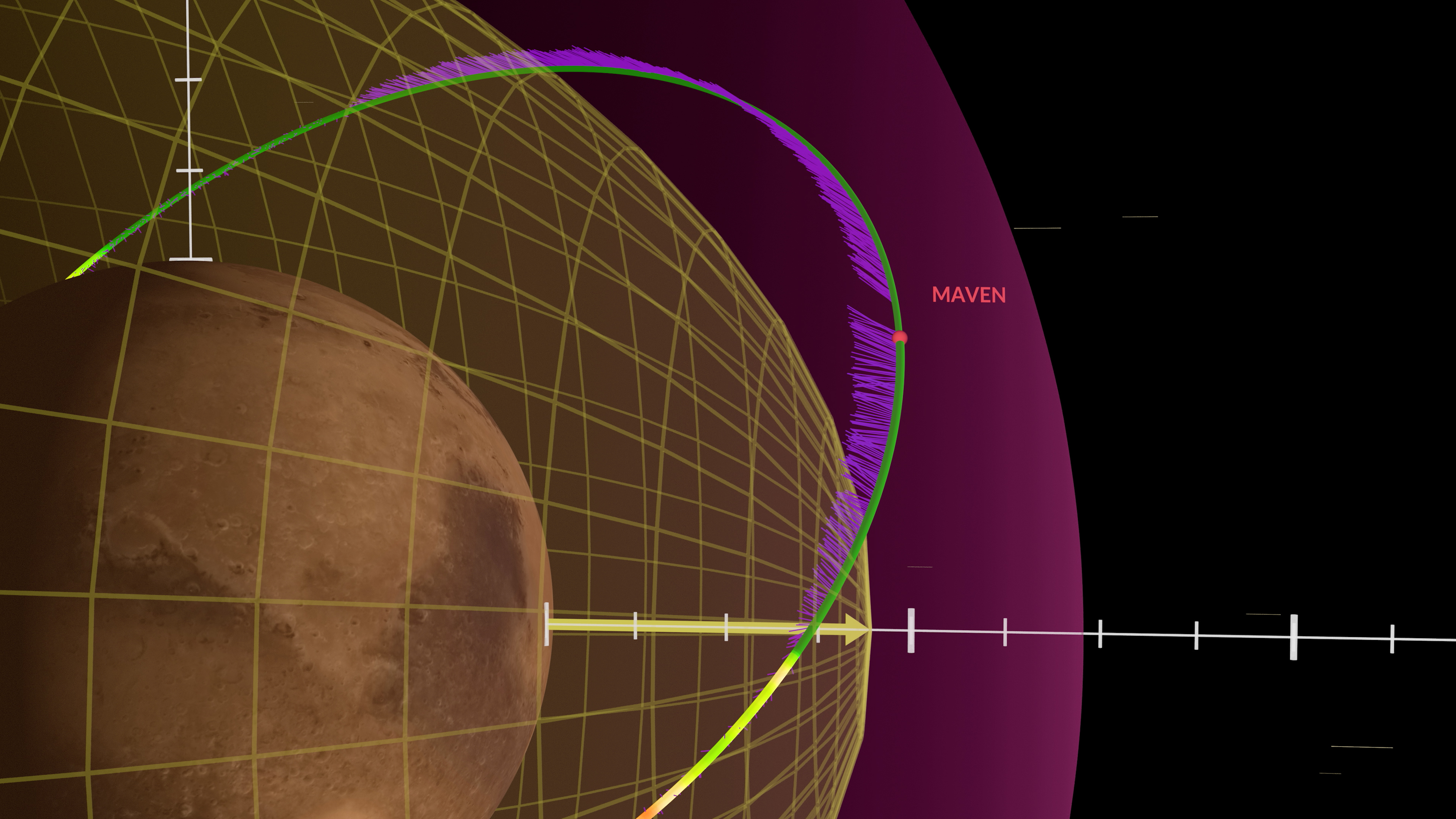
For those of us in the scientific community, the conclusion of such a mission is bittersweet. While we lose the real-time stream of data, we gain a consolidated body of knowledge that reshaped our textbooks. The mission’s success in mapping the escape of oxygen and hydrogen into space has been instrumental in verifying models of planetary evolution. It highlights the importance of sustained, long-term observation in uncovering the secrets of our solar system.
Looking Toward Future Exploration
As the MAVEN mission concludes, the focus of the global space community shifts toward the next generation of Martian exploration. NASA continues to maintain an active presence on and around the planet through various rovers and other orbiters, ensuring that the legacy of discovery remains uninterrupted. The insights gained from MAVEN are already being integrated into the planning of future missions, which aim to further investigate the subsurface water ice and the potential for ancient microbial habitats.
The mission has effectively answered the foundational questions it was sent to address: how the solar wind strips away the planet’s atmosphere, and why the world lost its water. As we synthesize these findings, we are better equipped to understand the broader context of planetary health, a concept that resonates deeply with those of us dedicated to the study of complex, living systems. The data provided by MAVEN is publicly accessible through the NASA Planetary Data System, where it remains available for researchers and students worldwide to continue this vital work.
The conclusion of MAVEN is not a final stop, but a transition point. As NASA continues to process the final telemetry and transition the mission into its archival phase, the scientific community awaits the publication of final synthesis papers that will further cement the mission’s findings in the annals of space exploration. I encourage our readers to stay tuned to official NASA updates regarding the final decommissioning procedures and to share their thoughts on the significance of this mission in the comments below.
Worth a look