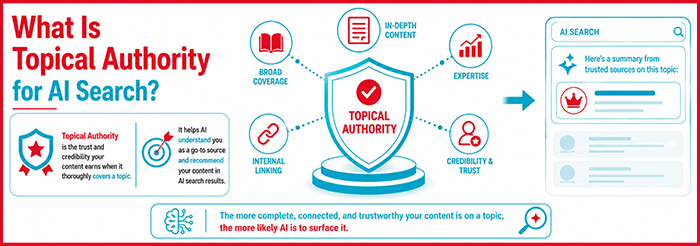
Topical authority in AI search determines whether modern answer engines recognize a website as a dependable, comprehensive source for a defined subject. As generative search tools like ChatGPT, Perplexity, Gemini, and Google AI Overviews transform how users discover information, building a robust content architecture goes far beyond traditional keyword optimization. According to industry analyses, establishing true topical authority requires a deliberate matrix of content depth, structural architecture, and entity signaling that proves a brand’s genuine expertise to automated systems.
Search algorithms and generative AI models do not simply select pages based on repeated keywords. Instead, they synthesize information across multiple sources to deliver direct answers. Research highlights that topical relevance and source position significantly influence citation placement in generative results. Furthermore, analysis of Google AI Overviews indicates that a substantial share of cited domains do not even appear among traditional first-page search results, proving that classic ranking metrics alone no longer guarantee visibility inside AI-generated answers.
Defining Topical Authority and Semantic Depth
Topical authority describes the collective trust and expertise a website builds over a focused subject area. Rather than treating individual keywords and pages as isolated units of work, semantic search and AI systems analyze broader contextual frameworks. Google’s generative search features often employ query fan-out mechanics to generate related searches, subsequently retrieving pages that cover connected user needs with clarity and depth.
Creating this foundation involves structured content planning. A pillar page typically defines the central subject, while cluster pages address narrower, specific subtopics. Contextual internal links connect these assets, forming a clear navigation path for human readers and search crawlers alike. Content breadth matters, but raw page volume does not equal authority. A focused digital library requires complete topic coverage, verifiable accuracy, firsthand insights such as original data or expert commentary, and consistent brand and author entity signals.
Moving From Eligibility to Selection in AI Engines
While traditional search engine optimization establishes eligibility, AI answer engines operate on a distinct selection process. Industry frameworks suggest that digital authority functions as a multi-layered matrix encompassing content coverage, structural architecture, and competitive positioning. Coverage serves as the entry ticket, demanding vertical exhaustiveness and horizontal breadth across adjacent subtopics.

However, comprehensive coverage alone risks turning a website into a static encyclopedia. To retain the attention of automated engines over time, publishing original thought—such as novel frameworks, fresh perspectives on familiar concepts, or unique brand insights—separates an authoritative resource from interchangeable summaries. AI models prioritize verifiable, up-to-date information that directly satisfies complex user intent.
Practical Steps to Build and Measure Authority
Organizations seeking to enhance their visibility in AI search must shift their strategic focus from high-volume publishing to targeted authority building. Key execution steps include:
- Defining Clear Boundaries: Selecting specific subjects where a brand can offer genuine value, avoiding overly broad categories in favor of well-defined niches.
- Auditing Existing Content: Merging duplicate pages, updating outdated statistics, and refining introductions to provide direct, factual answers.
- Strengthening Entity Signals: Maintaining consistent brand names, leadership credentials, service descriptions, and structured schema markup (Organization, Person, Article, Breadcrumb) across the web.
- Earning Credible Mentions: Cultivating legitimate third-party visibility through expert contributions, research partnerships, and professional association memberships while avoiding inauthentic links.
By replacing scattered blog archives with a unified trust system, brands can ensure that search systems understand their expertise, trust their evidence, and choose them as primary sources for future AI citations.
Keep reading