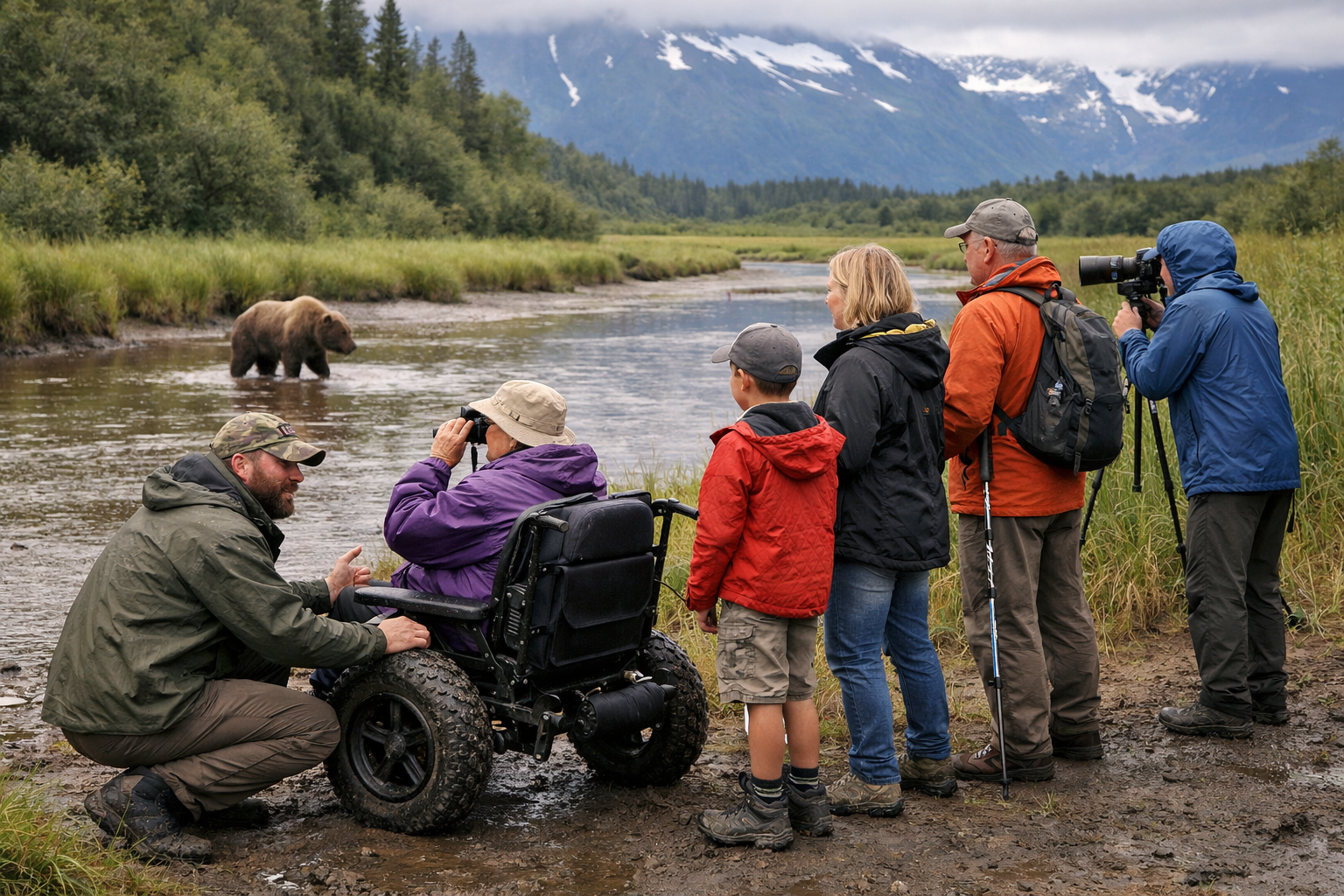
For many travelers, the dream of observing Alaska’s brown bears in their natural habitat—whether along the salmon-rich streams of Katmai National Park or the coastal meadows of Lake Clark—is a once-in-a-lifetime ambition. Yet, as the tourism industry in the 49th state matures, a significant shift is occurring in how these excursions are designed. The focus is moving away from purely photographic objectives toward a more inclusive model: Alaska bear viewing tours for mixed-ability travelers. As an editor who has long covered the intersections of tourism and accessibility, I have watched this evolution with great interest, as operators increasingly recognize that the “wild” does not have to be inaccessible.
The challenge of navigating the Alaskan wilderness is real. For older adults, families with young children, or individuals with varying levels of physical mobility, a successful trip depends on more than just spotting a grizzly. It hinges on the logistics of the journey—the stability of a boat deck, the incline of a trail, and the availability of essential facilities. According to the National Park Service, while many areas in Alaska’s national parks remain rugged and primitive, specific concessions and private tour operators are now providing more detailed transparency regarding the physical requirements of their excursions, allowing travelers to better assess their own comfort levels before booking.
Evaluating Accessibility: Beyond the Lens
When planning a trip that includes multiple generations, the industry standard is shifting toward a “full-disclosure” approach. It is no longer enough to market a tour based on the promise of proximity to wildlife. Responsible operators are now providing granular data regarding the physical demands of their routes. For instance, travelers should prioritize operators who explicitly detail the number of stairs involved in boarding a floatplane or a skiff, as well as the nature of the terrain at the viewing site. A boardwalk, for example, offers a vastly different experience than a trek across soft, uneven tundra.
The Americans with Disabilities Act (ADA), while primarily focused on domestic infrastructure, has influenced the expectations travelers bring to outdoor recreation. However, much of Alaska’s remote wilderness falls under federal land management policies where structural modifications are limited to preserve the natural character of the environment. The burden of information often falls on the tour company. A high-quality operator will clarify whether a site features a stable, elevated viewing platform or requires standing on a muddy bank for several hours. This distinction is vital for those with reduced stamina or balance concerns.
Logistics and Comfort: The Deciding Factors
For many mixed-ability groups, the “bear viewing” aspect is only half the battle; the other half is the journey itself. The transition from a larger vessel to a smaller landing craft—often referred to as a “transfer step”—can be the most daunting part of the day. Travelers should inquire about the presence of assistance handles, the height of the gunwales, and whether the tour provides step-stools or physical support from crew members.

climate-controlled comfort is an often-overlooked necessity. In the unpredictable Alaskan climate, a heated cabin or a sheltered space can prevent fatigue, particularly for children or elderly participants. According to the Alaska.org travel guide, weather patterns in coastal regions can change rapidly, and the ability to retreat to a warm, dry environment is critical for maintaining the safety and enjoyment of the entire group. When vetting an operator, ask specifically about the availability of restroom facilities on site or on the vessel, as remote bear-viewing locations rarely offer modern amenities.
Practical Considerations for Your Itinerary
If you are planning an excursion, consider the following checklist to ensure the experience matches your group’s capabilities:
- Trail Surface: Ask if the path is a man-made boardwalk, packed gravel, or natural, uneven soil.
- Stamina Requirements: Request an estimate of the total walking distance from the landing point to the viewing area.
- Transfer Logistics: Inquire about the boat-to-shore transition process and whether We find significant tidal fluctuations that affect dock height.
- On-Site Facilities: Verify the availability of seating at the viewing location and proximity to restrooms.
These details are not just bureaucratic hurdles; they are the difference between an exhausting ordeal and a successful wildlife encounter. By focusing on these logistical nuances, tour operators are effectively opening up the Alaskan wilderness to a broader demographic, ensuring that the majesty of the brown bear remains accessible to those who might otherwise have been excluded from the experience.
Looking Ahead: The Future of Inclusive Wildlife Tourism
As the demand for accessible nature tourism grows, we are likely to see more standardized reporting on physical accessibility in the adventure travel sector. While the Department of the Interior continues to allocate funding for infrastructure improvements within national parks, the pace of change in remote areas will remain measured. For now, the most effective tool for the traveler is proactive communication with tour outfitters.

The next major checkpoint for these discussions will likely occur during the upcoming annual Alaska Travel Industry Association convention, where operators and tourism boards discuss the standards for the 2025 season. As we look toward the future, the goal remains clear: to balance the preservation of Alaska’s pristine landscapes with the human desire to connect with the natural world in a safe, comfortable, and inclusive manner. We encourage our readers to share their own experiences with accessible wildlife tours in the comments section below, as your firsthand accounts help build a more informed community for all travelers.
Related reading