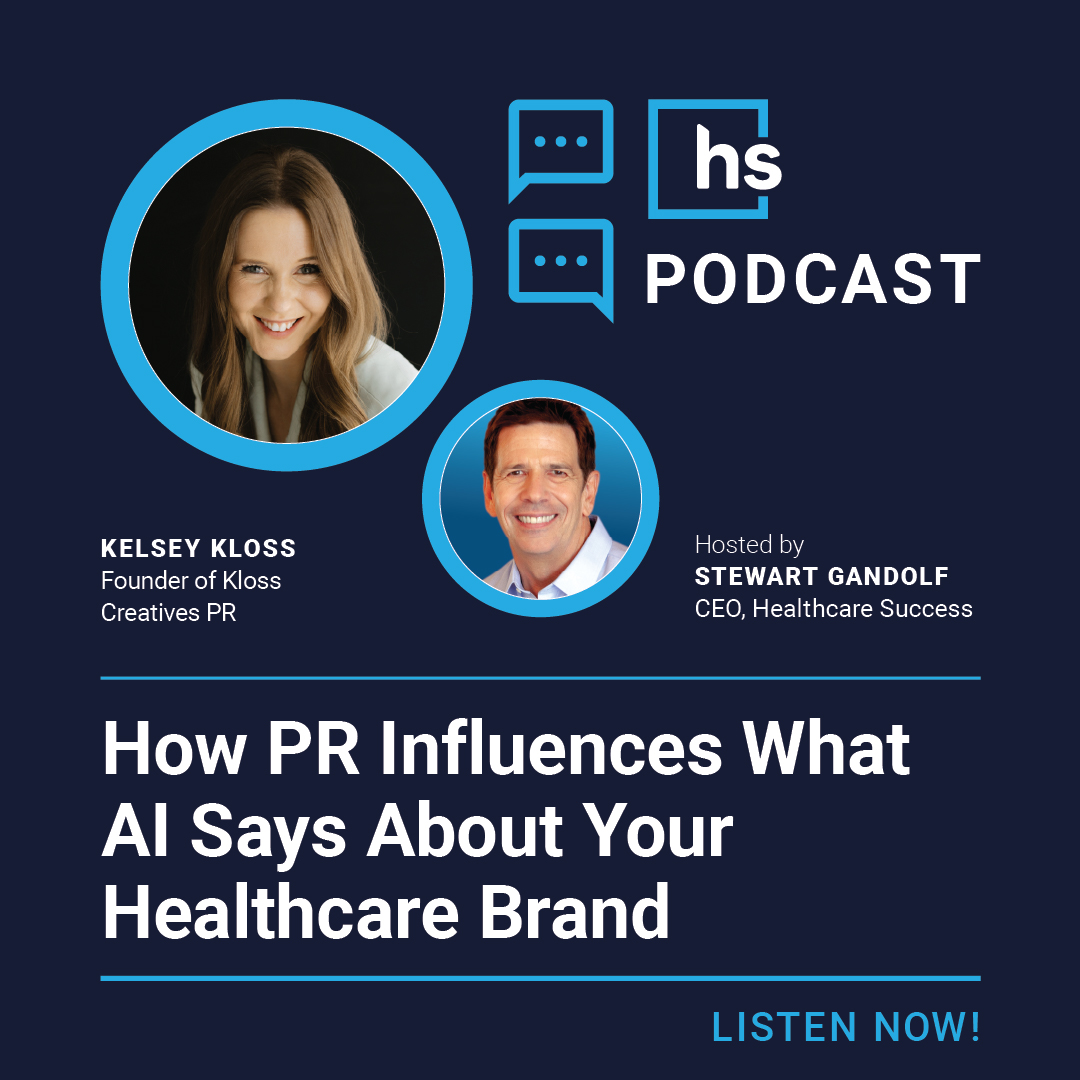
In the evolving landscape of healthcare marketing, public relations is undergoing a quiet but profound transformation. No longer limited to securing headlines or managing crises, PR now plays a foundational role in shaping how artificial intelligence systems perceive and recommend healthcare brands. As AI-powered search and recommendation engines turn into gateways to patient discovery, the credibility signals that PR helps generate—earned media coverage, third-party validation and authoritative content—are increasingly determining which organizations surface in AI-driven responses.
This shift reflects a broader change in how trust is built online. Where traditional search engines once presented users with lists of links to explore, AI systems now synthesize information and deliver concise, direct answers. In this environment, being omitted from an AI’s response can mean invisibility, not just lower ranking. For healthcare brands, where trust and accuracy are paramount, understanding how PR influences AI visibility is no longer optional—It’s essential to staying relevant in a world where algorithms increasingly decide who gets seen first.
At the heart of this development is the growing influence of earned media in AI training and retrieval processes. Multiple industry analyses cited by PR professionals indicate that a significant majority of links referenced in AI-generated responses originate from journalism, trade publications, thought leadership pieces, and other forms of third-party validation. One estimate suggests that up to 90% of AI-cited links come from earned media, with approximately half stemming directly from news reporting. These figures underscore why healthcare organizations investing in sustained PR efforts are better positioned to appear in AI answers—not because they paid for placement, but because credible outlets have covered them.
The mechanism behind this trend aligns with how large language models evaluate credibility. AI systems are designed to favor content that demonstrates objectivity, expertise, and trustworthiness—qualities commonly associated with editorial journalism and verified expert commentary. When a reputable health publication features a brand in a best-of list, trade feature, or investigative report, that coverage acts as a trust signal that AI models learn to prioritize. Conversely, self-published claims or low-authority content, even if optimized for keywords, often fail to register as authoritative in AI assessments.
This dynamic creates a clear strategic imperative: healthcare brands must treat PR as a long-term authority-building effort rather than a series of isolated tactics. Publishing a single press release or securing one media mention will not sustain AI visibility over time. Models evolve, outputs shift, and citation patterns change. What matters is the cumulative effect of consistent, high-quality earned media that reinforces a brand’s reputation across multiple credible platforms. Over time, this creates a durable reference layer that AI systems can draw upon when answering questions about treatments, providers, or health products.
Different types of PR content serve distinct functions within the AI-influenced customer journey. Earned media placements—such as features in health trade journals, expert commentary in news outlets, or inclusion in curated best-of lists—are particularly influential at the top of the funnel. These are the moments when users are exploring categories (“What are the best digital therapeutics for anxiety?”) and rely on AI to synthesize trusted options. In contrast, press releases and other owned-but-authoritative content distributed through trusted newswires like PR Newswire or Business Wire play a more targeted role during mid-funnel consideration. When users ask brand-specific questions (“Is Company X’s cardiac monitoring device FDA-cleared?”), well-crafted press releases with factual density—including statistics, regulatory details, and expert quotes—can help shape how AI understands and validates the brand.
The importance of factual density cannot be overstated in this context. AI systems respond favorably to content rich in verifiable specifics: clinical trial outcomes, participant counts, publication names, dates, and credentialed expert commentary. A press release that merely states a company is “innovative” or “patient-focused” offers little for AI to anchor to. But one that includes, for example, “a 2023 randomized controlled trial published in JAMA Network Open involving 1,200 patients showed a 30% reduction in hospital readmissions” provides the concrete signals AI uses to assess reliability. Healthcare brands that prioritize precision and evidence in their communications are more likely to see their content reflected in AI outputs.
At the same time, the risks of cutting corners have grown more severe. Tactics such as generating fake expert profiles, publishing on low-authority “content farm” sites, or distributing generic, unverified press releases may produce short-term noise but carry long-term reputational hazards. Journalists and editors are increasingly vigilant about verifying sources, especially in health reporting where misinformation can have real-world consequences. Many outlets now employ tools to detect AI-generated quotes or fabricated credentials, and exposure of such tactics can lead to blacklisting from media engagement and damage to brand credibility.
This heightened scrutiny extends to how journalists themselves use AI in their workflows. While newsrooms have adopted AI-assisted tools for tasks like identifying relevant studies, simplifying medical jargon, or drafting initial outlines, reputable outlets maintain strict human oversight. AI is used to augment—not replace—editorial judgment, fact-checking, and sourcing. For healthcare brands pitching to journalists, this means that timeliness, clarity, and substance remain critical. Press materials that answer the core question upfront, avoid burying the lead, and provide accessible, evidence-based information are more likely to be picked up—and subsequently cited by AI systems.
The distinction between digital PR and traditional PR likewise remains relevant, though the lines continue to blur. Digital PR, focused on earning backlinks that improve a website’s authority and SEO performance, often overlaps with efforts to boost AI visibility. A feature in a respected health blog that links to a brand’s clinical research page, for example, serves both purposes. Traditional PR, encompassing executive visibility, crisis communication, and retailer engagement, still serves broader reputational goals. The most effective strategies integrate both, recognizing that authority is built not just through links, but through consistent, credible presence across multiple touchpoints.
the future of PR in healthcare lies in its ability to adapt to an AI-mediated information ecosystem without sacrificing core principles of accuracy, transparency, and third-party validation. Brands that invest in ongoing, thoughtful PR—not as a campaign, but as a sustained commitment to earning trust—will be best positioned to appear not just in search results, but in the answers AI provides to patients, caregivers, and clinicians seeking reliable health information.
For ongoing updates on healthcare PR trends and AI’s impact on medical communication, follow trusted industry sources such as the Public Relations Society of America’s Health Care Section or the Healthcare Communications Association. To share your perspective on how PR is shaping AI visibility in healthcare, join the conversation on professional platforms like LinkedIn or X using #HealthcarePR and #AIinHealth.
Worth a look