
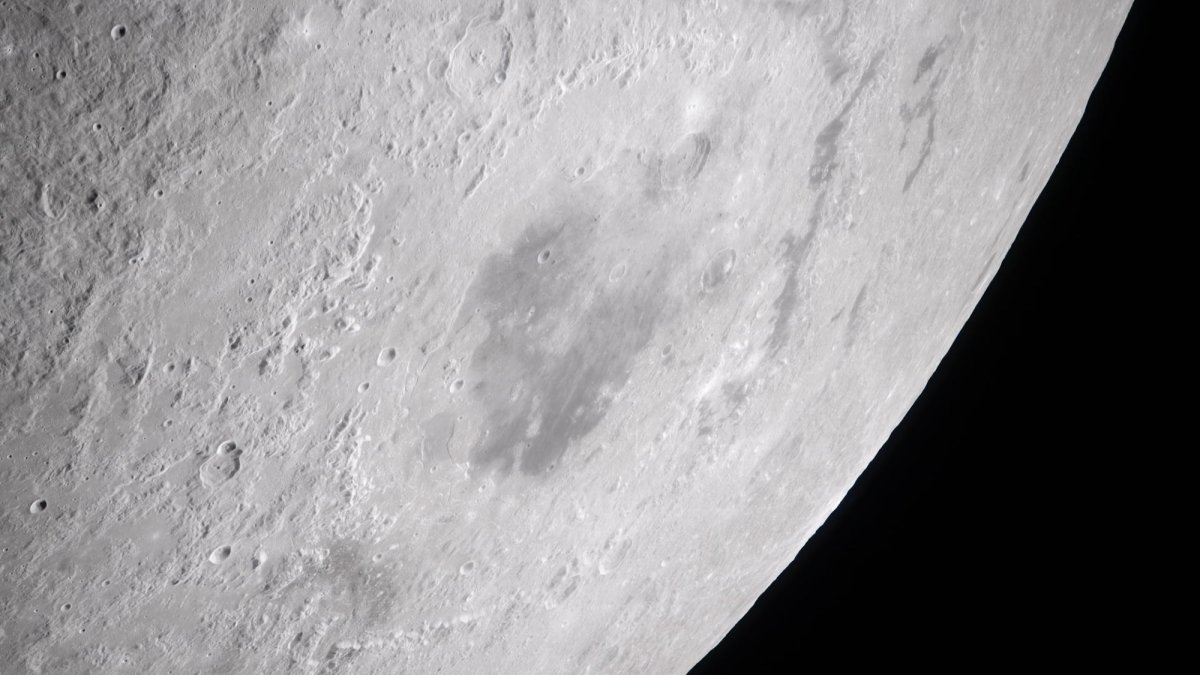
NASA Calls on Citizen Scientists to Help Track Meteor Strikes on the Moon
On April 6, 2026, NASA’s Artemis II astronauts made history as the first humans to fly around the Moon in more than half a century. But their mission wasn’t just about breaking records—it also provided scientists with a rare, firsthand glimpse of meteorites striking the lunar surface. During their nearly seven-hour observation period, the crew reported witnessing six distinct impact flashes, a phenomenon that has left researchers both excited and eager for more data. Now, NASA and its partners are turning to the public for help in tracking these cosmic collisions, offering amateur astronomers and space enthusiasts a chance to contribute to cutting-edge lunar science.
The Moon, unlike Earth, lacks a protective atmosphere, making it a prime target for meteoroids—small space rocks that collide with its surface at high speeds. These impacts release bursts of energy visible as brief flashes of light, known as impact flashes. Although scientists have long studied these events using robotic instruments, the Artemis II crew’s real-time observations marked a significant milestone. Their reports of six meteor strikes during a single flyby have already provided valuable insights into the frequency and intensity of these collisions, but researchers say more data is needed to fully understand the risks they pose to future lunar missions.
To fill this gap, NASA and the Geophysical Exploration of the Dynamics and Evolution of the Solar System (GEODES) team at the University of Maryland have launched Impact Flash, a citizen science initiative inviting telescope owners to monitor the Moon’s dark side for these fleeting flashes. The project aims to crowdsource observations from around the world, creating a comprehensive database that will help scientists map meteor activity and assess its potential threats to lunar infrastructure, astronauts and future bases.
Why Tracking Lunar Meteor Strikes Matters
The Moon is under constant bombardment from space debris. Unlike Earth, which has a thick atmosphere that burns up most incoming meteoroids, the Moon’s surface is exposed to these high-velocity impacts. According to NASA, an estimated 100 meteoroids the size of ping-pong balls strike the Moon every day, each releasing energy equivalent to about seven pounds of dynamite. Larger impacts are less frequent but far more destructive—a meteor at least eight feet in diameter hits the Moon with the force of a kiloton of TNT roughly once every four years.
These collisions pose significant risks to future lunar exploration. NASA’s Artemis program, which aims to establish a sustainable human presence on the Moon by the finish of this decade, will require robust infrastructure capable of withstanding such impacts. Understanding the frequency, size, and distribution of these strikes is critical for designing lunar habitats, spacecraft, and protective measures for astronauts. The data collected through the Impact Flash project will directly inform these efforts, helping engineers develop materials and structures that can endure the Moon’s harsh environment.
But the implications of this research extend beyond lunar base design. The same data will also help scientists study moonquakes—seismic activity triggered by meteor impacts. Ben Fernando, a planetary scientist at Los Alamos National Laboratory and the lead researcher for the Impact Flash project, explained in a NASA statement that the team plans to deploy seismometers on the Moon to measure ground vibrations. “Your measurements of impact flashes will help us work out the sources of moonquakes we detect,” Fernando said. “This will help us work out what the Moon’s interior looks like.” By correlating impact flashes with seismic data, researchers hope to gain new insights into the Moon’s internal structure, including its core and mantle composition.
How You Can Help NASA Track Meteor Strikes
The Impact Flash project is open to anyone with access to a telescope and a passion for astronomy. While professional observatories have long monitored lunar impacts, citizen scientists can provide a broader and more continuous stream of data by observing from multiple locations around the globe. Here’s how you can gain involved:
Equipment Requirements
- Telescope: A telescope with at least a 4-inch (100mm) aperture is recommended for capturing impact flashes. Larger apertures will increase your chances of detecting fainter flashes.
- Automatic Tracking: The Moon moves quickly across the sky, so a telescope with automatic tracking capabilities will help you maintain a steady view of its surface.
- High-Speed Camera: To capture the brief flashes, you’ll need a camera capable of recording video at 25–30 frames per second. Many modern astronomy cameras, such as those used for planetary imaging, meet this requirement.
- Software: Volunteers are encouraged to use publicly available software, such as ALFI (Automated Lunar Flash Identifier), to analyze their recordings for potential impact flashes. However, all observations must be uploaded to the official Lunar Impact Flash database for verification by scientists.
When and Where to Look
Impact flashes are most visible on the Moon’s dark side—the portion not illuminated by the Sun—where the contrast between the flash and the lunar surface is greatest. The best times to observe are during the Moon’s crescent or gibbous phases, when a significant portion of its surface is in shadow. Observers should focus on the terminator, the line dividing the illuminated and dark portions of the Moon, as this area provides the best conditions for spotting flashes.
Timing is also critical. Impact flashes are extremely brief, often lasting less than a second, so continuous recording is essential. The Impact Flash team recommends observing for at least 30 minutes per session to maximize your chances of capturing an event. Multiple observations from different locations can help confirm the authenticity of a flash and rule out false positives, such as cosmic ray hits on camera sensors or passing satellites.
Submitting Your Observations
Once you’ve recorded a potential impact flash, the next step is to upload your data to the Lunar Impact Flash database. The database is managed by an international team of astronomers who will review submissions, verify genuine impact events, and extract scientific data from the observations. This process ensures that the data collected is accurate and usable for research.
Even if you don’t capture an impact flash, your observations can still be valuable. The absence of flashes in certain regions or during specific time periods provides critical context for understanding the distribution and frequency of meteor strikes. Every submission helps build a more complete picture of lunar impact activity.
The Artemis II Crew’s Front-Row Seat to Lunar Impacts
The Artemis II mission provided scientists with an unprecedented opportunity to study lunar impacts up close. During their flyby on April 6, 2026, the crew—commander Reid Wiseman, pilot Victor Glover, mission specialist Christina Koch, and Canadian Space Agency astronaut Jeremy Hansen—reported seeing six distinct flashes on the Moon’s surface. Their observations were met with excitement from mission control, where scientists had not expected the crew to witness so many events during such a short observation window.
“That was definitely impact flashes on the moon. And Jeremy [Hansen] just saw another one,” Wiseman reported during the flyby. Kelsey Young, the mission’s lunar science lead, later described the moment at a press briefing: “I don’t know if I expected to have the crew see any on this mission, so you probably saw the surprise and shock on my face. Among NASA’s team in Houston, there were audible screams of delight.”
The crew’s observations were not just a stroke of luck—they were the result of careful planning. The Artemis II mission included a dedicated lunar observation period, during which the astronauts used high-resolution cameras and sensors to document the Moon’s surface. Their data is now being analyzed alongside observations from Earth-based telescopes to refine models of meteor impact rates and their effects on the lunar environment.
Jenni Gibbons, the mission’s backup astronaut, emphasized the rarity of the crew’s experience. “They were really high-priority science for us, so the fact that they saw four or five was just outstanding,” she told AFP. The astronauts’ reports have already sparked new questions about the frequency of larger impacts and their potential to create secondary debris fields, which could pose additional risks to lunar missions.
What’s Next for Lunar Impact Research?
The data collected through the Impact Flash project will play a crucial role in shaping the future of lunar exploration. As NASA prepares to return astronauts to the Moon with the Artemis III mission, scheduled for 2026, understanding the risks posed by meteor impacts is more important than ever. The information gathered will help engineers design habitats, spacesuits, and other equipment capable of withstanding the Moon’s harsh conditions, including its frequent meteor strikes.
Beyond infrastructure, the research will also contribute to our understanding of the Moon’s geology. By studying the seismic waves generated by meteor impacts, scientists hope to map the Moon’s internal structure, including its core, mantle, and crust. This knowledge could shed light on the Moon’s formation and evolution, as well as its relationship with Earth.
For citizen scientists, the Impact Flash project offers a unique opportunity to contribute to real-world space research. Whether you’re an experienced astronomer or a beginner with a passion for the cosmos, your observations can help advance our understanding of the Moon and its dynamic environment. As Ben Fernando noted, “The more data we have, the better we can prepare for the challenges of living and working on the Moon.”
Key Takeaways
- NASA’s Artemis II crew witnessed six meteor impacts on the Moon during their April 2026 flyby, providing rare real-time data for scientists.
- The Moon is struck by an estimated 100 meteoroids the size of ping-pong balls daily, each releasing energy equivalent to seven pounds of dynamite.
- The Impact Flash project invites citizen scientists to monitor the Moon’s dark side for impact flashes using telescopes and high-speed cameras.
- Data from the project will help NASA design safer lunar habitats, study moonquakes, and map the Moon’s internal structure.
- Observations can be submitted to the Lunar Impact Flash database, where they will be reviewed by astronomers.
- No prior experience is required—just a telescope, a camera, and a willingness to contribute to lunar science.
Frequently Asked Questions
What causes impact flashes on the Moon?
Impact flashes occur when meteoroids—small rocks or debris from space—collide with the Moon’s surface at high speeds. The energy released from these collisions creates a brief but bright flash of light, which can be observed from Earth or space. Because the Moon lacks an atmosphere, these flashes are more visible than they would be on Earth, where most meteoroids burn up before reaching the surface.
How often do meteor impacts occur on the Moon?
Astronomers estimate that around 100 meteoroids the size of ping-pong balls strike the Moon every day. Larger impacts, such as those caused by meteors at least eight feet in diameter, occur roughly once every four years and release energy equivalent to a kiloton of TNT. These estimates are based on observations from telescopes and spacecraft, but the Impact Flash project aims to refine these numbers with more precise data.
Can I participate in the Impact Flash project without a telescope?
While a telescope is the primary tool for observing impact flashes, We find other ways to contribute. For example, you can help analyze existing data using software like ALFI, or assist in verifying observations submitted by other participants. The project’s website also provides resources for beginners, including guides on how to set up your equipment and what to look for during observations.

What happens to the data I submit?
All observations submitted to the Lunar Impact Flash database are reviewed by a team of astronomers. Genuine impact flashes are logged and analyzed to determine their location, size, and energy. This data is then used to update models of lunar impact rates and to inform the design of future lunar missions. Even observations that don’t capture flashes can be valuable, as they help scientists understand the distribution of meteor activity.
How will this research benefit future lunar missions?
The data collected through the Impact Flash project will help NASA and its partners design safer and more resilient lunar infrastructure. For example, understanding the frequency and intensity of meteor impacts will allow engineers to develop habitats and spacesuits that can withstand these collisions. The research will contribute to our knowledge of moonquakes, which are triggered by impacts and can affect the stability of lunar structures. By mapping the Moon’s internal structure, scientists can also gain insights into its geological history and its relationship with Earth.
Join the Effort to Protect the Future of Lunar Exploration
The Artemis program represents a new era of lunar exploration, one that will see humans living and working on the Moon for extended periods. But to make this vision a reality, scientists and engineers must first understand the challenges posed by the Moon’s environment—including its frequent meteor impacts. The Impact Flash project offers a unique opportunity for space enthusiasts around the world to contribute to this effort, providing data that will shape the future of lunar exploration.
Whether you’re an amateur astronomer with years of experience or a beginner with a passion for space, your observations can make a difference. By participating in the project, you’ll join a global community of citizen scientists working alongside NASA to unlock the secrets of the Moon and ensure the safety of future astronauts.
Ready to get started? Visit the Impact Flash project website to learn more about the equipment you’ll need, how to submit your observations, and how your data will be used. The next time you look up at the Moon, remember: you could be the one to spot the next big impact.
Have you participated in the Impact Flash project or other citizen science initiatives? Share your experiences in the comments below, and don’t forget to share this article with fellow space enthusiasts!