
Artificial intelligence is evolving at an unprecedented pace, forcing even the largest corporations to rethink how they innovate. According to Joel Hron, Chief Technology Officer at Thomson Reuters, the secret to staying ahead lies not in scaling traditional processes, but in adopting the agility of a startup—embracing rapid experimentation, cross-functional collaboration, and a tolerance for failure. “The companies that will thrive in this environment are those that can move as fast as the technology itself,” Hron says.
Hron’s insights come as AI models like Google’s Gemini and OpenAI’s GPT-4.5 are pushing the boundaries of what’s possible in natural language processing, generative design, and predictive analytics. Yet, for enterprises accustomed to years-long development cycles, keeping up demands a cultural shift. “We’re not just talking about tools or infrastructure,” Hron explains. “It’s about mindset.”
In an interview with World Today Journal, Hron breaks down how Thomson Reuters—with its legacy in financial data and legal research—has integrated startup-like agility into its AI strategy. The approach centers on three core principles: treating AI as a product, not a project; fostering “intrapreneurship” within large teams; and measuring success by learning velocity, not just outcomes. “If you wait for perfection, you’ll always be late,” he warns.
Why Startup Agility Is Critical for AI Innovation
The gap between AI’s potential and enterprise adoption widens daily. A 2024 report from McKinsey found that only 15% of large organizations have successfully scaled AI initiatives beyond pilot phases, citing bureaucratic inertia and risk aversion as primary barriers. Hron argues that the solution lies in borrowing from startups—where speed and adaptability are survival mechanisms.

At Thomson Reuters, this means structuring AI development in “sprints” mirroring agile software methodologies. Teams are given 90-day windows to prototype solutions, with clear success metrics tied to business impact rather than technical perfection. “We’re not building monoliths,” Hron says. “We’re building modular, iterable systems that can pivot based on real-world feedback.”
This approach contrasts sharply with traditional enterprise AI deployments, where projects often stall in “analysis paralysis.” For example, a 2023 Gartner study revealed that 60% of AI projects fail to deliver value because they’re treated as one-off initiatives rather than ongoing innovation cycles. Hron’s team avoids this pitfall by embedding AI development into existing product lines—such as integrating generative AI into legal research tools—rather than siloing it in R&D labs.
How Thomson Reuters Structures AI Teams for Speed
Hron’s team at Thomson Reuters has dismantled traditional departmental barriers to create “AI squads” composed of data scientists, legal experts, and product designers. These cross-functional units operate with autonomy, reporting directly to business unit leaders rather than centralized IT. “We’ve eliminated the ‘throw it over the wall’ mentality,” Hron explains. “Every squad has a clear owner who can say yes or no to priorities.”
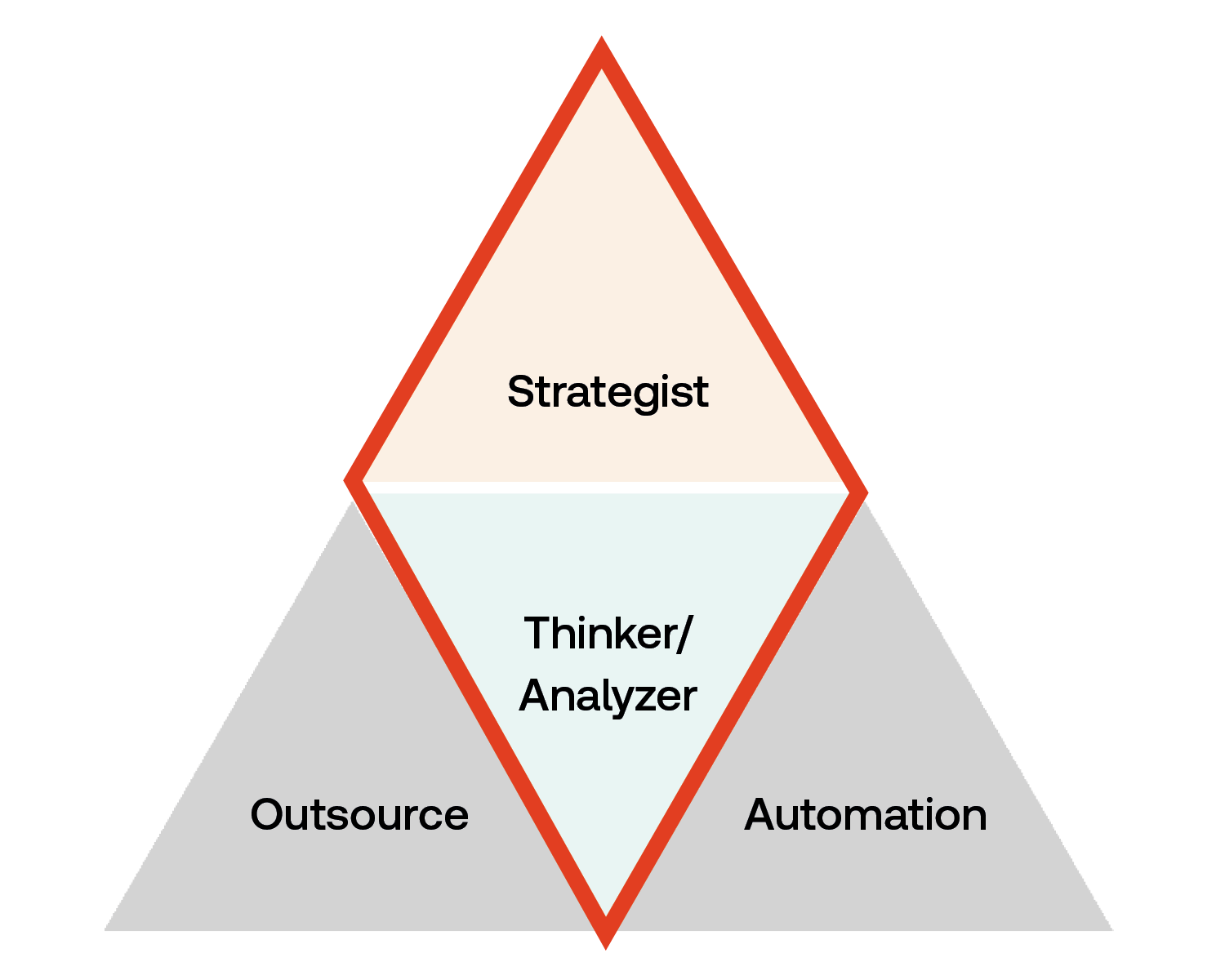
This structure mirrors the flat hierarchies of startups, where decisions are made quickly and accountability is personal. For instance, when Thomson Reuters launched its AI-powered contract analysis tool in 2023, the development team—comprising 12 members from three departments—operated with a startup-like budget of $500,000 and a six-month timeline. The result? A tool now used by 80% of the company’s enterprise clients, according to internal metrics shared with World Today Journal.
Hron emphasizes that this agility isn’t about cutting corners. “We still invest in rigorous testing and compliance,” he notes. “But we’ve shifted from asking, ‘Is this perfect?’ to ‘Is this good enough to learn from?’ That’s the difference between a startup and a bureaucracy.”
The Role of Failure in AI Innovation
One of the most counterintuitive aspects of Hron’s approach is the deliberate embrace of failure. “In a startup, failure is just data,” he says. “In a corporation, it’s often a career risk.” To change this culture, Thomson Reuters tracks “learning failures”—projects that didn’t work but provided critical insights—as rigorously as successes.
For example, the company’s early foray into AI-driven news summarization stumbled when initial models produced inaccuracies in legal contexts. Rather than scrapping the project, the team pivoted to focus on high-stakes domains like securities filings, where precision is non-negotiable. “That failure taught us more about our edge cases than any success would have,” Hron recalls.
This mindset aligns with research from Harvard Business Review, which found that companies fostering a “psychological safety” culture—where mistakes are seen as learning opportunities—outperform peers by 20% in innovation metrics. At Thomson Reuters, this translates to quarterly “failure reviews,” where teams present what didn’t work and how it will inform future efforts.
What Happens Next: Scaling Agility Beyond AI
Hron predicts that the startup mentality will extend beyond AI into other areas of enterprise innovation, from cybersecurity to customer experience. “The companies that master this will be the ones defining the next decade of digital transformation,” he says.

For organizations lagging behind, Hron offers three actionable steps:
- Start small. Pilot AI initiatives in low-risk areas (e.g., internal tools) before scaling to customer-facing products.
- Measure learning, not just output. Track how quickly teams adapt to feedback, not just whether they hit milestones.
- Reward intrapreneurship. Create internal programs to recognize employees who drive innovation outside their formal roles.
The next checkpoint for Thomson Reuters will be its 2025 AI roadmap, which Hron confirms will include expanded use cases in regulatory compliance and predictive analytics. The company has also committed to publishing its first “AI Innovation Report” in Q3 2025, detailing metrics on agility, failure rates, and business impact—a transparency move rare in the industry.
For enterprises watching from the sidelines, the message is clear: AI isn’t just a technology to adopt—it’s a new way of organizing work. As Hron puts it, “The startup mentality isn’t about being small. It’s about moving faster than the problem.”
Have you seen this approach work in your organization? Share your experiences in the comments or reach out to [email protected].
Keep reading