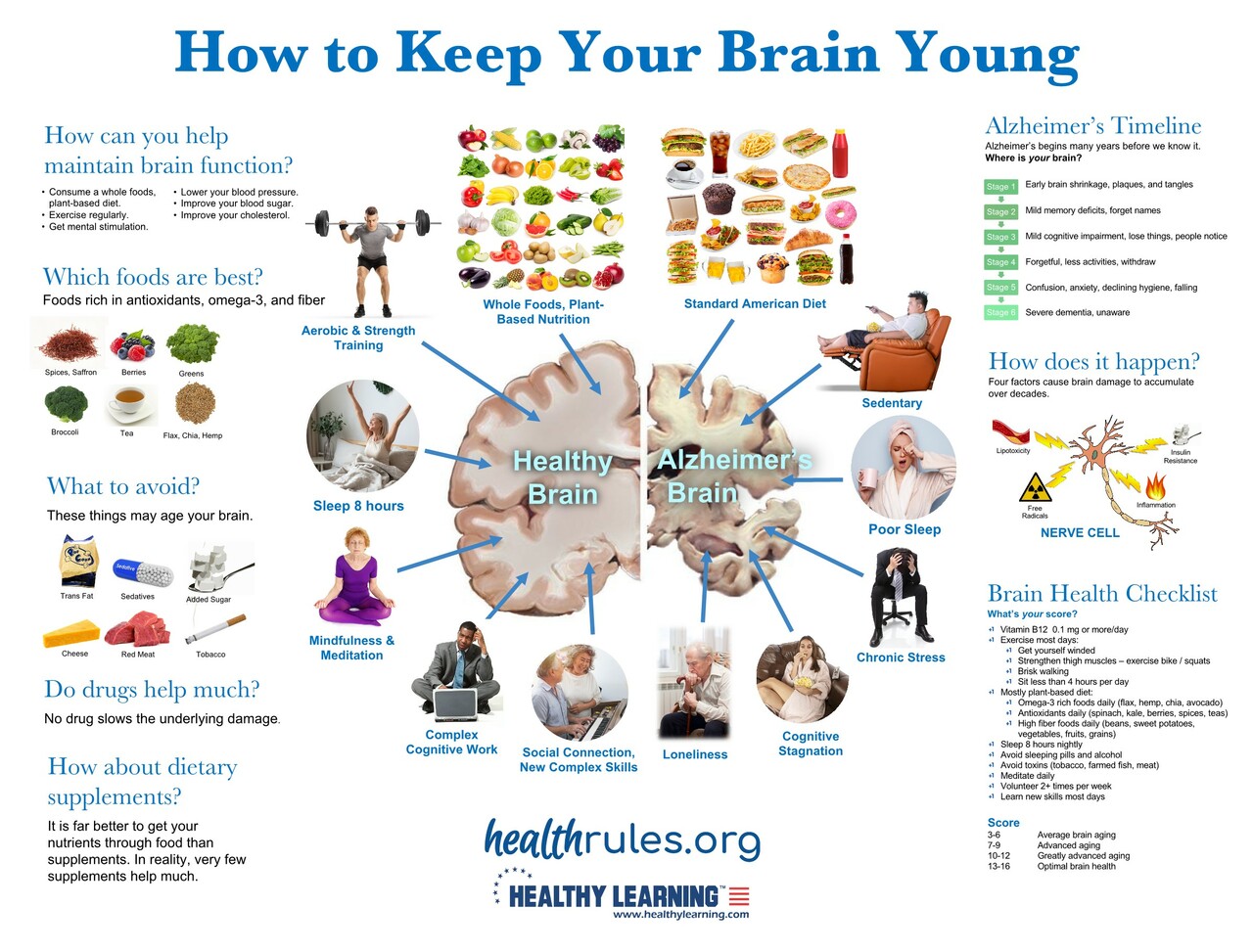
Recent neuroscientific research indicates that the human brain maintains the capacity for structural reorganization and neural connection formation well into the ninth decade of life. This phenomenon, known as neuroplasticity, challenges the traditional medical view that cognitive decline is an inevitable and linear process of decay starting in mid-life. Instead, evidence suggests that the aging brain can continue to adapt to new information and environmental stimuli, potentially mitigating the impact of age-related cognitive impairment.
This capacity for change is driven by the brain’s ability to modify synaptic strength and, in specific regions, generate new neurons. While the rate of change may differ from that of a developing child, the biological mechanisms for learning and memory retention remain active in elderly populations. Understanding these mechanisms offers new pathways for dementia prevention and long-term cognitive health.
How does the aging brain maintain neuroplasticity?
Neuroplasticity refers to the brain’s ability to reorganize its structure, functions, or connections in response to intrinsic or extrinsic stimuli. For decades, many researchers believed the adult brain was a relatively static organ. However, contemporary studies in neuroscience demonstrate that the brain remains “plastic” throughout the lifespan.
This plasticity occurs primarily through two processes: synaptic plasticity and neurogenesis. Synaptic plasticity involves the strengthening or weakening of existing connections between neurons, a process fundamental to learning and memory. Neurogenesis, the birth of new neurons, is a more complex process that has been most clearly documented in the dentate gyrus of the hippocampus, a region critical for spatial navigation and memory consolidation.
According to research published in journals such as Nature Neuroscience, the brain’s ability to form new synapses—the junctions where neurons communicate—remains a viable mechanism for adaptation in older adults. This allows the brain to compensate for the loss of certain neurons by strengthening the pathways of others, a concept often referred to as functional compensation.
What is the difference between neuroplasticity and neurogenesis?
While often used interchangeably in popular media, neuroplasticity and neurogenesis represent distinct biological processes. Distinguishing between them is essential for understanding how lifestyle interventions impact brain health.
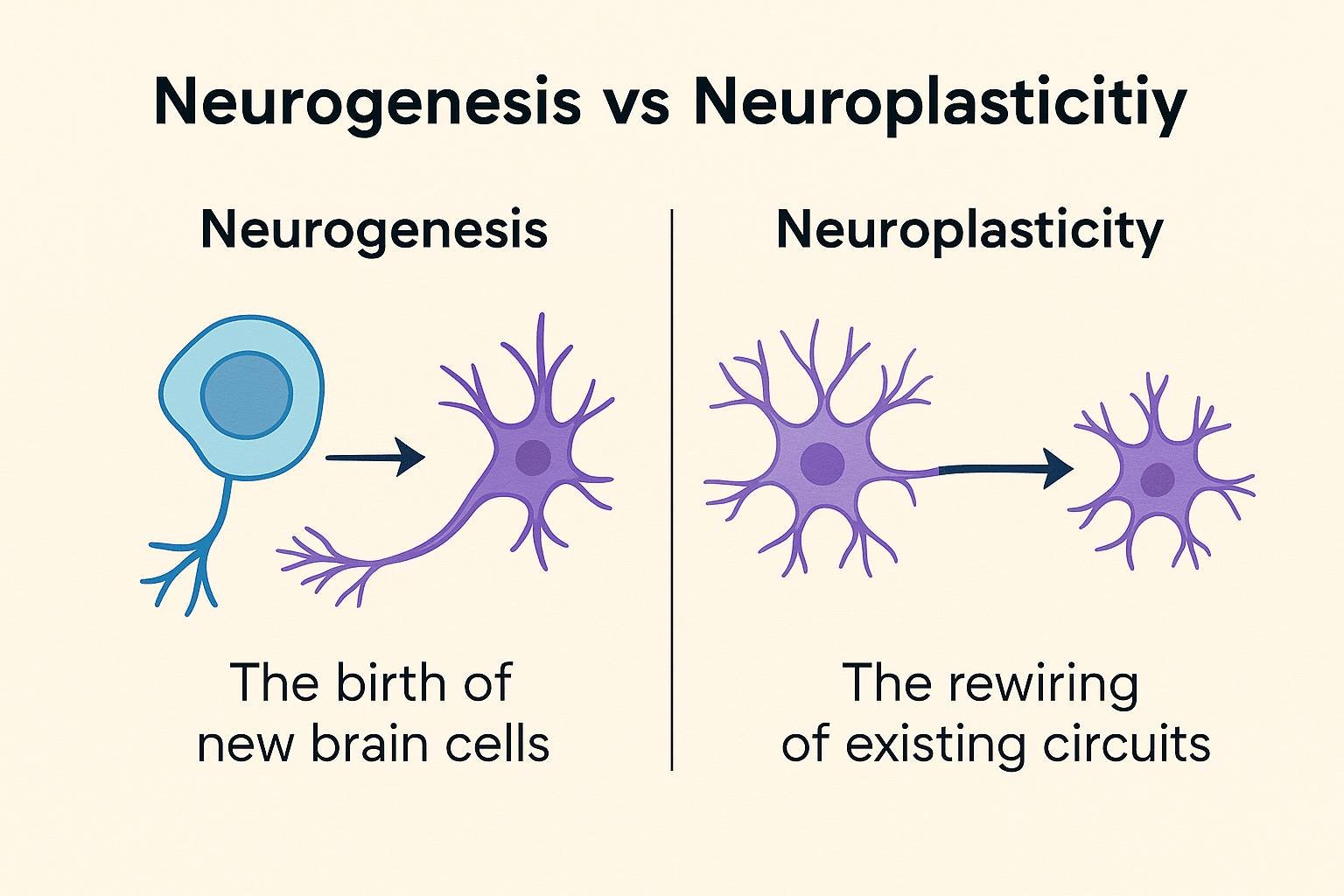
- Neuroplasticity: A broad term encompassing all changes in the brain’s neural networks. This includes the remodeling of existing synapses, the growth of new dendrites (the branches of neurons), and the reorganization of functional maps within the cortex.
- Neurogenesis: A specific subset of plasticity involving the actual production of new neurons from neural stem cells. While widespread neurogenesis in the adult human brain remains a subject of ongoing scientific debate, evidence of hippocampal neurogenesis in older adults is widely accepted in the scientific community.
The distinction matters because different activities may target different processes. For example, repetitive tasks might reinforce existing synaptic connections (neuroplasticity), whereas learning a complex new skill, such as a foreign language or a musical instrument, may more significantly drive neurogenesis and large-scale structural changes.
How do lifestyle habits influence brain development in seniors?
Scientific consensus suggests that the brain’s capacity for development is not solely determined by genetics but is heavily influenced by environmental and behavioral factors. Several key pillars of lifestyle intervention have been identified as drivers of brain health in aging populations.

The role of aerobic exercise and BDNF
Physical activity, particularly aerobic exercise, is one of the most potent stimulators of brain health. Exercise increases the production of Brain-Derived Neurotrophic Factor (BDNF), a protein that acts like “fertilizer” for neurons. BDNF supports the survival of existing neurons and encourages the growth and differentiation of new neurons and synapses.
Research indicates that regular cardiovascular activity can increase the volume of the hippocampus, helping to counteract the natural shrinkage that typically occurs with age. This biological boost provides a foundation for better memory retention and cognitive flexibility.
Cognitive stimulation and “cognitive reserve”
The concept of “cognitive reserve” explains why some individuals maintain high levels of cognitive function despite having the physical hallmarks of Alzheimer’s disease in their brain scans. Cognitive reserve is the brain’s ability to improvise and find alternate ways of getting a job done. This reserve is built through lifelong learning and mental engagement.
To build this reserve, experts suggest engaging in “cognitively demanding” tasks. This includes activities that require active problem-solving rather than passive consumption. Examples include:
- Learning a new language or musical instrument.
- Engaging in complex strategy games like chess.
- Volunteering or participating in complex social environments.
- Mastering new digital technologies or professional skills.
Sleep and the glymphatic system
Sleep is not merely a period of rest but a critical period of neurological maintenance. During deep sleep, the brain utilizes the glymphatic system—a macroscopic waste clearance system—to flush out metabolic byproducts, including beta-amyloid, a protein associated with Alzheimer’s disease. Chronic sleep deprivation can impair neuroplasticity and increase the risk of neurodegenerative diseases by preventing this essential “cleaning” process.

Why does neuroplasticity matter for dementia prevention?
The ability of the brain to develop and reorganize into the 90s provides a significant target for public health interventions. If the brain is capable of building new connections, then dementia may not be an inevitable consequence of aging, but rather a condition that can be delayed or mitigated through proactive management of brain health.
By fostering neuroplasticity, individuals can increase their “buffer” against the onset of clinical symptoms. This does not mean that the underlying pathology of diseases like Alzheimer’s can be entirely cured, but it suggests that a more robustly connected brain can function effectively even in the presence of some neurological damage.
Current medical research is shifting its focus from merely treating the symptoms of dementia to identifying early-stage interventions that leverage these natural plastic processes. This includes pharmacological research into BDNF enhancers and more rigorous guidelines for lifestyle-based preventative medicine.
Comparison of Brain Health Interventions
| Intervention Type | Primary Biological Mechanism | Impact on Brain Structure |
|---|---|---|
| Aerobic Exercise | Increases BDNF levels | May increase hippocampal volume |
| Cognitive Training | Enhances synaptic plasticity | Increases cognitive reserve and connectivity |
| Quality Sleep | Glymphatic waste clearance | Reduces accumulation of toxic proteins |
| Social Engagement | Reduces cortisol/stress responses | Supports emotional regulation and neural health |
As neuroscientific understanding evolves, the medical community continues to monitor how these lifestyle factors interact with genetic predispositions. Future clinical trials are expected to provide more specific “dosages” for exercise and cognitive training required to maximize these neuroprotective effects.
Further updates on neuroplasticity research and clinical guidelines for cognitive health are expected as longitudinal studies on aging populations continue to release data. We encourage readers to share this information with family and caregivers to promote proactive brain health.
Do you have questions about maintaining cognitive health as you age? Share your thoughts or questions in the comments below.
Keep reading
- Hidden Danger: What Herpes Viruses Can Trigger in the Brain
- How to Choose the Right Dentist: The Importance of Communication and Expertise
- Screen Time, Sleep and Mental Health: Family Rules That Change Daily Life (world-today-news.com)
- Luxembourg and WHO Sign Landmark Strategic Partnership for Global Health (newsdirectory3.com)