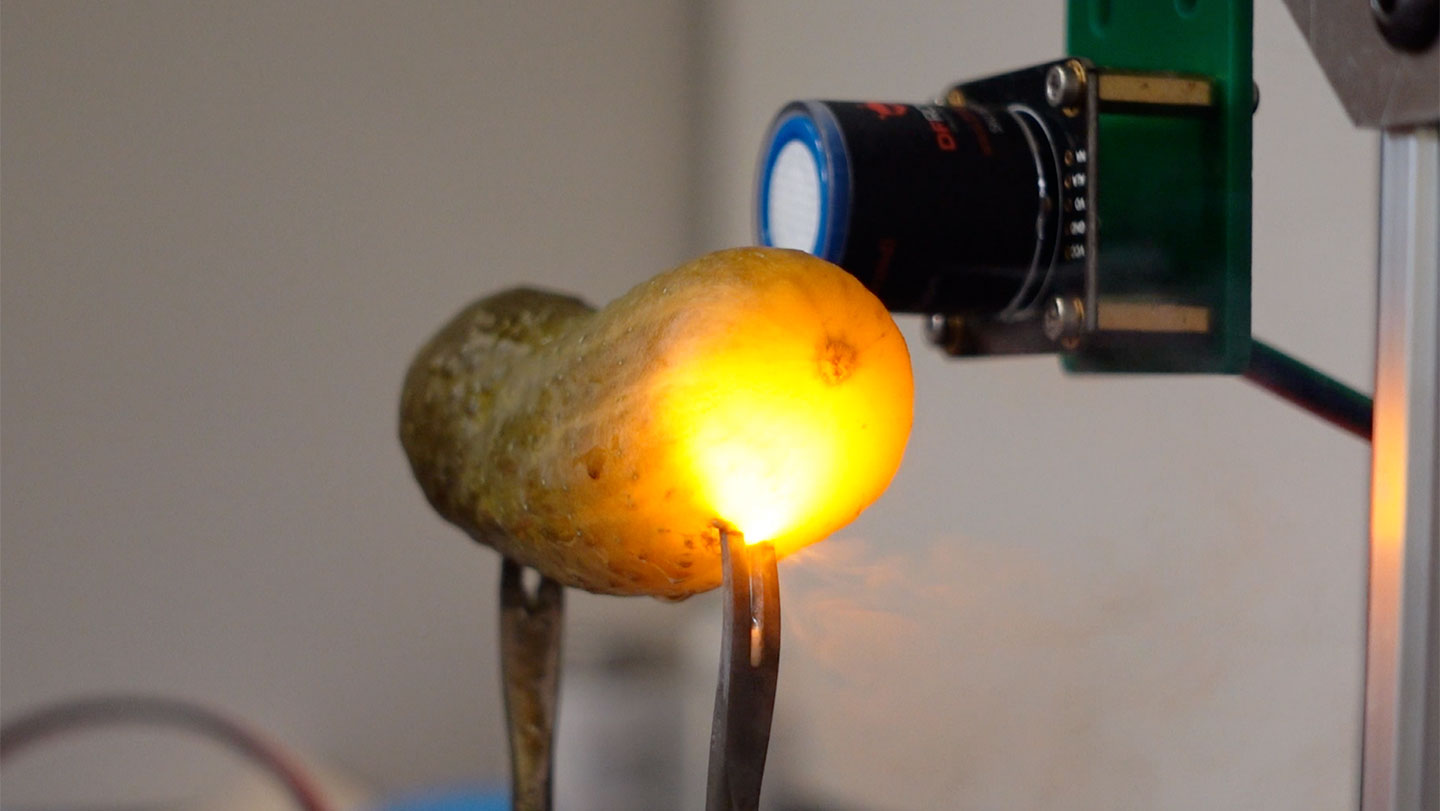
Pickles glow when plugged into an electrical source because of a physics phenomenon known as electroluminescence, specifically occurring when the brine’s salt content allows it to conduct electricity and interact with specific gas or chemical components. According to physics principles, this “glowing pickle” effect typically requires a high-voltage power source, such as a Tesla coil or a plasma globe, to excite the gas molecules within or around the pickle, creating a visible discharge of light.
The phenomenon is not a result of the pickle itself generating light, but rather the pickle acting as a conductor for an electrical current. When a pickle—which is saturated in a saline solution—is connected to a high-frequency electrical field, the ions in the brine facilitate the flow of electricity. This process can lead to the ionization of gases, which produces the characteristic glow, according to scientific demonstrations of the effect.
While the concept is often presented as a “scientific party trick,” the underlying mechanics involve complex interactions between conductivity, voltage, and gas discharge. Because the brine contains sodium chloride, it creates an electrolyte solution that allows current to move more efficiently than it would through a dry vegetable.
How the Glowing Pickle Phenomenon Works
The glow occurs through a process called gas discharge. When a pickle is exposed to high voltage, the electrical energy strips electrons from gas atoms, creating a plasma. This plasma emits light as the electrons return to a lower energy state. According to the Britannica entry on electroluminescence, this is a direct conversion of electrical energy into light.
The salt in the pickle brine is the critical component. Salt, or sodium chloride, dissociates into ions when dissolved in water. These ions allow the pickle to act as a conductor. If a person were to attempt this with a non-salted vegetable, the lack of electrolytes would prevent the current from flowing with the same efficiency, and the glow would not occur.
The type of power source matters significantly. A standard household wall outlet (120V or 230V) is generally insufficient to create a visible glow and is extremely dangerous to use for this purpose. Most successful demonstrations utilize a Tesla coil, which produces high-frequency, high-voltage alternating current. This allows the electricity to “skin” the surface of the conductor or jump through the air as a spark, creating the luminous effect.
The Role of Brine and Conductivity
Conductivity is the measure of a material’s ability to allow the transport of an electric charge. In the case of a pickle, the brine transforms the cucumber from an insulator into a conductor. The concentration of salt determines how well the pickle can carry the current. According to basic chemical principles, the higher the ion concentration in the brine, the more conductive the solution becomes.
When the high-voltage current passes through the pickle, it doesn’t just stay inside the vegetable. It interacts with the air and any residual gases trapped within the pickle’s cellular structure. This interaction is what creates the visual “glow.” The light is often a pale blue or purple, which is characteristic of ionized nitrogen and oxygen in the air, though impurities in the pickle can sometimes alter the color.
Safety Warnings and Electrical Hazards
Medical professionals and physicists warn that attempting to “plug in” a pickle using standard home electrical outlets is life-threatening. Household current is designed for power delivery, not for scientific demonstration, and can cause severe electrical burns or cardiac arrest upon contact.

The “glowing pickle” effect is safely achieved only in controlled laboratory settings using high-frequency equipment like Tesla coils, which operate on different principles than the current delivered by a power strip. High-frequency current tends to travel on the outside of a conductor—a phenomenon known as the skin effect—which reduces the risk of internal tissue damage compared to low-frequency household current, though it still carries significant risks of burns and interference with medical devices like pacemakers.
According to safety guidelines provided by the Occupational Safety and Health Administration (OSHA) regarding electrical safety, any experiment involving high voltage should be conducted with proper grounding, insulating equipment, and professional supervision to prevent accidental electrocution.
Comparing the Glow: Tesla Coils vs. Plasma Globes
Different electrical sources produce different visual results when interacting with a pickle:
- Tesla Coils: Produce a bright, often erratic glow and audible snapping sounds as the high-voltage current arcs through the brine and surrounding air.
- Plasma Globes: Create a more localized, steady glow where the pickle touches the glass, as the noble gases inside the globe are excited by the proximity of the conductive pickle.
- Standard Outlets: Do not produce a glow; instead, they typically result in a short circuit, tripped breakers, or lethal electrical shock.
The difference lies in the frequency and voltage. A plasma globe uses a high-frequency transformer to create a localized field, while a Tesla coil generates massive voltage spikes that can ionize the air over a larger distance.
For those interested in the physics of light and electricity, the next confirmed milestone in public science education is the ongoing series of open-house events at major research universities, where such demonstrations are performed under strict safety protocols. Readers are encouraged to share their thoughts on science communication in the comments below.