
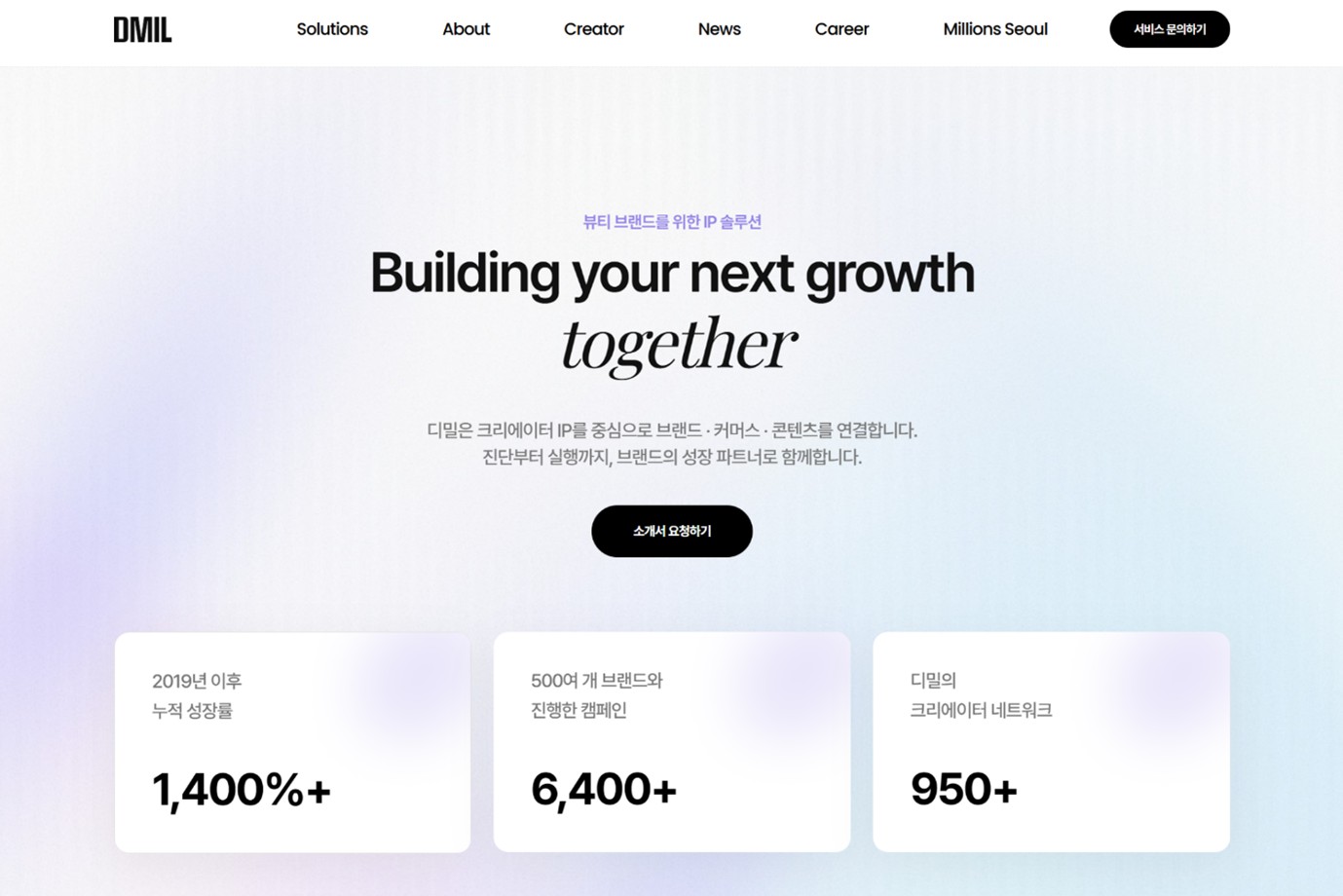
The traditional blueprint for influencer management is undergoing a fundamental shift. For years, the Multi-Channel Network (MCN) model served as the primary bridge between brands and creators, focusing largely on talent recruitment, channel growth, and the brokering of sponsorship deals. Though, as the creator economy matures, the industry is moving away from simple management and toward the creation of sustainable, scalable business assets.
Leading this transition in the beauty sector is Dimil, a South Korean firm that has officially announced its pivot from a specialized beauty MCN to a “Creator IP Solution Company.” This strategic evolution signals a move beyond the role of an agency, repositioning the company as a venture builder that leverages the intellectual property (IP) of creators to launch independent brands and scalable commerce ecosystems.
This shift reflects a broader global trend where the most successful creators are no longer content with being the “face” of a product; they are becoming the founders. By transitioning to an IP solution model, Dimil is effectively moving its value proposition from service-based revenue—such as commission on ad deals—to equity-based growth and product ownership.
Defining the ‘Creator IP Solution’ Model
To understand why this pivot is significant, one must first distinguish between the legacy MCN model and the emerging IP solution framework. A traditional MCN operates primarily as a talent agency. It provides creators with administrative support, helps them optimize their content for platform algorithms, and connects them with brands for one-off campaigns. While this model helped build the first generation of “mega-influencers,” it often left creators dependent on volatile sponsorship markets and platform-specific ad revenue.

A Creator IP Solution company, by contrast, views a creator’s influence not as a marketing tool, but as a foundation for intellectual property. In this model, the company provides the infrastructure—supply chain management, product R&D, legal frameworks, and operational logistics—to transform a creator’s personal brand into a standalone business. Instead of simply promoting a third-party lipstick, the creator and the IP solution company collaborate to develop a proprietary formula, brand identity, and distribution strategy.
For Dimil, this means integrating deep industry expertise in beauty with a systematic approach to product development. By treating “influence” as IP, the company can create assets that have value independent of a single video or post, building long-term brand equity that can be scaled across different markets and product lines.
The Catalyst: The Rise of Short-Form Commerce
The timing of this transition is closely tied to the explosive growth of short-form video platforms, specifically TikTok, Instagram Reels, and YouTube Shorts. These platforms have fundamentally altered the “discovery-to-purchase” funnel. In the era of long-form content, a creator might spend ten minutes explaining a product’s benefits, leading a viewer to a separate website to buy it. Today, the “hook” and the “sale” often happen within a 60-second window.
Short-form content allows for rapid testing and iteration. A creator can post a prototype or a concept video and receive immediate, data-driven feedback from thousands of viewers. This creates a high-velocity feedback loop that is ideal for an IP solution company. Dimil can use this real-time data to refine product features before they even hit the manufacturing stage, significantly reducing the risk associated with traditional product launches.
the algorithmic nature of short-form video enables “micro-targeting.” A creator’s IP can be tailored to a very specific niche—such as vegan skincare for sensitive skin or high-performance makeup for athletes—and reach that exact audience without the need for massive advertising budgets. This precision makes the transition from “content creator” to “brand owner” more viable than ever before.
Strategic Implications for the K-Beauty Ecosystem
South Korea’s beauty industry, known globally as K-Beauty, has always been a pioneer in innovation and rapid trend adoption. However, the market is becoming increasingly saturated. For beauty brands, the cost of acquiring new customers through traditional digital advertising is rising, while consumer trust in corporate advertising is declining in favor of “authentic” peer recommendations.
Dimil’s pivot addresses this tension. By building brands *around* creators rather than just using creators to *market* brands, they are creating a more authentic connection with the consumer. When a creator launches a brand through an IP solution company, the product is often perceived as a solution to a problem the creator has shared with their community over years of content. This inherent trust reduces the friction of the sale.
This model likewise allows for greater agility. Traditional beauty conglomerates often struggle with long development cycles. An IP solution company can pivot their product line in weeks based on a trending ingredient or a shifting consumer preference identified through short-form content trends, giving them a competitive edge over slower, larger incumbents.
The Global Context: From Influencers to Entrepreneurs
Dimil’s evolution mirrors a global shift in the creator economy. In the United States, we have seen this play out with creators like MrBeast (Feastables) or Logan Paul and KSI (Prime), who transitioned from entertainment content to massive consumer packaged goods (CPG) empires. These creators didn’t just sign endorsement deals; they built IP-driven companies.
The “Creator-led Brand” is becoming a dominant force in consumer behavior. Gen Z and Alpha consumers, in particular, gravitate toward brands that have a human story and a transparent origin. The IP solution model formalizes this process, providing the professional corporate structure needed to scale a “personality-led” business into a professional enterprise without losing the authenticity that made the creator popular in the first place.
As an editor with a background in software engineering, I view this as a transition from “Content-as-a-Service” to “Content-as-a-Product.” The content is no longer the conclude goal; it is the R&D department and the marketing arm for the underlying IP asset.
Key Takeaways: The MCN to IP Solution Pivot
- Business Model Shift: Moving from agency-style commissions (MCN) to equity and ownership in creator-led brands (IP Solution).
- Risk Reduction: Utilizing short-form video data to validate product-market fit before full-scale production.
- Value Creation: Transforming temporary social media “influence” into permanent, tradable business assets (Intellectual Property).
- Market Alignment: Meeting the demand for authenticity in the K-Beauty sector by integrating the founder and the promoter into one person.
What Happens Next for the Creator Economy?
The transition of companies like Dimil suggests that the “Golden Age” of the simple MCN is ending. Future growth in the creator economy will likely be defined by “vertical integration,” where the entity managing the talent also manages the supply chain, the logistics, and the brand equity.
We can expect to witness more specialized IP solution firms emerging in other sectors beyond beauty, such as wellness, gaming, and sustainable fashion. The challenge for these firms will be maintaining the “soul” of the creator’s brand while implementing the rigorous operational standards required for global scaling.
For creators, this represents a path toward financial independence. Instead of relying on a monthly payout from a platform or a one-time check from a brand, they can build a legacy asset that can eventually be sold or taken public.
The next critical milestone for the industry will be the emergence of standardized valuation metrics for “Creator IP.” As more firms transition to this model, the financial world will need a clearer way to value the synergy between a creator’s reach and a company’s operational capability.
World Today Journal will continue to monitor the evolution of the creator economy and the impact of IP-driven business models on global commerce. We invite our readers to share their thoughts in the comments: Do you trust creator-led brands more than traditional corporate labels?