
Loneliness is often described as a quiet ache, a pervasive sense of disconnection that can persist even in a crowded room. While frequently dismissed as a temporary mood or a personal failing, psychological research and global health authorities now recognize it as a critical public health challenge. For many, the struggle is not merely the absence of people, but the absence of meaningful, supportive connections that provide a sense of belonging, and security.
Recognizing signs of loneliness is the first and most vital step toward recovery. Because the experience is deeply subjective, it often masks itself as fatigue, irritability, or a general lack of motivation. When left unaddressed, this state of emotional isolation can evolve into chronic loneliness, which health experts warn can have physical consequences as severe as well-established risk factors like smoking or obesity.
As the world becomes increasingly digitally connected yet socially fragmented, the gap between “contact” and “connection” has widened. From the isolation felt by elderly populations to the “loneliness epidemic” reported among Generation Z, the phenomenon transcends age, geography, and socioeconomic status. Understanding how to identify these patterns—both in oneself and in others—is essential for fostering resilience and reclaiming mental well-being.
Addressing loneliness requires a dual approach: acknowledging the internal emotional state and taking strategic, external actions to rebuild social scaffolding. By shifting the perspective of loneliness from a source of shame to a biological signal—much like hunger signals a need for food—individuals can begin to seek the social nourishment required for a healthy life.
The Distinction Between Loneliness and Solitude
To effectively address the issue, This proves necessary to distinguish between loneliness and solitude. While the terms are often used interchangeably in casual conversation, they represent fundamentally different psychological states. Solitude is a chosen state of being alone; it is often restorative, providing an opportunity for reflection, creativity, and emotional regulation. People who embrace solitude typically feel content and energized by their own company.
Loneliness, conversely, is the distressing feeling that one’s social needs are not being met. It is characterized by a perceived gap between the social connections a person has and the connections they desire. A person can be surrounded by family, colleagues, and acquaintances yet still experience profound loneliness if those relationships lack emotional depth, authenticity, or mutual understanding.
This distinction is crucial because the “cure” for loneliness is not simply the presence of other people, but the presence of quality connections. Increasing the quantity of social interactions without increasing their quality can sometimes exacerbate feelings of isolation, as the contrast between the superficial interaction and the internal void becomes more apparent.
Recognizing Signs of Loneliness: Emotional and Physical Indicators
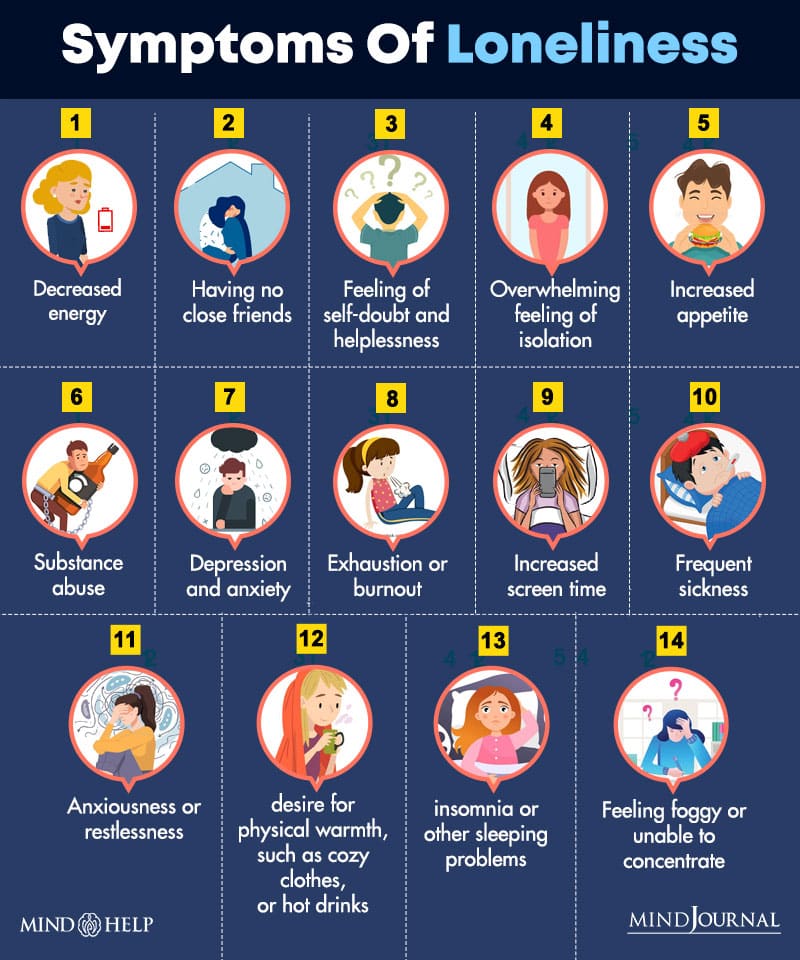
Loneliness rarely presents itself as a simple statement of “I am lonely.” Instead, it manifests through a complex array of behavioral, emotional, and physiological symptoms. Recognizing these patterns early can prevent the transition from acute loneliness—which is often a reaction to a life change—to chronic loneliness.
Emotional indicators often include a persistent feeling of emptiness, an increased sensitivity to social rejection, and a tendency to perceive social interactions more negatively. Those experiencing loneliness may find themselves withdrawing further from social opportunities, not because they desire isolation, but because the fear of not fitting in or being misunderstood becomes overwhelming. This creates a self-perpetuating cycle where the desire for connection is countered by a defensive mechanism of avoidance.
The physical manifestations are equally significant. Research has shown that chronic loneliness can trigger a prolonged stress response in the body, increasing levels of cortisol and promoting systemic inflammation. This can lead to a variety of health issues, including sleep disturbances, weakened immune function, and an increased risk of cardiovascular disease. According to the U.S. Surgeon General’s Advisory on Loneliness and Isolation, social disconnection can increase the risk of premature death by as much as 26% to 29%, comparing it to the health risks associated with smoking up to 15 cigarettes a day.
Behavioral red flags often include changes in eating or sleeping patterns, a decline in personal hygiene, or an obsessive reliance on social media to simulate connection. In older adults, loneliness may manifest as increased confusion or a faster decline in cognitive function, which can sometimes be mistaken for the early stages of dementia.
The Global Scale of Social Isolation
Loneliness is no longer viewed as an individual struggle but as a systemic global issue. The World Health Organization (WHO) has highlighted the urgency of this crisis, noting that social isolation affects people across all life stages and contributes significantly to the global burden of mental health disorders, including depression and anxiety.

In response to the growing crisis, the World Health Organization launched the Commission on Social Connection to tackle the root causes of loneliness and isolation. The commission aims to provide a framework for governments and communities to integrate social connection into public health policies, recognizing that social health is as fundamental to human survival as physical health.
The drivers of this epidemic vary by demographic. For younger generations, the “digital paradox” is a primary factor—where high levels of online connectivity are coupled with a decline in face-to-face intimacy and a rise in social comparison. For the elderly, the loss of spouses, retirement from the workforce, and physical mobility limitations create a structural isolation that requires targeted community intervention.
Strategies for Overcoming Loneliness and Finding Help
Moving from a state of isolation to one of connection requires a gradual, intentional approach. Because loneliness can erode self-confidence, the prospect of reaching out can feel daunting. The goal is not to suddenly build a massive social circle, but to establish a few “anchor” relationships that provide genuine support.
1. Small-Scale Social Integration
Starting with “low-stakes” social interactions can help rebuild confidence. This includes brief conversations with neighbors, greeting a cashier, or attending a public event where interaction is optional. These “weak ties”—the casual acquaintances in our lives—play a surprisingly large role in making us feel part of a community and reducing the feeling of invisibility.

2. Pursuing Shared-Interest Communities
Connecting over a shared activity reduces the pressure of direct social performance. Joining a book club, a sports team, a volunteering organization, or a hobby-based group allows the focus to remain on the task at hand, allowing relationships to develop organically over time. The shared goal provides a natural bridge for conversation and a sense of collective purpose.
3. Leveraging Professional Support
When loneliness is accompanied by depression or severe anxiety, professional intervention is often necessary. Cognitive Behavioral Therapy (CBT) can be particularly effective in addressing the “maladaptive social cognition” that often accompanies chronic loneliness—such as the belief that one is unlovable or that others are inherently judgmental.
4. Digital Tools Used Intentionally
While social media can contribute to isolation, technology can also be a tool for connection if used actively rather than passively. Using digital platforms to organize in-person meetups, joining moderated support groups for specific life challenges, or using video calls to maintain long-distance family bonds can mitigate the effects of physical distance.
How to Help Someone Else Recognizing Signs of Loneliness
Identifying loneliness in others requires empathy and a keen eye for subtle changes in behavior. Because of the stigma associated with loneliness, many people will deny they are struggling, even when the signs are evident. The approach should be one of gentle curiosity rather than clinical diagnosis.
Look for “social withdrawal” patterns: a friend who stops responding to invites, a family member who becomes unusually quiet during gatherings, or a colleague who isolates themselves during breaks. It is also important to notice “over-compensation,” where an individual may appear hyper-social or performatively happy to mask a deep sense of internal void.
When reaching out, avoid phrases like “You seem lonely,” which can feel accusatory or pitying. Instead, use “I” statements and focus on your own desire for their company. Phrases such as “I’ve missed our chats lately” or “I’m planning to go to [event] and thought you might enjoy it” are more inviting and less stigmatizing. The most powerful tool in combating another person’s loneliness is the consistent, reliable presence of a witness—someone who notices their absence and celebrates their presence.
Key Takeaways for Recovery
- Loneliness is a Signal: View the feeling of loneliness as a biological prompt to seek connection, not as a personal flaw.
- Quality Over Quantity: Focus on developing a few deep, authentic connections rather than a wide network of superficial acquaintances.
- Health Implications: Understand that chronic loneliness affects physical health, including heart health and immune function, making it a medical priority.
- Incremental Steps: Begin with low-stakes social interactions to rebuild the confidence needed for deeper connections.
- Professional Help: Seek therapy if loneliness is paired with persistent low mood or anxiety to address the underlying cognitive patterns.
Looking Ahead: The Future of Social Connection
The global recognition of loneliness as a health crisis is leading to innovative systemic responses. From the “Ministry of Loneliness” established in the United Kingdom to community-led “social prescribing” programs in various healthcare systems, there is a growing movement to treat social connection as a vital sign of health.

The next major shift in addressing this issue involves urban planning and workplace design. Architects and city planners are increasingly focusing on “third places”—social surroundings separate from the two usual social environments of home (“first place”) and office (“second place”)—such as public libraries, community gardens, and walkable plazas that encourage spontaneous human interaction.
While the systemic changes are essential, the immediate solution remains human-centric. The act of reaching out, admitting vulnerability, and listening without judgment remains the most effective antidote to isolation. By recognizing the signs early and utilizing the available resources, individuals can move from a state of survival to one of thriving connection.
For those currently struggling, the first step is often the hardest, but it is the only path toward change. Whether through a local community center, a mental health professional, or a simple text to an old friend, the bridge to connection is always available to be crossed.
World Today Journal encourages readers to share this guide with anyone who may be struggling in silence. If you have found a specific community resource or strategy helpful in overcoming isolation, please share your experience in the comments below to help others find their way back to connection.