Global AI Atlas Maps Deep Consumer Divides
The Harris Poll has released findings from its global AI Atlas, capturing how consumers across eight countries interact with artificial intelligence. The survey reveals a deep divide between enthusiastic adopters and resistant populations as the technology scales into everyday life.
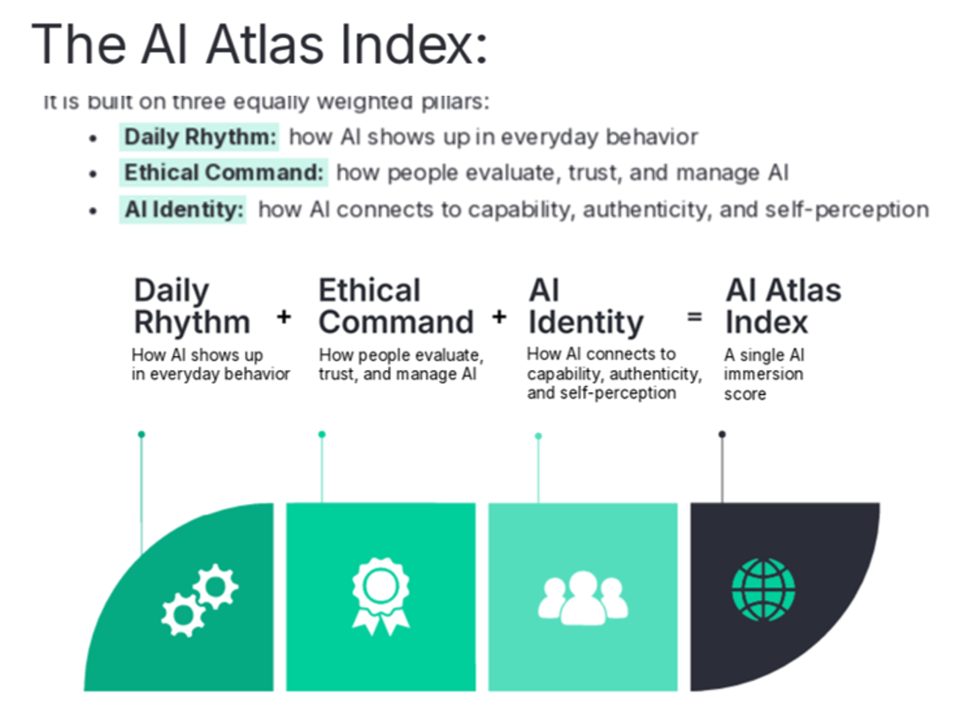
Conducted online in January 2026, the research evaluated 16,017 adults aged 18 and older across Brazil, Canada, Germany, India, Japan, Mexico, the United Kingdom, and the United States. Researchers mapped consumer behaviors across three pillars: daily rhythm, ethical command, and AI identity.
The study divides respondents into six distinct personas based on trust and behavioral patterns: AI Maximizers, Advanced Integrators, Everyday Users, Selective Adapters, Skeptical Resisters, and Disengaged Non-Users. Health and wellness guidance emerged among these groups as a major area of divergence and potential growth for digital health services.
Profiling AI Maximizers and Skeptical Resisters
At the leading edge of technology adoption are the AI Maximizers, who view artificial intelligence as a core component of their personal and professional operations.
According to survey data, this group accounts for roughly one in five adults in the United States, skews more male than female, and represents over half of Millennials globally. Notably, 72% of AI Maximizers use artificial intelligence tools for health and wellness guidance.
Advanced Integrators follow closely as intensive users, though their approach focuses primarily on task completion and efficiency rather than exploration. Conversely, Skeptical Resisters have examined artificial intelligence tools and largely rejected them due to discomfort, perceived risks, and distrust.
Only 38% of Skeptical Resisters use AI tools to find information at least weekly, while just 11% use them for writing and 10% for work.
Opening the Door for Healthcare Providers
Despite their resistance, 31% of Skeptical Resisters expressed interest in using artificial intelligence for health and wellness guidance.
The second pillar of the study, ethical command, governs how individuals evaluate, trust, and manage artificial intelligence tools. Across all surveyed countries, between one-quarter and one-third of consumers expressed interest in adopting AI-driven health resources, yet broader adoption remains restricted by economic pressures and privacy concerns.
In many regions, particularly the United States, health consumers face persistent inflation, high medical bills, and complex cost structures that complicate routine care management, such as filling prescriptions or scheduling diagnostic tests.
Bridging Trust and Digital Innovation in Patient Care
Healthcare providers can bridge this gap by deploying trusted touchpoints, such as virtual assistants, transparent pricing tools for copays, and telehealth onboarding designed with privacy-by-design principles.
As health systems encounter the intersection of digital innovation and patient care, understanding these six consumer personas provides a roadmap for building secure, transparent platforms that foster patient agency and expand access to essential medical and wellness services.