Media critics and analysts are increasingly calling for a formal reckoning regarding the role of legacy Western news organizations in shaping public perception of the war in Gaza. The discussion, centered on the influence of institutional narratives, highlights how major outlets have been accused of manufacturing consent through the selective use of language, the prioritization of specific sources, and the systemic exclusion of historical context. These critiques suggest that the journalistic choices made by prominent editors and broadcasters have had tangible consequences on the international response to the humanitarian crisis.
The conversation regarding media accountability gained momentum following the release of recent analysis by media critics who argue that the destruction of Gaza was facilitated by a consistent, deliberate alignment between news organizations and official government narratives. According to these critics, the failure to provide adequate historical context—such as the conditions in Gaza prior to October 2023—was not a neutral editorial decision but a structural choice that influenced the trajectory of the conflict. By framing the events through a narrow lens, legacy outlets are accused of having effectively narrowed the public’s ability to understand the broader geopolitical stakes.
The Role of Narrative in Shaping Public Perception
Media analysis suggests that the editorial standards adopted by major networks and newspapers in the immediate aftermath of the October 7 attacks played a significant role in defining the scope of acceptable public discourse. Critics point to the consistent use of terminology that favored specific geopolitical interpretations, often at the expense of reporting on the civilian impact within Gaza. This framing, they argue, made it difficult for audiences to grasp the full scale of the humanitarian catastrophe.
Research into media coverage indicates a stark asymmetry in how different parties to the conflict were portrayed. For example, some analysts have highlighted a significant disparity in the frequency with which terms like “slaughter” or “massacre” were applied to different populations. When these terms are used exclusively for one side, it influences the emotional response of the reader, potentially desensitizing the public to the death tolls reported in other areas. This editorial imbalance is a central point of contention for those calling for greater transparency and accountability in newsrooms.
Institutional Accountability and the Future of Media
The call for accountability extends beyond the newsroom and into the management structures of major media institutions. Critics argue that the decision-making processes—from the assignment of beats to the vetting of sources—are often influenced by a desire to maintain access to political and military officials. This reliance on official sources, particularly those from government agencies, is cited as a primary factor in the homogenization of reporting across different platforms.

In response to these concerns, some observers are advocating for a shift in how audiences interact with legacy media. Proposals include the adoption of more rigorous independent media monitoring, the support of non-traditional news outlets that provide alternative viewpoints, and organized efforts to pressure media executives to address the perceived biases in their reporting. The goal, according to these advocates, is to create a media environment that serves as an adversary to power rather than an extension of it.
Quantifying Bias in News Coverage
To support claims of systemic bias, researchers have begun to quantify the frequency and framing of specific topics across major outlets. By examining the number of mentions of particular terms and the context in which they appear, these studies aim to move the conversation from subjective critique to data-driven analysis. This quantitative approach allows for a more precise understanding of how specific narratives are reinforced over time.
The findings from these studies often reveal that certain perspectives are consistently marginalized. For instance, the discussion surrounding the definition of a “ceasefire” has been highlighted as a case where media outlets adopted government-aligned definitions that were at odds with traditional international usage. By uncritically accepting these definitions, outlets helped shape a reality where a cessation of hostilities was presented as an unrealistic or fringe demand, despite high levels of public support for such measures in various polls.
Next Steps for Media Reform
As the debate continues, the focus remains on the necessity of a broader reckoning within the media industry. Advocates for reform emphasize that the trust of the public is a finite resource that is rapidly being depleted by the perception of institutional complicity. The next phase of this movement involves sustained pressure on media boards, the development of independent fact-checking initiatives, and a commitment to more transparent editorial practices.
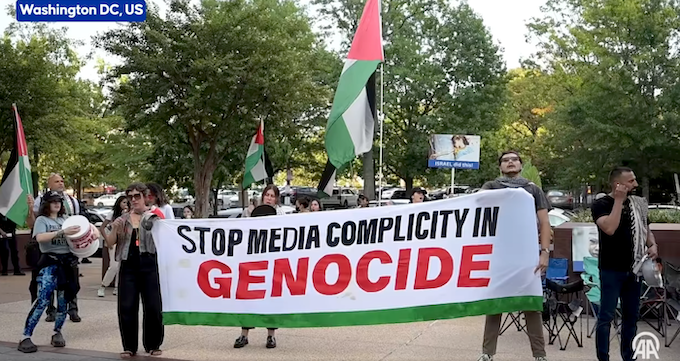
The ongoing dialogue suggests that the future of media credibility depends on a willingness to address these criticisms openly. Whether legacy organizations will engage in a process of self-reflection remains to be seen. In the meantime, the rise of independent media and the increasing sophistication of media literacy among the public indicate that the era of unchallenged institutional narratives may be coming to an end. Readers are encouraged to continue monitoring these developments and to engage with diverse sources of information to maintain a comprehensive understanding of global events.
Related reading