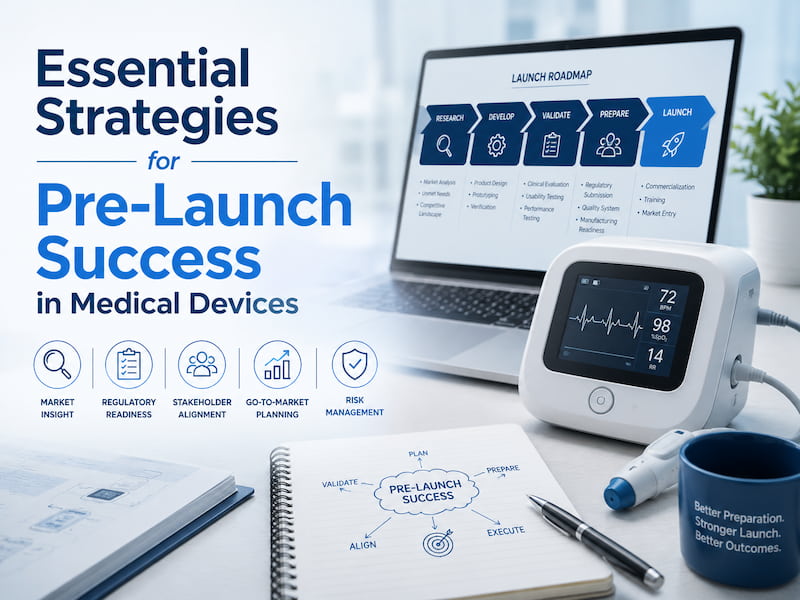
Launching a medical device requires a rigorous, multi-faceted strategy that extends well beyond the initial design concept to ensure regulatory compliance, market readiness, and clinical adoption. According to the U.S. Food and Drug Administration (FDA), the pre-market pathway for medical devices is governed by strict classification controls—Class I, II, or III—which dictate the level of clinical evidence and safety testing required before a product can enter the healthcare ecosystem. Failure to align product development with these regulatory realities often results in significant delays, costly redesigns, or total market withdrawal.
As a physician and health journalist, I have observed that the most successful medical technology transitions share a common foundation: early, evidence-based preparation. The transition from a laboratory prototype to a commercially available tool necessitates a clear understanding of the regulatory landscape, a deep dive into clinical user needs, and a robust plan for supply chain management. When teams prioritize these operational pillars, they significantly reduce the risk of clinical failure and improve the likelihood of long-term patient and provider uptake.
Establishing Clinical Utility and Market Research
Before a device reaches a clinical setting, manufacturers must perform comprehensive market research to define the specific unmet need the technology addresses. According to the World Health Organization (WHO), successful medical device innovation requires a “user-centered” approach that accounts for the specific environment where the device will be deployed, such as hospital operating rooms, outpatient clinics, or home-care settings. This process involves gathering direct feedback from the clinicians, nurses, and technicians who will interact with the device daily.
Understanding the competitive landscape is equally vital. Teams should perform a thorough analysis of existing technologies to identify where their solution offers a measurable improvement in patient outcomes or clinical efficiency. This research phase informs the product’s value proposition, which is essential for securing hospital procurement buy-in. Without this foundational understanding, even technologically sophisticated devices often fail to gain traction because they do not solve a practical, high-priority problem for healthcare providers.
Navigating Regulatory Pathways and Compliance
Regulatory strategy must be integrated into the product development lifecycle from the outset, not as a final step before launch. In the United States, the FDA provides specific guidance on the Premarket Notification 510(k) pathway, which requires manufacturers to demonstrate that their device is “substantially equivalent” to a legally marketed predicate device. For more complex or novel technologies, the Premarket Approval (PMA) process requires a much higher burden of clinical evidence, often including multi-center clinical trials to prove both safety and efficacy.
Effective regulatory planning involves maintaining meticulous documentation of all design controls, risk management activities, and safety checks. As noted by the European Medicines Agency regarding the Medical Device Regulation (MDR) framework, the shift toward more stringent clinical evidence requirements means that manufacturers must be prepared to invest heavily in post-market clinical follow-up. Engaging with regulatory consultants or legal experts early in the process can help teams avoid common pitfalls, such as incomplete safety data or misclassification of device risk, which are frequent causes of extended review timelines.
Building Clinical Awareness and Sales Readiness
Marketing a medical device differs significantly from consumer product marketing. The strategy must focus on clinical education, peer-reviewed evidence, and clear communication of the device’s impact on patient care. Early-stage awareness should leverage professional medical conferences, online webinars, and clinical case studies to establish the device’s credibility among key opinion leaders (KOLs) in the field. Establishing trust with the medical community is a long-term process that should begin months before the official product release.
Sales team preparation is the final internal hurdle. A highly trained sales force must be capable of discussing the device’s technical specifications, clinical indications, and contraindications with confidence. Training programs should include simulated clinical scenarios where representatives practice handling objections from skeptical surgeons or hospital administrators. Furthermore, ensuring that the supply chain and distribution network are fully operational—with sufficient inventory levels to meet initial demand—is critical to preventing stock-outs during the launch phase.
Rigorous Testing and Real-World Validation
Testing is the final safeguard against clinical and commercial failure. Beyond the bench testing required for regulatory approval, companies should prioritize usability testing in simulated or real-world clinical environments. According to the International Organization for Standardization (ISO) 62366-1, usability engineering is a mandatory process for ensuring medical devices are safe and effective for their intended users. This involves observing how clinicians interact with the device under stress, identifying potential use errors, and refining the user interface to mitigate these risks.
User feedback obtained during these final testing phases is invaluable. It allows for minor adjustments to the device ergonomics or software interface that can significantly enhance user satisfaction. By the time the product is released, the marketing materials, clinical manuals, and sales scripts should be validated against the final version of the device to ensure total accuracy. This comprehensive approach to testing, combined with early regulatory and market planning, creates a solid foundation for a successful and sustainable product launch in the competitive healthcare market.
For those involved in the development of new medical technologies, the next major consideration is the evolving landscape of digital health integration and cybersecurity, which regulators are increasingly prioritizing in their review processes. Keeping track of these updates via official government portals, such as the FDA’s Center for Devices and Radiological Health (CDRH) updates, remains essential for any team planning a future release. We welcome your insights and experiences regarding the challenges of bringing new medical innovations to market in the comments section below.