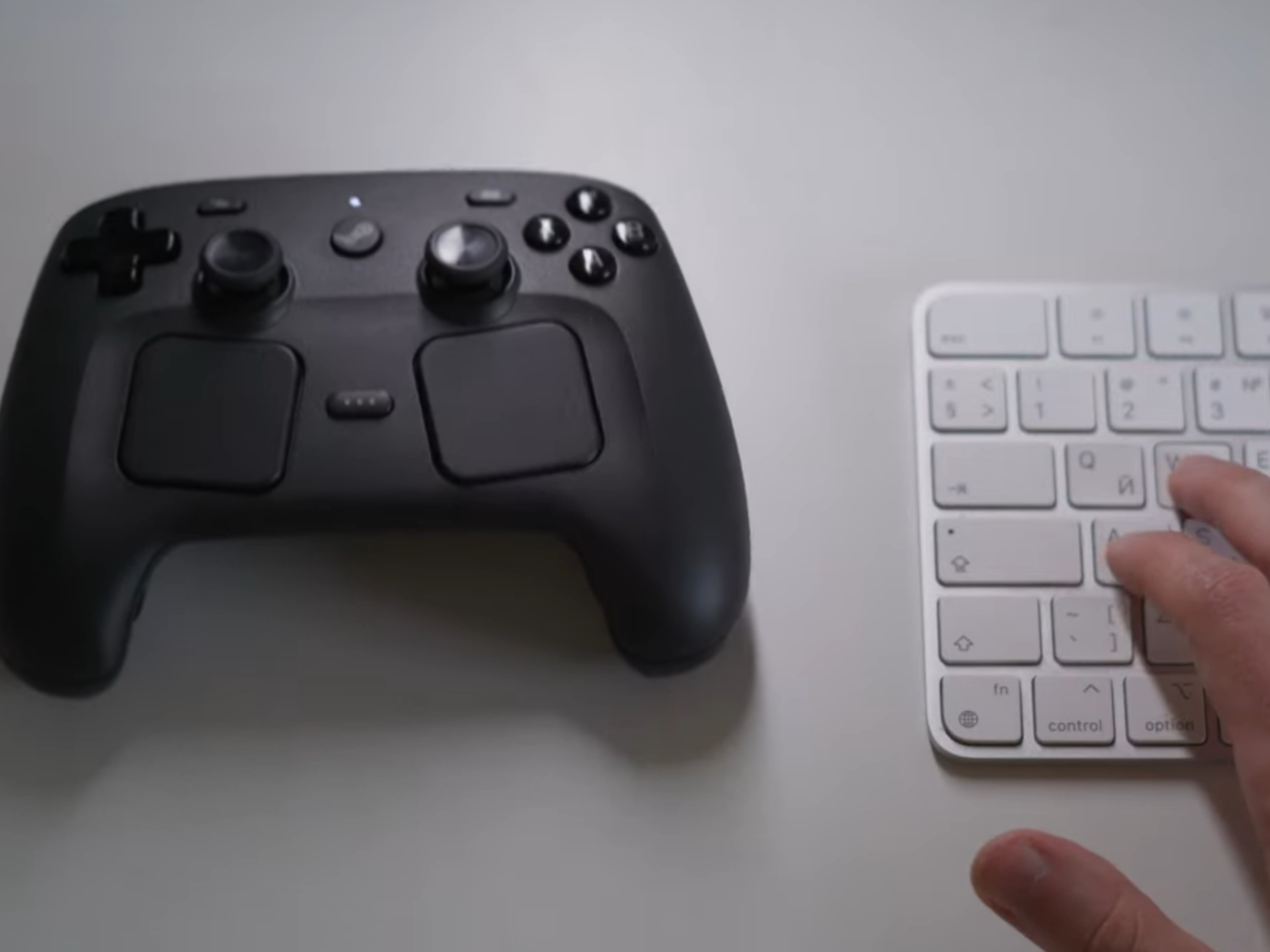
Driving a remote-controlled car using a Steam Controller has emerged as a niche project for hobbyists looking to repurpose legacy hardware, demonstrating the versatility of Valve’s discontinued input device. By utilizing custom software bridges and microcontroller interfaces, users can map the controller’s dual trackpads and analog triggers to the steering and throttle commands of radio-controlled (RC) vehicles. While Valve officially ceased production of the Steam Controller in 2019, according to official company communications, the device remains a popular subject for hardware enthusiasts due to its unique haptic feedback and gyroscope integration.
The process of converting a standard gaming peripheral into a remote control transmitter typically involves a middle-man device, such as a Raspberry Pi or an Arduino, to translate USB input signals into radio frequency (RF) commands. Because the Steam Controller communicates via a proprietary 2.4GHz wireless protocol or Bluetooth, users must first establish a stable connection with a host computer before routing those inputs to an external transmitter module. This DIY approach highlights the contrast between modern, locked-down gaming ecosystems and the open-source potential of legacy hardware that allows for low-level input remapping.
How Input Mapping Functions for RC Control
At the center of this conversion is the translation of HID (Human Interface Device) data into PWM (Pulse Width Modulation) signals that RC servos understand. According to documentation from the USB Implementers Forum, which manages the standard for device communication, the Steam Controller reports its input data in a specific format that requires custom drivers or software like Steam Input to interpret. Enthusiasts generally use a Python-based script on a Linux-based single-board computer to intercept these signals.
The left trackpad is often mapped to directional steering, while the analog triggers are utilized for proportional throttle and braking. Because the Steam Controller features high-precision gyroscopes, some builders have successfully implemented “tilt-to-steer” functionality, allowing the controller to mimic the physical movement of the vehicle. This mapping process requires a deep understanding of the controller’s internal API, which is accessible through the Steamworks SDK, providing developers and modders with granular control over every button and sensor on the device.
The Role of Legacy Hardware in Hobbyist Projects
The Steam Controller’s longevity in the hobbyist community is largely attributed to its unique hardware architecture, which includes dual trackpads designed to emulate mouse input. When Valve transitioned away from the hardware market, it released a final firmware update in 2020 that enabled full Bluetooth Low Energy (BLE) support, as noted in official Steam Community patch notes. This update is critical for modern RC projects, as it allows the controller to pair directly with modern mobile devices or microcontrollers without requiring the original proprietary USB dongle.
Comparing this to standard RC transmitters, which typically utilize fixed-frequency 2.4GHz protocols like DSM2 or FHSS, the Steam Controller offers a significantly more complex interface. While a dedicated RC transmitter provides immediate, low-latency control, the Steam Controller offers an “input-rich” environment that allows for complex macros—such as automated pathing or lighting control—that are difficult to achieve with traditional hobby-grade remote controls. However, the latency introduced by the software bridge remains a primary hurdle for high-speed RC racing, where millisecond response times are essential.
Technical Challenges and Safety Considerations
Modifying consumer electronics for remote operation involves inherent risks, particularly regarding signal interference and power management. When using a Raspberry Pi as a bridge, users must ensure the voltage levels of the GPIO pins match the requirements of the RF transmitter module to avoid damaging the hardware. According to safety guidelines provided by the Academy of Model Aeronautics, hobbyists should always maintain a clear line of sight to their vehicles and utilize failsafe mechanisms that stop the motor if the wireless signal is interrupted.

Furthermore, the reliance on third-party software to bridge the gap between Steam Input and hardware protocols means that these projects are susceptible to breaking with OS updates. Users interested in these modifications should keep their software environments isolated and document their dependency versions. As of mid-2024, there are no official consumer-grade adapters that allow for a plug-and-play connection between a Steam Controller and an RC receiver, meaning these projects remain firmly in the domain of custom engineering.
Future Outlook for Steam Controller Modding
The community surrounding Steam Controller modifications continues to grow, fueled by the open-source nature of the tools developed by independent engineers. While Valve has shifted its focus toward the Steam Deck and other handheld computing initiatives, the groundwork laid by the Steam Controller’s software ecosystem remains relevant. Future iterations of these projects may leverage the Steam Deck’s own input architecture, which shares much of the same DNA as the original controller, to provide even more robust control solutions.

For those looking to start their own project, the best resource remains the active community on platforms like GitHub, where developers share their custom HID-to-PWM scripts. Official updates regarding Valve’s legacy hardware support are occasionally posted on the Steam News Hub, which serves as the primary repository for all information concerning the company’s past and present hardware initiatives. Readers are encouraged to share their experiences with custom controller mapping in the comments section below.