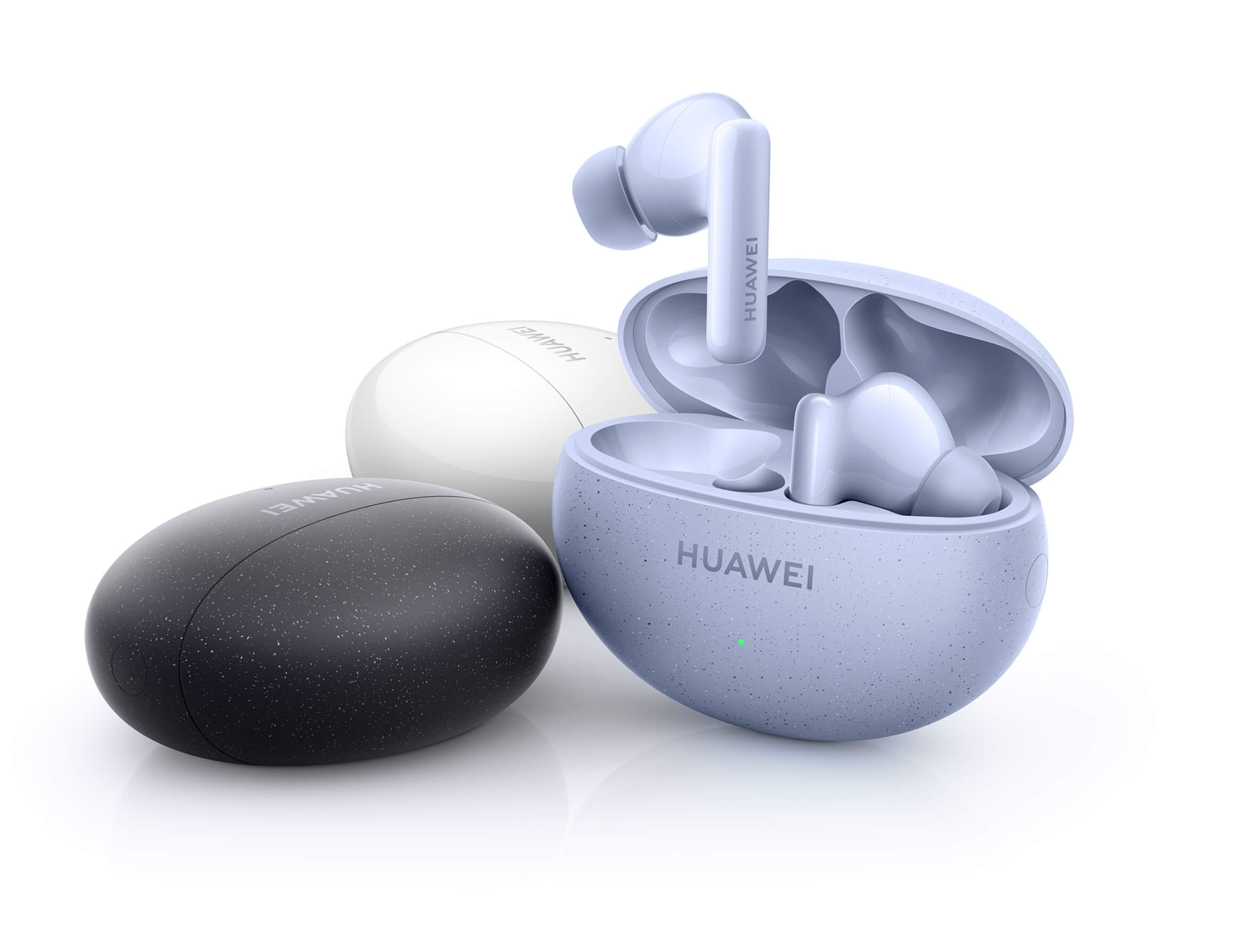
The landscape of wireless audio is shifting from simple noise blocking to intelligent sound management. At the forefront of this transition is the release of the Huawei FreeBuds Pro 5, a device designed to refine how users interact with their environment through advanced artificial intelligence. By integrating AI-driven noise cancellation, Huawei is attempting to solve one of the most persistent issues in True Wireless Stereo (TWS) design: the balance between total isolation and natural environmental awareness.
For professionals and commuters, the Huawei FreeBuds Pro 5 AI noise cancellation represents more than just a technical increment. It is an effort to create a “seamless” audio experience where the hardware adapts in real-time to the acoustic profile of the surroundings. This approach aims to reduce the cognitive load on the listener, removing the necessitate to manually toggle between modes as they move from a quiet office to a noisy street.
Early technical assessments suggest that the Pro 5 is a refined iteration of its predecessors, focusing on ergonomics and the quality of its transparency algorithms. While previous generations focused heavily on the volume of noise reduced, the current focus has shifted toward the quality of the remaining sound and the precision of the AI’s intervention.
Refining the Transparency Experience
One of the most critical benchmarks for any high-end earbud is the transparency mode—the ability to hear the outside world without removing the device. According to user impressions shared on Reddit on February 28, 2026, the FreeBuds Pro 5 shows a marked improvement in this area. The device is noted for having lower white noise and offering better control over the transparency experience compared to previous iterations.
This improvement is likely a direct result of the AI’s ability to filter out the “hiss” often associated with active transparency. By using AI to distinguish between desired environmental sounds (such as a human voice) and unwanted background hum, the Pro 5 can provide a more natural auditory window. This makes the earbuds more viable for long-term wear in varied environments, as the reduced white noise decreases listener fatigue.
Design and Performance Evolution
Beyond the software, the physical profile of the device has seen updates. In a review published on YouTube on February 26, 2026, the FreeBuds Pro 5 was described as being “sleeker” and “a bit better” than its predecessor, with the reviewer suggesting it is among the best performing wireless earbuds currently available.
The “sleeker” design is not merely aesthetic; it typically impacts the seal of the earbud, which is the first line of defense in noise cancellation. A more precise fit allows the AI-driven active noise cancellation (ANC) to work more efficiently, as there is less passive leakage to compensate for. When the physical seal and the AI algorithms work in tandem, the result is a more stable noise floor.
The Role of AI in Modern Noise Cancellation
To understand why AI noise cancellation differs from traditional ANC, it is necessary to look at how sound is processed. Traditional ANC typically uses a “counter-noise” approach, where microphones pick up external frequencies and the device generates an inverted wave to cancel them out. While effective for constant low-frequency sounds—like the drone of an airplane engine—it often struggles with erratic, high-frequency noises.
AI-powered systems, such as those in the FreeBuds Pro 5, add a layer of pattern recognition. The AI can identify specific types of noise and apply targeted cancellation profiles. So the device can potentially differentiate between a construction site and a crowded cafe, adjusting the intensity and frequency of the cancellation in real-time. This intelligence is what allows for the “better control” mentioned by early adopters, as the system makes micro-adjustments that a static ANC system cannot.
Key Performance Observations
| Feature | Observed Improvement | Impact on User |
|---|---|---|
| Transparency Mode | Lower white noise | Reduced listener fatigue |
| Physical Design | Sleeker form factor | Improved comfort and fit |
| AI Integration | Better environmental control | More natural sound transition |
Positioning in the Huawei Ecosystem
The FreeBuds Pro 5 sits at the top of Huawei’s audio hierarchy, distinct from more budget-friendly options like the FreeBuds 5i. While the 5i provides essential features like LDAC support and a lightweight design, the Pro series is where Huawei deploys its most aggressive AI research. The gap between these models is defined by the sophistication of the noise cancellation and the quality of the driver units.
For users who prioritize travel and productivity, the Pro 5 is positioned as a replacement for bulkier audio gear. By leveraging AI to mimic the isolation levels of larger headphones while maintaining the portability of a TWS device, Huawei is targeting the “prosumer” market—individuals who require high-fidelity audio and silence without the footprint of over-ear headsets.
As the industry moves toward 2026 and beyond, the success of the FreeBuds Pro 5 will likely depend on how well the AI continues to evolve through software updates. The ability to refine noise profiles via firmware means that the device’s performance can theoretically improve over time, a significant advantage over purely hardware-based audio solutions.
Further official technical specifications and regional availability updates are expected from Huawei’s consumer electronics division in the coming months. We will continue to monitor official filings and product announcements for updates on global rollout and pricing.
Do you think AI-driven noise cancellation is the future of audio, or do you prefer the simplicity of traditional ANC? Share your thoughts in the comments below.