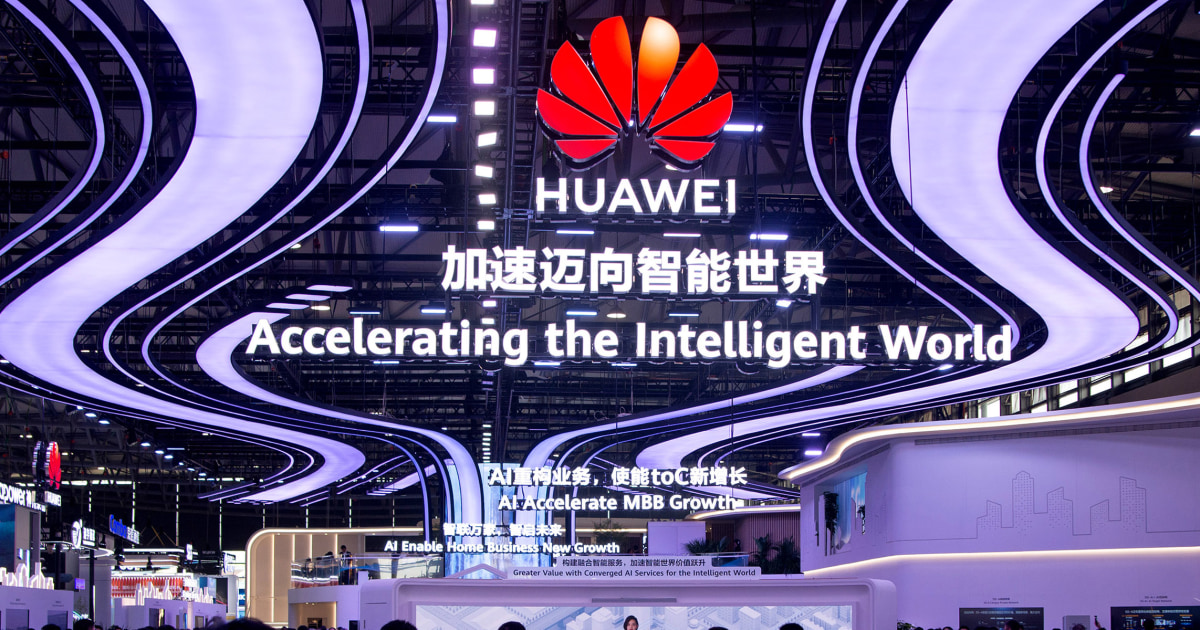
Huawei’s Chip Breakthrough: How China’s Tech Giant Pushes Back Against U.S. Sanctions
Shenzhen, China — In a move that could redefine the global semiconductor landscape, Huawei Technologies Co., Ltd. Announced today it has achieved a technological breakthrough in chip design, setting the stage for in-house production of advanced semiconductors within the next five years. The development marks a significant escalation in Beijing’s efforts to bypass U.S. Export controls that have crippled Chinese tech ambitions for nearly a decade.
The announcement comes as Huawei—already a global leader in telecommunications infrastructure and consumer electronics—deepens its focus on domestic semiconductor innovation. With U.S. Sanctions tightening under the Trump and Biden administrations, forcing Chinese firms to rely on homegrown alternatives, Huawei’s progress could accelerate China’s push toward self-sufficiency in a sector critical to military, industrial, and consumer technologies.
Yet the claim raises as many questions as it answers: What exactly has Huawei achieved? How does this fit into China’s broader “Made in China 2025” strategy? And what might this mean for global supply chains already strained by geopolitical tensions? For now, one thing is clear: The stakes could not be higher.
–>
From Sanctions to Self-Reliance: Huawei’s Semiconductor Gamble
Huawei’s latest announcement builds on years of strategic maneuvering in response to U.S. Restrictions. Since 2019, when the Trump administration added the company to the Entity List, Huawei has faced severe limitations on accessing American-made chips and tools. The company’s response has been twofold: developing its own operating systems (like EMUI and HarmonyOS) and investing heavily in domestic semiconductor research.
According to company filings and reports from Reuters, Huawei has been collaborating with Chinese foundries like SMIC (Semiconductor Manufacturing International Corporation) to develop advanced process nodes. While SMIC has struggled to match the most cutting-edge U.S. And Taiwanese chipmakers, recent breakthroughs in 7nm and 5nm process technologies suggest incremental progress.
Huawei’s stated goal of producing “cutting-edge chips” within five years aligns with broader Chinese government priorities. In 2021, Beijing unveiled a national semiconductor roadmap aiming to reduce reliance on foreign suppliers by 2030. If successful, Huawei’s achievement could serve as a model for other Chinese tech firms seeking to escape U.S. Dominance in critical industries.
What Does “Cutting-Edge” Really Mean?
The term “cutting-edge” is deliberately vague, but industry analysts suggest Huawei may be referring to advancements in two key areas:
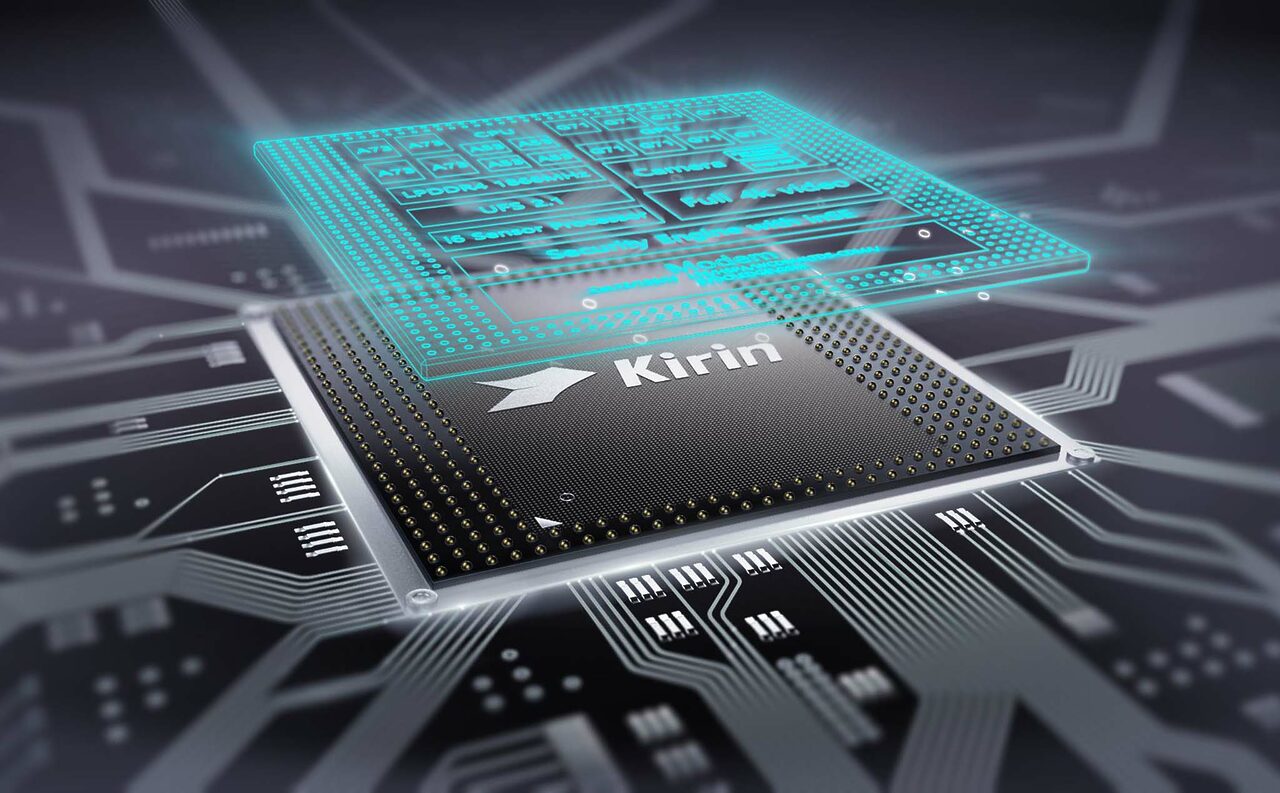
- Design Automation Tools (EDA): Huawei has already developed its own EDA software, reducing dependency on U.S. Firms like Cadence or Synopsys. These tools are essential for designing complex chips.
- Advanced Process Nodes: While China lags behind Taiwan’s TSMC in mass-producing chips at 3nm or below, progress in 7nm and 5nm could still enable Huawei to produce high-performance chips for its own devices and infrastructure equipment.
However, experts caution that true “cutting-edge” status—comparable to TSMC’s 3nm or Intel’s 18A processes—remains out of reach for now. The Wall Street Journal reported last year that Chinese foundries still face hurdles in yield rates and defect control at advanced nodes, despite government subsidies totaling billions of dollars.
Global Implications: A Tech Cold War Heats Up
Huawei’s progress has immediate consequences for three key stakeholders:
- U.S. Tech Companies: Firms like Intel, Nvidia, and ASML—already restricted from selling to Huawei—may face further pressure as China accelerates domestic alternatives. The U.S. Commerce Department has signaled it will monitor Huawei’s advancements closely, potentially tightening sanctions if deemed a national security risk.
- Global Supply Chains: Semiconductors are the backbone of modern industry, from smartphones to military hardware. If China achieves self-sufficiency, it could disrupt supply chains currently dominated by TSMC (Taiwan) and Samsung (South Korea), raising concerns about fragmentation in global tech markets.
- Chinese Consumers and Industries: While Huawei’s breakthrough could eventually lower costs for Chinese consumers, the immediate impact may be limited. Most advanced chips (e.g., for AI or high-end smartphones) will still rely on imported components for years.
Geopolitically, the development underscores the deepening tech cold war between Washington and Beijing. U.S. Officials have repeatedly warned that China’s semiconductor ambitions pose a long-term threat to American leadership in AI and defense technologies. Meanwhile, Chinese state media have framed the issue as a matter of sovereignty, arguing that foreign restrictions violate fair trade principles.
What Happens Next?
Huawei’s announcement is likely the first of many milestones in a long-term race. Key developments to watch include:
- Regulatory Responses: The U.S. May impose additional restrictions on Huawei’s access to indirect supply chains (e.g., Dutch ASML lithography machines or Japanese photoresists). The Bureau of Industry and Security (BIS) could update its export controls as early as mid-2026.
- Investment and Partnerships: Huawei will need to deepen collaborations with Chinese foundries like SMIC and Yangtze Memory Technologies (YMTC). Reports suggest Beijing is considering additional subsidies to accelerate R&D.
- Market Reaction: Huawei’s smartphone and infrastructure divisions may see short-term benefits from domestic chip integration, but global competitors (e.g., Apple, Qualcomm) are unlikely to cede market share easily.
Key Takeaways
- Huawei’s breakthrough is a symbolic victory for China’s tech self-reliance strategy, but full self-sufficiency in advanced chips remains years away.
- U.S. Sanctions have forced China to accelerate domestic semiconductor development, with Huawei as a test case for broader government ambitions.
- Global supply chains face disruption risks as geopolitical tensions reshape the semiconductor industry’s geography.
- Consumers may see limited immediate impact, but long-term cost reductions could emerge if China succeeds in scaling production.
- The tech cold war is intensifying, with both sides investing heavily in R&D to maintain strategic edges.
Where to Follow Updates
For the latest on Huawei’s semiconductor progress and U.S.-China tech tensions, monitor:

- Huawei’s official press releases
- U.S. Bureau of Industry and Security (BIS) updates
- China’s Ministry of Industry and Information Technology (MIIT) announcements
- SMIC’s technology roadmap
As Huawei’s journey unfolds, one certainty remains: The semiconductor industry will never be the same.
Worth a look
- Epsom Spree: 49-Year-Old Charged Over Six Incidents Including Public Assault
- New Volkswagen Tiguan R: The High-Performance SUV Stealing the Golf R’s Soul
- GM and SAIC Extend China Joint Venture for 20 Years Through 2047 (time.news)
- Philippe Strehlé: An Extraordinary Journey from China to France (archynewsy.com)