
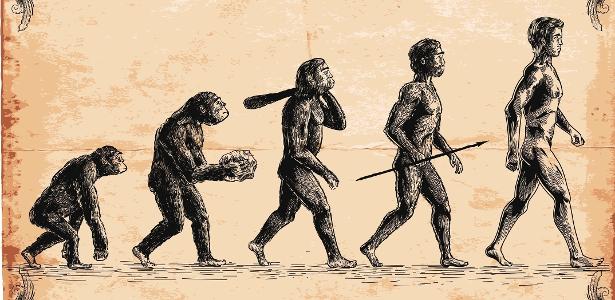
Human evolution continues to unfold in real time, with recent research revealing that natural selection has actively favored genetic traits linked to red hair and reduced male-pattern baldness over the past several millennia. A comprehensive study analyzing nearly 16,000 ancient genomes from West Eurasia spanning approximately 10,000 years has identified hundreds of instances where specific gene variants increased in frequency far beyond what would be expected by chance alone. This research, conducted by scientists at Harvard Medical School and published in the journal Nature, provides direct evidence that human biological adaptation did not stagnate in prehistoric times but has continued to shape our species well into recent history.
The study’s lead author, Ali Akbari, a senior staff scientist in the lab of geneticist David Reich, explained that advanced computational methods allowed researchers to distinguish random genetic drift from true directional selection — a process where a particular gene variant confers a measurable survival or reproductive advantage, causing it to spread rapidly through a population. Prior to this work, scientists had documented only about 21 clear examples of such selection in human history, including the well-known case of lactose tolerance. The new analysis uncovered hundreds more, highlighting how tools like large-scale ancient DNA databases and improved statistical modeling are transforming our ability to observe evolution as it happens.
Among the most prominent findings were genetic variants associated with red hair pigmentation and decreased susceptibility to androgenetic alopecia, commonly known as male-pattern baldness. Researchers noted that while it remains uncertain whether these traits were directly advantageous or merely linked to other beneficial genes, their consistent rise in frequency across millennia suggests they were shaped by evolutionary pressures. One hypothesis posits that lighter skin and hair variants, which are genetically tied to red hair, may have offered advantages in vitamin D synthesis under lower sunlight conditions in northern latitudes. Alternatively, these traits could have co-selected with other adaptations, such as immune responses or metabolic efficiencies, that proved critical for survival in changing environments.
The implications extend beyond physical appearance. The same analytical framework revealed strong selection signals in genes related to dietary adaptation, immune function, and metabolic health — including variants associated with increased risk for celiac disease and type 2 diabetes in modern contexts. This underscores a key insight from evolutionary medicine: genes that were once advantageous in ancient settings — such as those promoting efficient fat storage or heightened immune vigilance — may now contribute to disease in environments marked by processed foods, reduced pathogen exposure, and sedentary lifestyles. As such, the study illustrates how evolutionary legacies continue to influence contemporary health outcomes.
Experts emphasize that this research does not suggest humans are evolving toward a predetermined “ideal” form, but rather that our genomes remain responsive to environmental challenges — whether infectious diseases, nutritional shifts, or climatic changes. The ability to track these changes in real time through ancient DNA represents a significant leap forward in evolutionary biology, transforming what was once inferred from fossils and modern variation into a directly observable process. As more ancient genomes are sequenced and analytical techniques improve, scientists expect to uncover even more nuanced stories of how human biology has adapted — and continues to adapt — to the world around us.
Looking ahead, researchers plan to expand these methods to include more diverse populations from regions outside West Eurasia, aiming to build a globally representative picture of recent human evolution. While no single study can capture the full complexity of our species’ genetic journey, this work affirms a fundamental truth: evolution is not a relic of the distant past. It’s an ongoing, measurable force shaping who we are today — and who we may develop into.