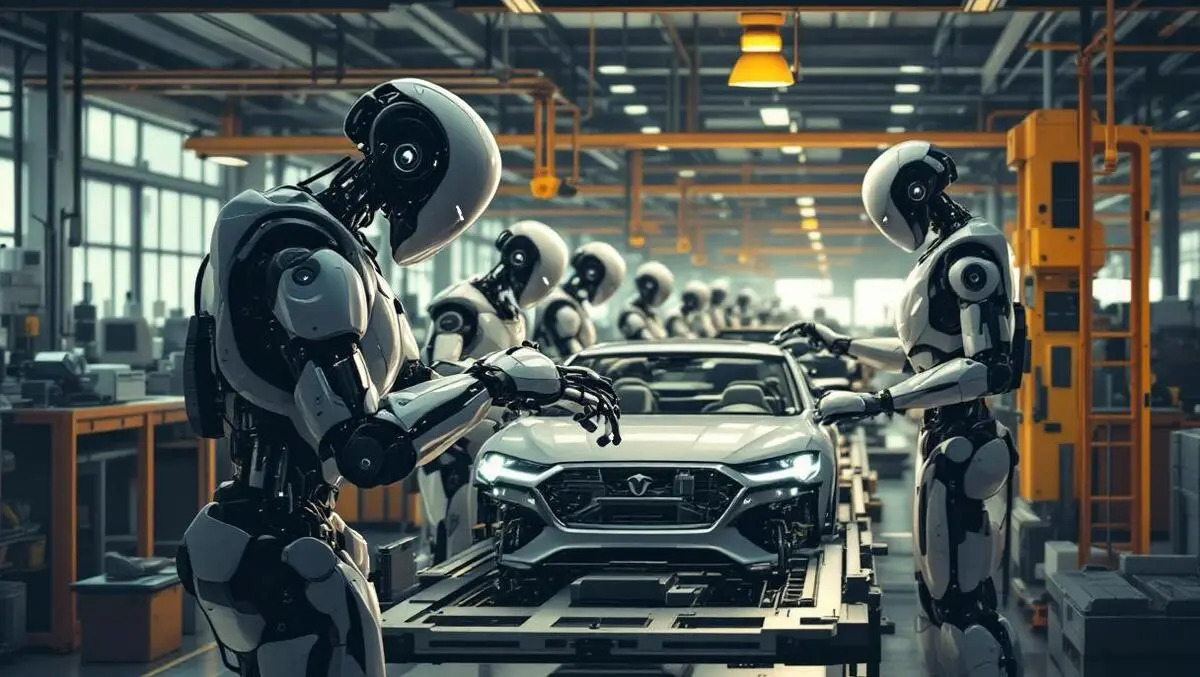
The future of work is increasingly incorporating a new kind of colleague: the humanoid robot. Even as still in its early stages, the adoption of these human-like machines is moving beyond experimental phases, particularly in industries grappling with labor shortages and demanding physical tasks. A new report from Forrester Research indicates a cautious but growing surge in interest, though widespread deployment remains contingent on overcoming significant hurdles related to cost, complexity, and regulatory frameworks. The report, titled The State of Humanoid Robots, 2026, highlights a shift from futuristic fantasy to pragmatic operational tool, but emphasizes the need for disciplined experimentation and a measured approach.
Interest in humanoid robots is demonstrably high, with 69% of automation decision-makers either adopting or planning to adopt the technology, according to Forrester’s Automation Survey 2025. This isn’t about wholesale replacement of human workers, but rather augmentation – freeing up employees from repetitive, hazardous, or physically demanding tasks to focus on roles requiring supervision, problem-solving, and direct customer interaction. This trend is fueled by advancements in artificial intelligence, particularly generative AI, physical AI, and AI-native cloud platforms, which are rapidly expanding the capabilities of these robots and shortening development cycles.
Early Adoption and Operational Gains
Currently, early deployments of humanoid robots are concentrated in sectors characterized by labor-intensive processes and clear productivity metrics. Manufacturing, logistics, healthcare, and customer service are leading the way in testing these systems in real-world operational environments. In manufacturing, BMW is leveraging humanoid robots to tackle ergonomically challenging assembly tasks, reducing strain on human workers and improving efficiency. Forbes reports that manufacturers are increasingly focused on automation as a key strategy for 2026, alongside addressing challenges in energy, workforce, and technology.
The food service industry is also seeing benefits. KEENON Robotics, for example, is being utilized by restaurants to automate food preparation and cleaning, reportedly cutting labor costs by as much as 20%. Similarly, in warehousing and distribution, companies are exploring the use of humanoid robots for material movement and routine handling. AgiBot’s A2-W is cited as an example, having reportedly handled 30% of warehouse material transport with zero errors. These early successes demonstrate the potential for humanoid robots to standardize repetitive workflows, leading to tangible improvements in efficiency and cost reduction. Companies are seeing, on average, a 40% reduction in processing errors and a 20% decrease in labor costs when these robots are implemented in high-friction, repetitive tasks.
The Role of AI and Technological Advancements
The recent progress in humanoid robotics is inextricably linked to advancements in artificial intelligence. Improvements in generative AI, physical AI, and AI-native cloud platforms are not only expanding the capabilities of these robots but also accelerating their development. NVIDIA’s Isaac GR00T-Dreams is a prime example, demonstrating a significant reduction in development time – from three months to just 36 hours – through the use of synthetic motion generation and multimodal foundation models. Forrester’s report emphasizes the importance of “physical AI” in bridging the “sim-to-real” gap, enabling robots trained in simulation to perform reliably in real-world environments.
This narrowing of the gap between simulation and reality is crucial for reducing commissioning downtime and improving overall reliability, particularly in complex settings like warehouses and clinics. The ability to train and test robot behaviors in a virtual environment before deployment minimizes risks and accelerates the integration process. This represents particularly crucial as companies move beyond small-scale pilots and consider broader deployments.
Workforce Impact and the Human-Robot Collaboration
A key finding of the Forrester report is that early use cases position humanoid robots as collaborators, not replacements, for human workers. The focus is on automating tasks that are repetitive, hazardous, or physically demanding, allowing employees to shift their focus to more complex and value-added activities. In healthcare, for instance, Singapore’s Sengkang Community Hospital is utilizing Dexie, a humanoid robot, to support multilingual dementia care, demonstrating the potential for these machines to enhance patient care while freeing up healthcare professionals to focus on more specialized tasks. This approach aligns with the broader trend of integrating humanoid systems into controlled parts of service delivery where interpersonal interaction remains essential.
This collaborative model is crucial for addressing concerns about job displacement. By augmenting human capabilities rather than replacing them entirely, humanoid robots can contribute to a more productive and fulfilling work environment. But, it’s important to acknowledge that this shift will require workforce retraining and upskilling to prepare employees for the new roles that emerge alongside the adoption of these technologies.
Challenges and Constraints to Wider Adoption
Despite the promising advancements and growing interest, several challenges remain that are hindering the widespread adoption of humanoid robots. High research and development (R&D) costs continue to be a significant barrier, as does the complexity of deployment. Organizations often need to redesign processes, modify facilities, and integrate robots with existing systems, all of which require substantial investment and expertise. Uncertainty surrounding regulation and liability is slowing down approvals for public-facing or safety-critical operations.
The lack of well-defined cybersecurity, safety, and accountability frameworks creates additional risk for organizations considering deploying humanoid robots. These gaps necessitate thorough risk assessments and the development of robust governance structures to ensure responsible and ethical use of the technology. Forrester anticipates that the near-term market will be driven by targeted pilots rather than large-scale rollouts, with the next two years being critical for testing return on investment (ROI) and building operational experience.
Looking Ahead: A Measured Approach
Charlie Dai, VP and Principal Analyst at Forrester, urges organizations to approach humanoid robots as operational tools rather than spectacles. “Humanoid robots are no longer a futuristic fantasy, but a pragmatic tool for operational transformation,” Dai stated. “Leaders must approach this technology with disciplined experimentation, viewing these robots as workforce multipliers that augment human capabilities rather than wholesale replacements. The next two years are critical: those who take a measured, strategic approach will position themselves to unlock significant value as the technology matures, while avoiding the pitfalls of premature or overhyped deployment.”
The emphasis on pilot design, safety governance, and clear measurement of error rates and labor impacts underscores the importance of a data-driven approach to evaluating the potential of humanoid robots. Organizations assessing these technologies in manufacturing lines, logistics facilities, hospitals, and customer-facing venues should prioritize these factors to maximize their chances of success.
The development of humanoid robot technology is also attracting significant investment in the broader robotics market. MarketWise highlights the growing capital flowing into companies like Tesla, Hyundai, and Nvidia, positioning investors to capitalize on this emerging trend. The recent announcement by Dow Chemical to slash 4,500 jobs as it pivots toward automation, as reported by MarketWise, further illustrates the accelerating impact of AI and robotics on the workforce.
As the technology continues to evolve, and as regulatory frameworks become more established, we can expect to witness a gradual but steady increase in the adoption of humanoid robots across a wider range of industries. The key to success will be a pragmatic, data-driven approach that prioritizes collaboration between humans and machines, and a commitment to responsible innovation.
The next key checkpoint for this evolving landscape will be the release of updated market analysis reports in late 2026, providing a more comprehensive assessment of the impact of early deployments and the progress made in addressing the remaining challenges. We encourage readers to share their thoughts and experiences with humanoid robots in the comments below.
Keep reading