
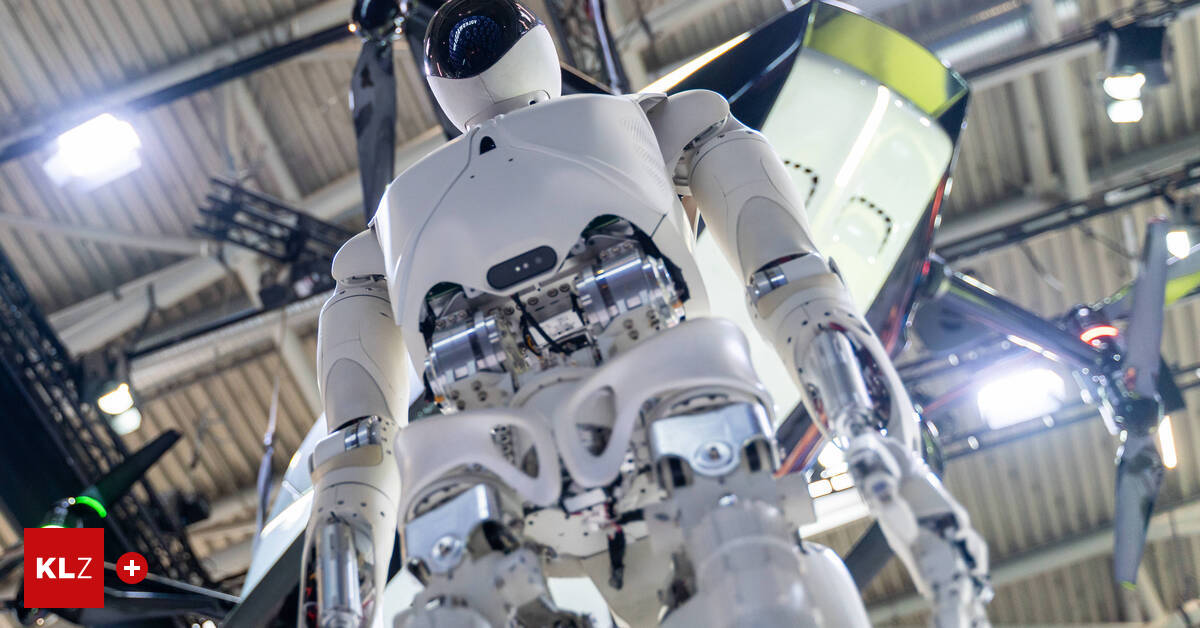
Humanoid robots are entering the industrial landscape of Styria, Austria, as companies including Roto Frank and Antemo prepare for their deployment. Driven by acute labor shortages in the manufacturing sector, these firms are exploring general-purpose robots to handle repetitive tasks, marking a shift from fixed automation to flexible, human-like robotic labor.
The adoption of these machines comes as Austrian industry faces a persistent gap in available skilled labor. Unlike traditional industrial robots that are bolted to the floor and programmed for a single task, the humanoid models being considered in Styria are designed to navigate human environments and utilize tools designed for people. This versatility allows companies to integrate automation into existing production lines without redesigning entire facilities.
Roto Frank, a specialist in rotational molding, and Antemo, an automotive components supplier, are among the first in the region to move toward active implementation. Both companies are targeting roles that are physically demanding or repetitive, where the “human-shaped” form factor provides a distinct advantage over traditional robotic arms.
Which Styrian companies are deploying humanoid robots?
Roto Frank and Antemo are leading the current wave of humanoid exploration in Styria. Roto Frank focuses on the production of high-quality plastic parts using rotational molding, a process that often requires manual handling of molds and finished products. By introducing humanoid robots, the company aims to automate the movement of materials and the management of production cycles that were previously too irregular for standard automation.
Antemo, which operates within the high-precision automotive supply chain, is looking at humanoids to bridge the gap between fully automated assembly lines and manual finishing work. In the automotive sector, precision is mandatory, but the flexibility to move between different stations is often lacking in traditional robotics. Humanoid robots can potentially step into these roles, performing quality checks or transporting parts across the factory floor.
The move mirrors a broader global trend seen in the automotive industry. For example, Figure AI has already established partnerships to deploy its Figure 01 and Figure 02 robots in BMW manufacturing plants to handle sheet metal and assembly tasks. Styrian firms are observing these large-scale implementations to determine the most cost-effective integration strategies for mid-sized enterprises.
Why is the Austrian industry turning to humanoids?
The primary driver for this technological shift is the “Fachkräftemangel,” or the acute shortage of skilled workers, which has plagued the Austrian economy for several years. According to data from the Public Employment Service Austria (AMS), thousands of vacancies remain unfilled in the technical and manufacturing sectors despite available job openings.

Humanoid robots offer a solution to this labor vacuum by filling “low-complexity, high-repetition” roles. When a company cannot find a human worker to perform a repetitive sorting task or a heavy-lifting routine, a humanoid robot can step in. Because these robots are designed with human proportions, they can use the same walkways, doors, and tools as their human counterparts, eliminating the need for expensive infrastructure overhauls.
Beyond labor shortages, the shift is motivated by the evolution of Artificial Intelligence. The integration of Large Language Models (LLMs) and advanced computer vision allows these robots to understand verbal commands and recognize objects in real-time. This means a worker on the factory floor can tell a robot to “pick up that bin” without needing a software engineer to write thousands of lines of coordinate-based code.
How do humanoid robots differ from traditional industrial automation?
Traditional industrial robots, such as those produced by KUKA or ABB, are typically “stationary manipulators.” They are highly efficient and fast but are limited to a specific work envelope. If the part they are picking up moves by two centimeters, the robot may fail unless it is equipped with expensive, specialized sensors.
Humanoid robots differ in three primary areas: mobility, versatility, and interaction. First, bipedal movement allows them to navigate a warehouse or factory without needing magnetic tracks or specialized flooring. Second, their “general-purpose” nature means the same robot can be tasked with cleaning a floor in the morning and moving crates in the afternoon. Third, their physical appearance is designed to facilitate safer and more intuitive collaboration with human workers.
This transition represents a move toward “flexible automation.” In a traditional setup, changing a product line often requires weeks of reprogramming and physical reconfiguration of the robots. A humanoid robot, theoretically, only requires a new set of instructions or a demonstration of the new task to adapt to a different part of the production process.
What are the challenges of integrating robots into Styrian firms?
Despite the potential, the deployment of humanoid robots in Styria faces significant hurdles, primarily regarding cost and regulatory compliance. High-end humanoid robots remain expensive, often requiring significant capital investment before a clear return on investment (ROI) is established. For mid-sized companies like Roto Frank and Antemo, the cost-benefit analysis involves weighing the robot’s hourly “cost” against the cost of recruiting and training new human staff.
Safety is another critical concern. The European Union’s AI Act and existing CE marking requirements for machinery mandate strict safety protocols. A 150-kilogram bipedal robot moving through a factory floor poses different risks than a stationary arm behind a safety fence. Companies must implement “cobot” (collaborative robot) standards, ensuring the robots have sensitive touch sensors and vision systems that stop all movement the instant a human enters their immediate path.
There is also the challenge of “edge cases.” While a robot can easily be taught to move a box from point A to point B, handling a deformed plastic part or reacting to a spilled liquid requires a level of sensory feedback and problem-solving that current AI is still perfecting. The transition period will likely involve “hybrid teams,” where humans oversee several robots, intervening whenever the machine encounters a scenario it cannot resolve.
What happens next for robotics in Austria?
The next phase for Styrian companies involves moving from theoretical planning and small-scale testing to full-scale pilot programs. These pilots will likely focus on “dark warehouse” tasks—activities that can be done in low-light or hazardous environments—before moving into high-traffic human zones.

Industry analysts expect a surge in specialized software development within Austria to customize these robots for specific industrial niches. Rather than relying solely on the software provided by robot manufacturers in the US or China, Austrian firms may develop their own “skill libraries” to optimize robots for the specific needs of rotational molding or automotive precision engineering.
The success of these deployments will be measured by the reduction in production bottlenecks and the ability of companies to scale their output without a corresponding increase in human headcount. As the hardware becomes more affordable and the AI more reliable, the presence of humanoid assistants in Styrian factories is expected to move from a novelty to a standard operational requirement.
The next confirmed checkpoint for the industry will be the upcoming regional industrial trade fairs in Austria, where firms are expected to showcase the results of their initial humanoid pilot phases and share data on efficiency gains.
Do you believe humanoid robots will solve the labor crisis in manufacturing, or will they create new challenges for the workforce? Share your thoughts in the comments below.