The evolutionary Arms Race: How Hummingbird Bills Became Weapons of Choice
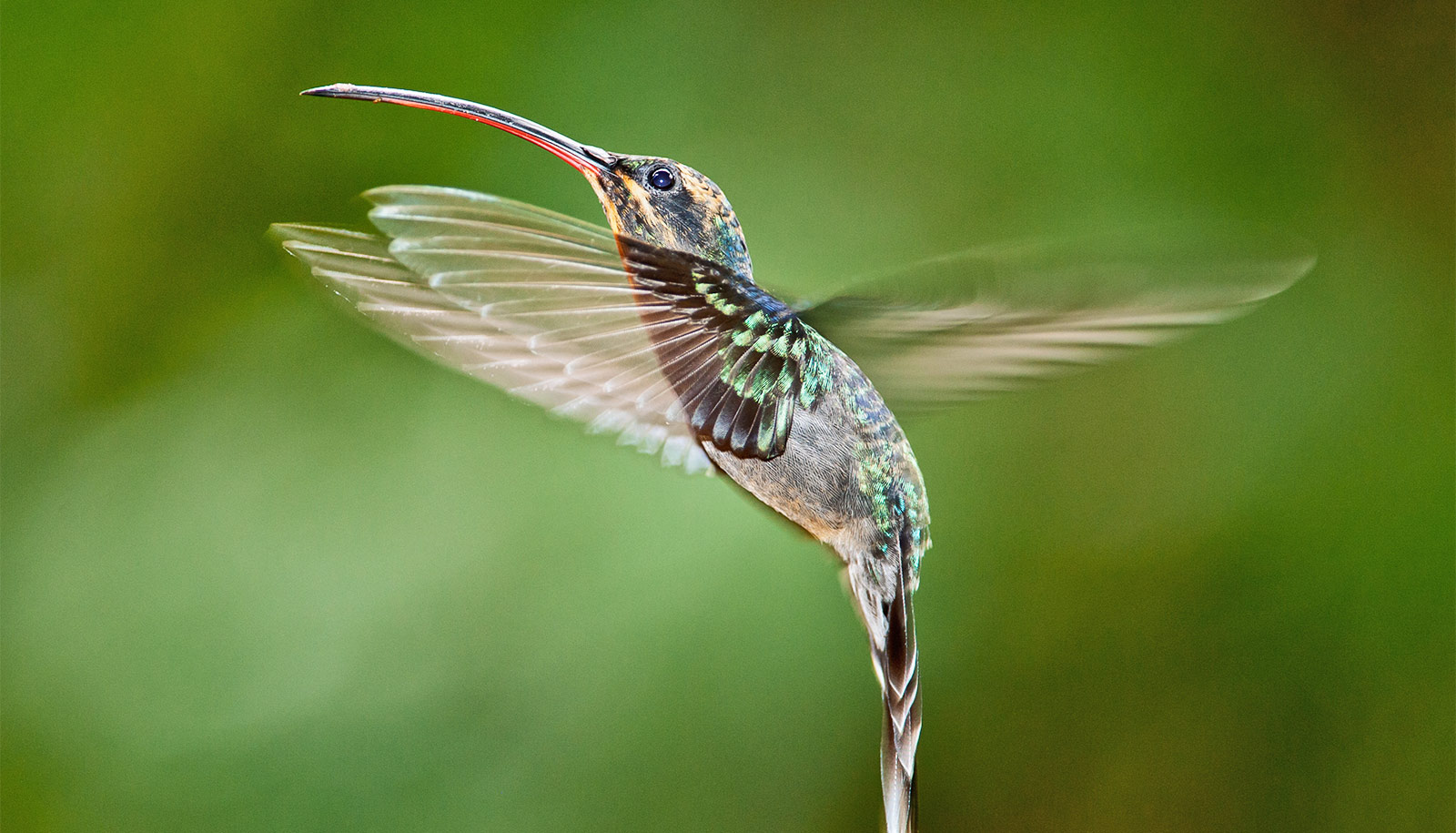
For decades, scientists have observed the aggressive territoriality of hummingbirds, especially the vibrant green hermits. These tiny dynamos fiercely defend their feeding perches – essentially, their spots at the “singles bar” – engaging in surprisingly violent confrontations. But new research reveals these aren’t just squabbles over nectar; they’re a driving force behind a fascinating example of sexual dimorphism, shaping the vrey evolution of the green hermit’s bill.
as a biologist specializing in avian evolution, I’ve long been captivated by the intricate ways natural selection sculpts life. this study, recently published in the Journal of experimental Biology, offers compelling evidence that the need to fight has substantially influenced the physical characteristics of these birds, perhaps even more than dietary needs alone.
A Bill That Does Double Duty
Hummingbirds rely on their long, slender bills for accessing nectar deep within flowers. However, these same bills are also deployed as surprisingly effective weapons.
* Like miniature jousting lances, males raise their bills and thrust them into opponents during territorial disputes.
* The stakes are high: a damaged bill can hinder feeding, impacting survival and mating success.
This dual purpose – feeding and fighting – has led to a remarkable divergence in bill structure between male and female green hermits.
Decoding the Differences: Male vs. Female Bills
Researchers at the University of Washington’s Burke Museum of Natural History and Culture, where I serve as curator of birds, utilized cutting-edge techniques to analyze the bills of green hermits. Here’s what they discovered:
* Male Bills: Straighter, sharper, and structurally stronger. They possess a “dagger-like” tip and are optimized for delivering forceful, accurate strikes.
* Female bills: More curved, providing enhanced access to nectar in certain flower types. While still capable of defense, they aren’t built for the same level of aggressive combat.
These differences aren’t superficial. CT scans revealed that the internal architecture of the male bill is designed to efficiently transmit force, making it more resistant to breakage.
Rigorous Testing: Simulating Combat
To validate their findings, the research team went beyond observation and anatomy.they created detailed 3D models of both male and female bills and subjected them to simulated “stabbing” tests.
The results were striking:
* Energy Absorption: Male bills expended 52.4% less energy during deformation, indicating greater resilience.
* Stress Reduction: Male bills experienced 39% less stress than female bills under the same impact.
* Attack Angle Versatility: The straighter shape of the male bill allows for a wider range of effective attack angles, reducing the need for precise targeting.
These findings strongly suggest that the reinforced bills of male green hermits are a direct adaptation to their frequent and intense fighting behavior.
Beyond Antlers: A Cryptic weapon in the Bird World
While sexually dimorphic weapons are well-documented in mammals like deer and moose (think antlers!), they are far less common in birds.This research highlights a fascinating example of a ”cryptic” weapon – one that isn’t immediately obvious but plays a crucial role in male-male competition.
As Lucas Mansfield,a co-author and graduate student at Michigan State University,aptly put it,”It’s fun to explore a more hidden weapon.”
Implications for Understanding Sexual Dimorphism
This study underscores the importance of considering behavioral factors when investigating sexual dimorphism. It’s a powerful reminder that evolution isn’t solely driven by ecological pressures; social dynamics and competition for mates can be equally influential.
The green hermit’s bill serves as a compelling example of how a single anatomical feature can be shaped by multiple, sometimes conflicting, selective forces. It’s a testament to the ongoing evolutionary arms race playing out in the natural world, and a reminder that there’s still so much to learn about the intricacies of life on Earth.
Research Team: Felipe Garzón-Agudelo (Centro de Investigación Colibrı́ Gorriazul, Colombia), Kevin Epperly (UW Burke Museum), and Lucas Mansfield (michigan State University).
Funding: Walt Halperin Endowed Professorship (UW Biology) and Washington Research Foundation.
Source: [https://wwwwashingtonedu/news/2025/11/21/sharper-straighter-stiffer-stronger-[https://wwwwashingtonedu/news/2025/11/21/sharper-straighter-stiffer-stronger-[https://wwwwashingtonedu/news/2025/11/21/sharper-straighter-stiffer-stronger-[https://wwwwashingtonedu/news/2025/11/21/sharper-straighter-stiffer-stronger-