
A high-stakes international rescue operation concluded on Saturday, May 2, 2026, as a stranded humpback whale, affectionately known as Timmy
, was released into the open waters of the North Sea. The release marks the end of a grueling multi-week ordeal that saw the marine mammal drift far from its Atlantic habitat into the shallow, restrictive waters of the Baltic Sea, sparking a global wave of concern and a complex logistical effort to save its life.
Timmy was first spotted near Germany’s Baltic Sea coast on March 3, 2026, appearing disoriented and out of place. For weeks, the whale repeatedly beached itself in shallow waters, including a period spent in a small bay area off the island of Poel near the town of Wismar. As the animal grew weaker and sicker, the operation transitioned from simple coaxing efforts to a massive engineering project involving air cushions and a specialized transport vessel.
The final phase of the rescue involved transporting the whale via a flooded cargo barge through Danish waters to reach the North Sea, providing Timmy with a viable path back to the Atlantic Ocean. While the release is a triumph of human coordination and private philanthropy, marine experts warn that the journey is far from over, as the whale’s health remains precarious after months of stress, and malnutrition.
The Road to the North Sea: A Logistical Challenge
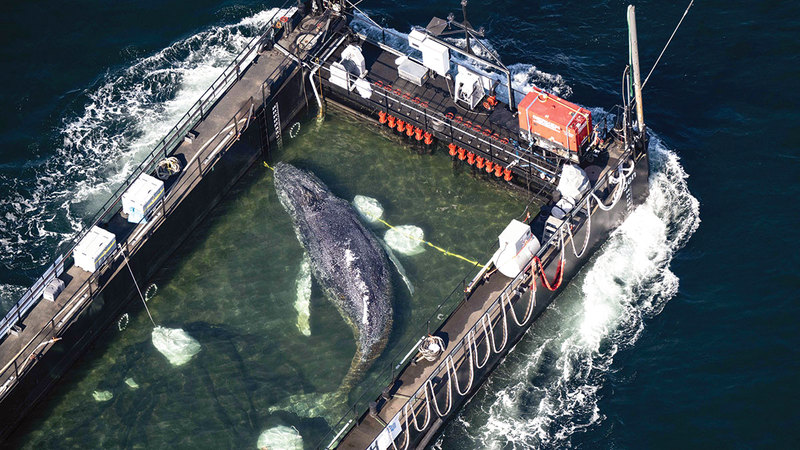
The rescue of Timmy was not a standard stranding response. Since the whale was trapped in the Baltic Sea—a body of water far too shallow and enclosed for a humpback to navigate back to the Atlantic on its own—authorities and volunteers had to uncover a way to physically move the animal across borders. The operation reached a critical turning point on April 28, 2026, when rescuers successfully loaded Timmy onto a special barge designed to guide him toward the ocean.
The transport was a delicate balance of veterinary care and maritime engineering. To maintain the whale buoyant and stable during the journey, the barge was flooded, creating a portable aquatic environment. By Wednesday, April 29, the vessel had reached Danish waters, moving steadily toward the North Sea according to German authorities.
The funding for this unconventional transport did not come from government coffers alone. Reports indicate that two entrepreneurs stepped forward to finance the barge, recognizing that the cost of such a specialized operation would otherwise be prohibitive for local rescue agencies as reported by France 24.
Timeline of the Rescue Operation
| Date | Event | Location |
|---|---|---|
| March 3, 2026 | First spotted in the Baltic Sea | Germany Coast |
| March 23, 2026 | Stuck on a sandbank | Near Lübeck, Germany |
| April 2026 | Air cushion rescue attempts | Near Wismar, Germany |
| April 28, 2026 | Loaded onto specialized barge | Island of Poel |
| May 2, 2026 | Final release into open waters | North Sea/Skagen area |
Why the Baltic Sea is a Death Trap for Humpbacks
The case of Timmy highlights the extreme danger that deep-ocean mammals face when they wander into the Baltic Sea. Unlike the Atlantic, the Baltic is a brackish, shallow sea with limited depth and a complex coastline that can easily lead to stranding. For a humpback whale, which relies on deep water for diving and foraging, the Baltic is essentially a geographical cul-de-sac.
The stress of being stranded is not just physical but biological. When a whale beaches, its own massive weight can crush internal organs and restrict blood flow to the fins, a condition that leads to rapid deterioration. Timmy’s condition had grow critical, with livestreamed footage showing a whale that was increasingly weak and unable to maintain its own position in the water as documented by the Associated Press.
The apply of air cushions in the earlier stages of the rescue was an attempt to lift the whale’s weight off the seabed without causing further injury. This method is often used in strandings to reduce the pressure on the animal’s chest and abdomen, allowing it to breathe more easily while rescuers prepare for a full extraction.
A Fragile Victory: The Aftermath of the Release
While the image of Timmy swimming away from the barge on May 2 provided a moment of global relief, the biological reality is more sobering. The whale has spent nearly two months in a state of high stress, struggling to find food and fighting off the effects of repeated strandings. The transition from a confined barge to the unpredictable currents of the North Sea is a significant shock to a weakened system.
Marine biologists remain concerned about the whale’s long-term survival. The primary worries include:
- Nutritional Deficit: The whale has likely lost significant blubber reserves, which are essential for thermoregulation and energy during migration.
- Physical Trauma: Potential internal injuries sustained during the multiple beaching events in the Baltic.
- Disorientation: The risk that a sick and confused animal may again wander into shallow coastal waters.
Despite these concerns, the successful release is being hailed as a landmark in marine rescue. The coordination between German and Danish authorities, combined with private funding, demonstrates a new model for responding to “impossible” strandings where the animal cannot be simply pushed back into the surf.
Key Takeaways from the Timmy Rescue
- International Cooperation: The rescue required seamless coordination between Germany and Denmark to move a protected species across maritime borders.
- Private-Public Partnership: The operation was made possible by private entrepreneurs funding the specialized barge.
- Critical Timing: The move to the North Sea was a race against time as the whale’s health deteriorated.
- Habitat Danger: The event underscores the risk that the Baltic Sea poses to Atlantic humpbacks that lose their way.
As of today, May 3, 2026, Timmy is swimming in the open waters near Skagen. The next critical checkpoint will be the monitoring of his movement via satellite or sightings to confirm he is heading south toward the Atlantic and regaining his strength. Marine observers are hopeful that the deep waters of the North Sea will provide the environment he needs to recover.
Do you believe private funding should play a larger role in wildlife rescues, or should these costs be borne by the state? Share your thoughts in the comments below.