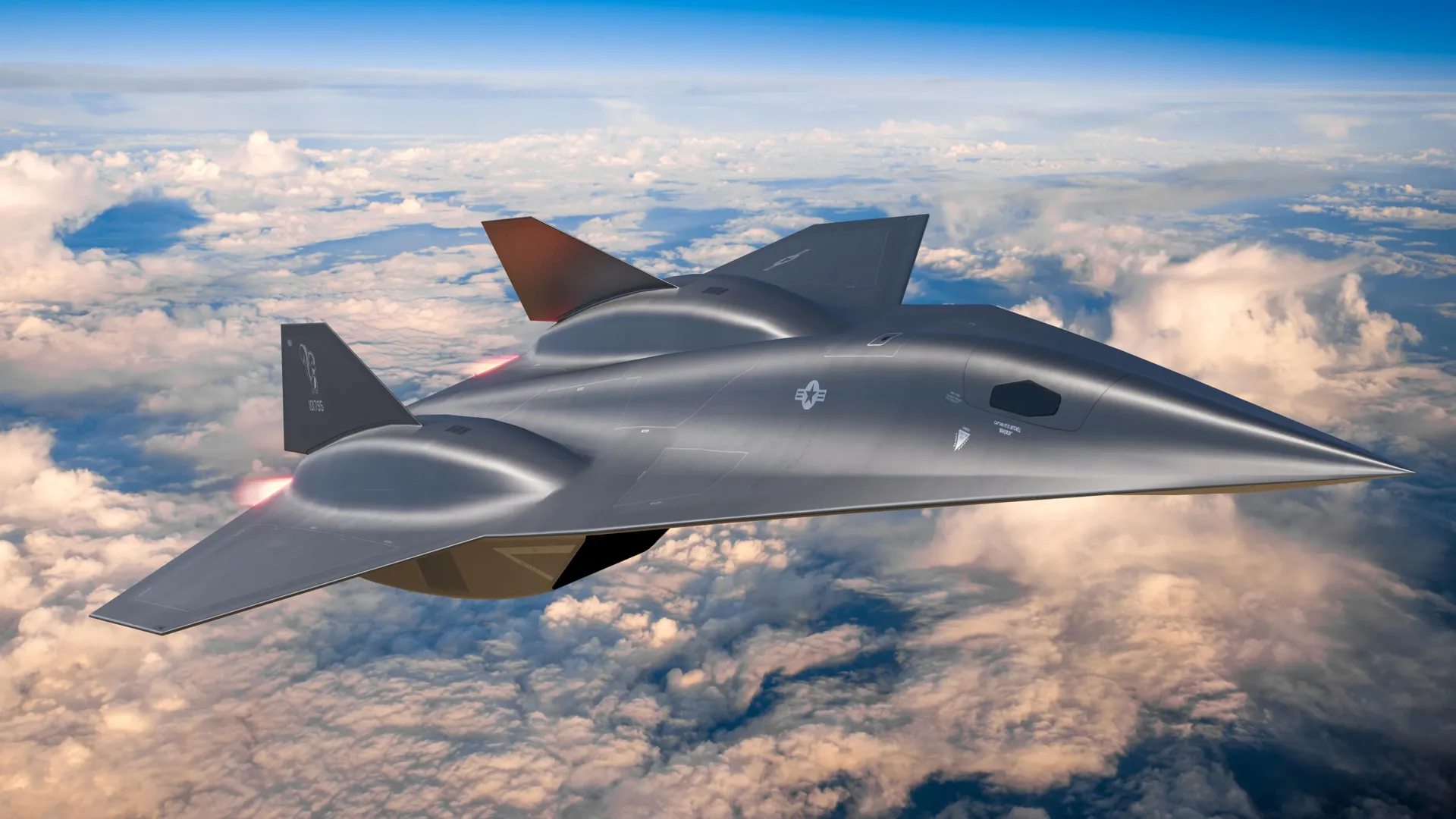
Unlocking Hypersonic flight: New Research Validates a Decades-Old Hypothesis
For decades, the dream of routine hypersonic flight – travel at five times the speed of sound and beyond – has remained largely elusive.The challenges aren’t simply about building faster engines; they lie in fundamentally understanding how air behaves at these extreme velocities.Now, groundbreaking research is bringing that dream closer to reality by bolstering a pivotal, yet long-unproven, hypothesis about the nature of hypersonic turbulence. This work, led by Dr. William Parziale,promises to streamline the design process for future hypersonic vehicles and even revolutionize access to space.
The Challenge of Hypersonic Airflow: Compressibility and its Implications
Unlike the airflows experienced by conventional aircraft, hypersonic airflow is profoundly affected by compressibility. As air speeds increase, it doesn’t simply flow around an object; it’s compressed, leading to notable changes in density, temperature, and pressure. This compression dramatically alters how an aircraft interacts with the surrounding air, impacting critical factors like lift, drag, and the thrust required for flight.
“Compressibility affects how the airflow goes around the body and that can change things like lift, drag, and thrust required to take off or stay airborne,” explains Dr. Parziale. ”All of these factors play a major role in aircraft design.”
While engineers have a robust understanding of airflow at lower speeds (subsonic and transonic regimes – often referred to as “low Mach” numbers),the complexities of Mach 5,6,and beyond present a significant knowledge gap.Predicting and controlling airflow at these speeds is crucial, and for years, much of the guidance has come from a surprisingly enduring idea: Morkovin’s Hypothesis.
Morkovin’s Hypothesis: A Surprisingly Simple Solution to a Complex Problem
Developed in the mid-20th century by Mark Morkovin, this hypothesis proposes a counterintuitive concept: that the fundamental characteristics of turbulence remain remarkably consistent even as air reaches hypersonic speeds. Despite the dramatic shifts in temperature and density, Morkovin theorized that the underlying patterns of turbulent motion wouldn’t drastically change.
“Basically, the Morkovin’s hypothesis means that the way the turbulent air moves at low and high speeds isn’t that different,” Dr. Parziale clarifies. “If the hypothesis is correct, it means that we don’t need a whole new way to understand turbulence at these higher speeds. We can use the same concepts we use for the slower flows.”
This is a critical point. Accepting Morkovin’s hypothesis simplifies the design process immensely, suggesting that engineers don’t need to entirely overhaul existing aerodynamic principles. However, until recently, the hypothesis lacked definitive experimental proof.
Eleven Years of Research: A Laser-Based Breakthrough
Dr. Parziale’s recent research, published in Nature Communications in November 2025, provides compelling evidence supporting Morkovin’s long-standing theory. The study, a culmination of 11 years of dedicated effort, employed a novel experimental technique.
The team introduced krypton gas into a specialized wind tunnel and used powerful lasers to ionize it, creating a luminous, straight line of glowing atoms. High-resolution cameras then meticulously tracked how this illuminated line bent, twisted, and distorted as it moved through the hypersonic airflow.
“As that line moves with the gas, you can see crinkles and structure in the flow, and from that, we can learn a lot about turbulence,” Dr.Parziale explains. “And what we found was that at Mach 6, the turbulence behavior is pretty close to the incompressible flow.”
This meticulous observation, enabled by cutting-edge laser technology and advanced imaging, provides strong validation for Morkovin’s hypothesis. The research was supported by the Air Force office of scientific Research Young investigator Research Program (YIP) and the Office of Naval Research (ONR).
Implications for the Future of Flight and Space Access
The implications of this research are far-reaching. By strengthening the foundation of Morkovin’s hypothesis, Dr. Parziale’s work significantly reduces the complexity of designing hypersonic vehicles.
“Today, we must use computers to design an airplane, and the computational resources to design a plane that will fly at Mach 6, simulating all the tiny, fine, little details would be impossible,” Dr. Parziale emphasizes.”The Morkovin’s hypothesis allows us to make simplifying assumptions so that the computational demands to design hypersonic vehicles can become more doable.”
But the benefits extend beyond simply making hypersonic flight more achievable. Dr. Parziale envisions a future where hypersonic aircraft could provide a more efficient and cost-effective pathway to space.
“If
Keep reading
- Samsung Smart Glasses: Android XR Integration, Design, and Privacy Features
- 78% of Austrians Support TikTok Restrictions to Protect Youth
- How One Sound Engineer's Machine Taught America When to Laugh (daybreakwire.com)
- SpaceX’s stock falls to a new low despite a near-flawless Starship flight (archyde.com)