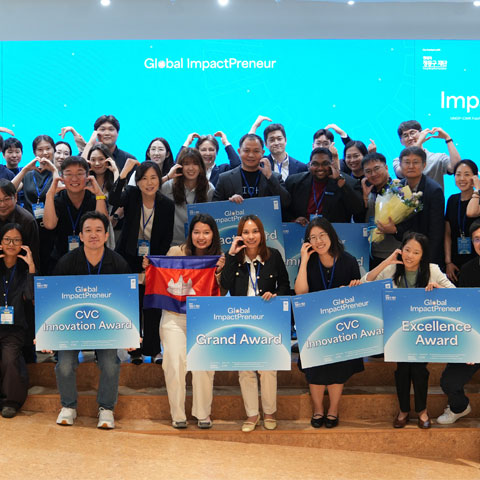
The Hyundai Motor Chung Mong Koo Foundation and the United Nations Development Programme (UNDP) hosted a Demo Day for impact enterprises representing Asia-Pacific nations to showcase scalable solutions for sustainable development. The event serves as the culmination of an acceleration program designed to help startups from the region refine business models that address critical social and environmental challenges.
This partnership targets the “impact economy,” where companies prioritize measurable social or environmental benefits alongside financial returns. According to the Hyundai Motor Chung Mong Koo Foundation, the initiative focuses on empowering entrepreneurs in the Asia-Pacific region to implement innovations that align with the UN Sustainable Development Goals (SDGs).
The Demo Day follows a rigorous selection and incubation process. Selected enterprises received mentorship and strategic guidance to ensure their technologies—ranging from climate-tech to inclusive healthcare—could be deployed effectively in diverse markets across Asia and the Pacific. The collaboration leverages the UNDP’s global network and the Foundation’s resources to bridge the gap between early-stage innovation and large-scale implementation.
Scaling Social Innovation via the UNDP Partnership
The collaboration between the Hyundai Motor Chung Mong Koo Foundation and the UNDP is structured to move beyond traditional philanthropy. By focusing on “impact enterprises,” the program identifies companies that use market-based mechanisms to solve systemic issues. The UNDP provides the institutional framework and regional expertise necessary to validate these solutions in the field, while the Foundation provides the catalytic support needed for growth.

The acceleration program emphasizes a “localized” approach to global problems. Because the Asia-Pacific region contains some of the world’s most diverse economic landscapes, the program requires startups to demonstrate how their solutions can be adapted to different regulatory environments and cultural contexts. This ensures that a technology developed in one country can be scaled to another without losing its efficacy.
Participants in the program typically undergo a series of workshops focusing on investment readiness, impact measurement, and go-to-market strategies. The Demo Day acts as the final pitch session, where these companies present their refined models to a panel of investors, corporate partners, and policymakers to secure the funding and partnerships required for the next phase of expansion.
Addressing the UN Sustainable Development Goals (SDGs)
The enterprises featured at the Demo Day are vetted based on their ability to contribute to specific UN Sustainable Development Goals. While the exact portfolio of companies varies by cohort, the focus remains on high-impact sectors such as carbon reduction, waste management, and digital financial inclusion. These sectors are critical for the Asia-Pacific region, which faces acute vulnerabilities to climate change and significant gaps in infrastructure.

By aligning with the SDGs, the program ensures that the growth of these startups is not merely commercial but contributes to a broader global agenda. The Hyundai Motor Chung Mong Koo Foundation has stated that its goal is to foster a sustainable ecosystem where innovation leads to tangible improvements in quality of life. This approach shifts the focus from short-term grants to long-term systemic change.
The impact of these enterprises is measured using specific KPIs (Key Performance Indicators) that track metrics such as the volume of CO2 emissions avoided, the number of underserved individuals gaining access to essential services, or the amount of plastic waste diverted from oceans. This data-driven approach allows the UNDP and the Foundation to quantify the success of the acceleration program.
The Role of the Hyundai Motor Chung Mong Koo Foundation
The Hyundai Motor Chung Mong Koo Foundation operates as a philanthropic arm dedicated to nurturing future talent and supporting social innovation. Beyond its work with the UNDP, the Foundation manages several initiatives, including the “Innovation Leader Academy,” which aims to develop the next generation of leaders capable of driving societal progress through technology and entrepreneurship.
The Foundation’s involvement in the Asia-Pacific Demo Day reflects a strategic shift toward international cooperation. By partnering with a global body like the UN, the Foundation extends its reach from domestic Korean initiatives to a broader regional impact. This strategy allows the organization to identify global trends in social entrepreneurship and bring those insights back to its domestic programs.
For the startups involved, the Foundation provides more than capital. It offers a bridge to the broader Hyundai Motor Group ecosystem, potentially opening doors for corporate partnerships, pilot projects, and supply chain integration if the startup’s technology aligns with the group’s sustainability goals, such as hydrogen energy or smart mobility.
Future Milestones and Regional Expansion
Following the Demo Day, the participating enterprises enter a monitoring and evaluation phase. The UNDP and the Foundation will track the progress of the companies to determine how many successfully secure follow-on funding or launch pilot programs in new territories. This feedback loop is used to refine the selection criteria for future cohorts of the acceleration program.

The next confirmed step for the partnership involves the continued scaling of these impact models into “hub” cities across the Asia-Pacific region. The goal is to create a network of sustainable enterprises that can support one another through shared knowledge and cross-border collaborations.
Readers interested in the progress of these impact enterprises or future application windows for the acceleration program can monitor official updates via the Hyundai Motor Chung Mong Koo Foundation’s news portal.
Share your thoughts on the role of corporate foundations in driving the UN SDGs in the comments below.